



Here’s how AI could complicate the search for Savannah Guthrie’s missing mother
When Savannah Guthrie made a heartbreaking plea to her 84-year-old mother’s kidnapper to send her “proof of life,” she addressed the possibility of people creating deepfakes.
“We live in a world where voices and images are easily manipulated,” he said.
Before the proliferation of artificial intelligence tools (which made it possible to impersonate someone realistically, in photos, sound and video), “proof of life” could simply mean sending a grainy image of a person who had been kidnapped.
“Today, with AI you can make videos that look very real. So we can’t just take a video and trust that it’s proof of life because of advances in AI,” Heith Janke, head of the FBI in Phoenix, said at a news conference Thursday.
NBC via Getty Images
Hoaxes, whether high-tech or low-tech, have long challenged authorities, especially when it comes to high-profile cases like the disappearance of Nancy Guthrie last weekend from her Tucson-area home.
As technology has advanced, criminals have become smarter and have used it to their advantage, confusing police and the public and masking their identities. In December, the FBI warned that people posing as kidnappers may provide what appears to be a real photo or video of a loved one, along with demands for money.
Police have not said they received fake images of Guthrie. At least three news organizations reported receiving purported ransom notes that they handed over to investigators, who said they were taking them seriously.
Investigators said they believe she is “still out there,” but have not identified any suspects.
Separately, a California man was charged Thursday with texting the Guthrie family seeking bitcoin after following the case on television. There is no indication that he is suspected of having any role in the disappearance, according to a court filing.
She appeared in an emotional video on Instagram on Wednesday, sitting between her sister and brother. His voice cracked as he spoke directly to the kidnapper, saying the family is “ready to talk” and “ready to listen,” but that he also wanted to know if his mother is alive.
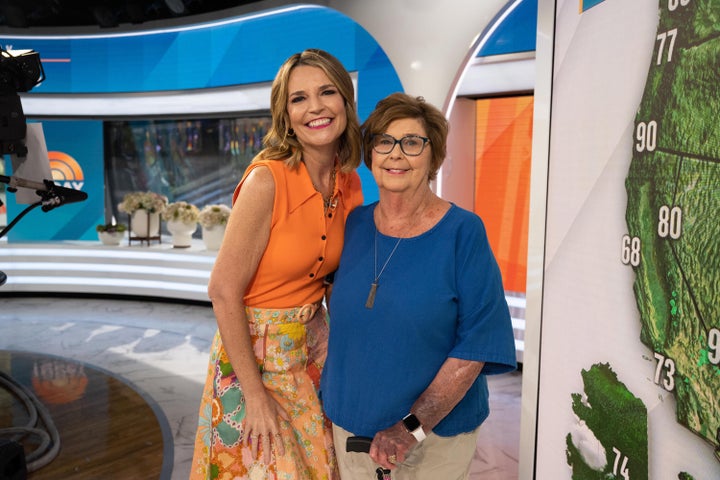
Images of Nancy Guthrie, shared publicly by her family, could be used to create deepfakes, said former FBI agent Katherine Schweit.
He said ransom demands throughout history have evolved from phone calls and handwritten notes to emails, text messages and other digital tools. A century ago, ransom notes were analog. For example, when the young son of famous aviator Charles Lindbergh was kidnapped, a piece of paper asking for $50,000 was found on a window sill.
“Investigative techniques accumulate over time,” Schweit said. “There is never less to do as the years go by; there is more to do. The digital and forensic work is a perfect example. It just adds to the other shoe work we would have done in years past… Nothing can be ruled out. Everything has to be done.”
Schweit said addressing a kidnapper directly, as Savannah Guthrie did in her video, is a tactical move.
“The goal is for the family or authorities to speak directly to the victim and the perpetrator, and ask the perpetrator: What do you need? How can we resolve this? Let’s move forward,” he said.
Janke suggested to reporters that the FBI may have had some influence on Guthrie’s decision to release a video message.
“We have experience in kidnapping, and when families want advice, consultation or expertise, we will provide it,” he said. “But the final decisions (about what they say and how they express it) rest with the family itself.”