



How will companies get refunds now that the US Supreme Court has rejected Trump?
WILMINGTON, Delaware, Feb 20 (Reuters) – The U.S. Supreme Court said on Friday that tariffs imposed by President Donald Trump under an economic emergency law were illegal.
The court did not say how the government should reimburse the illegal tariffs, worth an estimated $175 billion. When asked about the refunds, Trump said at a news conference that “we will end up in court over the next five years.”
HOW ARE TARIFFS CHARGED?
For almost all goods subject to tariffs, an importer posts a bond with the Customs and Border Protection agency and pays an estimated tariff on the merchandise to bring it into the United States.
The government makes a final determination of tariffs on those goods, a process known as liquidation, which generally occurs 314 days after the goods are received. Overpayments are refunded or the importer must make up the shortfall. The importers filed a lawsuit with the U.S. Court of International Trade to try to stop the process of determining final tariff payments while the Supreme Court considered the case, but that court denied the request.
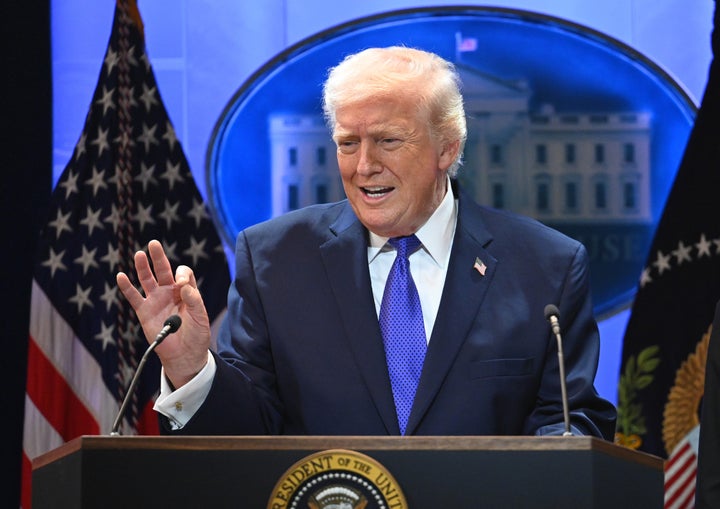
China News Service via Getty Images
DID THE SUPREME COURT TELL HOW TO RETURN THE MONEY?
No. In a dissenting opinion, Justice Brett Kavanaugh said the court’s ruling would likely lead to serious practical consequences in the near term, including refunds. He noted that oral arguments acknowledged that the distribution of refunds would likely be “a disaster.”
The case will now return to the International Trade Court to resolve the refunds.
HOW CAN REFUNDS BE HANDLED?
Importers have filed more than 1,000 claims in the commercial court seeking refunds, and a flood of new cases is likely to emerge.
The court ruled in December that it had the power to reopen final tariff determinations and order the government to pay refunds with interest, an authority the Trump administration said in court it would not challenge. That decision eliminated potential legal complications for refunds, according to trade experts.
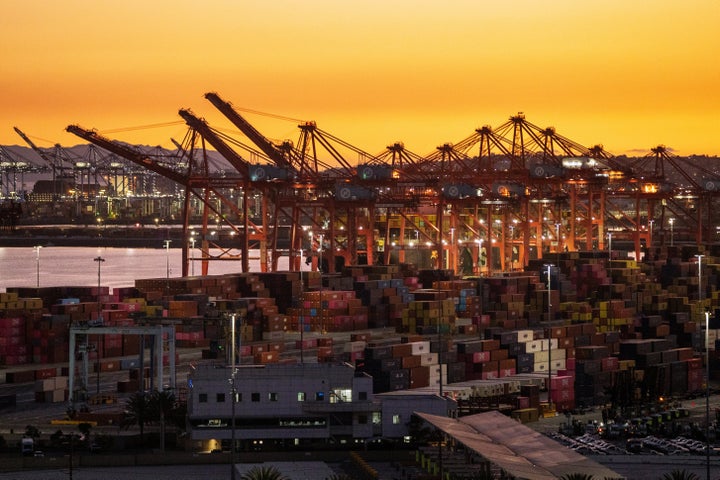
Bloomberg via Getty Images
WHAT WILL IMPORTERS HAVE TO DO TO GET A REFUND?
Each importer may have to file a lawsuit with the International Trade Court for a refund, and it is not clear that a class-action lawsuit can be formed to cover the wide range of companies that paid tariffs, legal experts said. Importers have two years to sue and claim a refund, under US trade law.
The process could disproportionately hurt smaller businesses, many of which were already suffering more from tariffs than well-financed companies like Costco. Lawyers for the importers said some smaller importers might walk away from a potential refund rather than pay thousands of dollars in legal and court fees to file a case.
IS THERE A PRECEDENT FOR THESE REFUNDS?
The International Trade Court has overseen large-scale refunds before. Congress enacted a port maintenance tax in 1986 that was assessed on the value of all cargo entering and leaving U.S. ports. The Supreme Court ruled that part of the tax was unconstitutional in 1998. The International Trade Court oversaw a refund process involving more than 100,000 plaintiffs and that was administered by Judge Jane Restani, who remains on the court.
DOES IT HAVE TO BE A DISPLACEMENT?
Trade experts said the government has tracked tariff payments and improved record-keeping systems that should make it easier to determine the amount of refunds. Small businesses have called on the Trump administration to issue automatic refunds and have expressed concern that the government could scrutinize entry paperwork in a way that slows down the refund process.
Even if the refunds are distributed, some companies that requested them may not get the money. This is because the company may not have been the importer of record, which is the entity responsible for ensuring that imported products comply with regulations and pay tariffs.
Once the refund is distributed, it will be up to the contractual agreement between the company that paid the tariff and the importer of record to determine who ultimately receives the money, creating another potential legal dispute.
The process could take years, trade groups warned.
For that reason, some companies with potential tariff refunds have been selling their potential rights to Wall Street investors.
(Reporting by Tom Hals in Wilmington, Delaware; editing by Amy Stevens, Deepa Babington and Chizu Nomiyama)
Related