



Hurricane Melissa’s death toll nears 50, most in Jamaica and Haiti, as it moves toward Bermuda
/News/AP
The roar of big machinery, the grinding of chainsaws and the slashes of machetes echoed through communities across the northern Caribbean as they recovered from the destruction of Hurricane Melissa and surveyed the damage it left behind.
The deaths of at least 45 people, mostly in Haiti and Jamaica, were blamed on the storm. It also hit Cuba hard.
Authorities said 19 people died in Jamaica, at least 25 in Haiti and at least one in the Dominican Republic.
Melissa was over the open waters of the Atlantic running towards the outskirts of Bermuda Early Friday with maximum sustained winds of 90 mph, the Miami-based U.S. National Hurricane Center said. A hurricane warning was in effect for the wealthy British territory.
But the agency said: “Gradual weakening is expected over the next few days, and Melissa is expected to become a post-tropical depression tonight.”
In Jamaica, government workers and residents began clearing roads in an effort to reach dozens of isolated communities in the island’s southeast that were directly hit by one of the most powerful Atlantic hurricanes ever recorded.
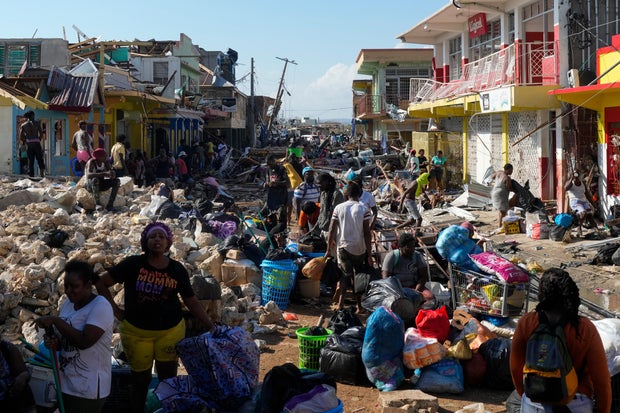
Stunned residents wandered around, some staring at their roofless homes and their soaked belongings strewn around them.
“I’m homeless now,” said Sylvester Guthrie, a resident of Lacovia in the southern parish of St. Elizabeth, as he held his bicycle, the only valuable possession left after the storm.
Emergency relief flights were landing at Jamaica’s main international airport as crews distributed water, medicine and other basic supplies. Helicopters dropped food as they flew over communities where the storm flattened homes, washed away roads and destroyed bridges, preventing them from receiving assistance.
“All of Jamaica is really devastated by what happened,” said Education Minister Dana Morris Dixon.
Authorities said the dead in Jamaica included a child and they expected the death toll to continue rising. In one isolated community, residents begged officials to remove the body of a victim tangled in a tree. On Thursday, dozens of American search and rescue experts landed in Jamaica along with their dogs.
More than 13,000 people remained crammed into shelters, with 72% of the island without power and only 35% of mobile phone sites operational, authorities said. People carried cash as they formed long lines at the few gas stations and supermarkets open in the affected areas.
“We understand the frustration, we understand your anxiety, but we ask for your patience,” said Daryl Vaz, Jamaica’s minister of telecommunications and energy.
Tanker trucks have been mobilized to serve many of Jamaica’s rural communities that are not connected to the government’s utility system, said Water Minister Matthew Samuda.
No deaths reported, but Cuba is far from saved
In Cuba, heavy equipment began clearing blocked roads and paths and the military helped rescue people trapped in isolated communities and at risk of landslides.
No deaths were reported after Civil Defense evacuated more than 735,000 people across eastern Cuba ahead of the storm. Residents were slowly beginning to return to their homes on Thursday.
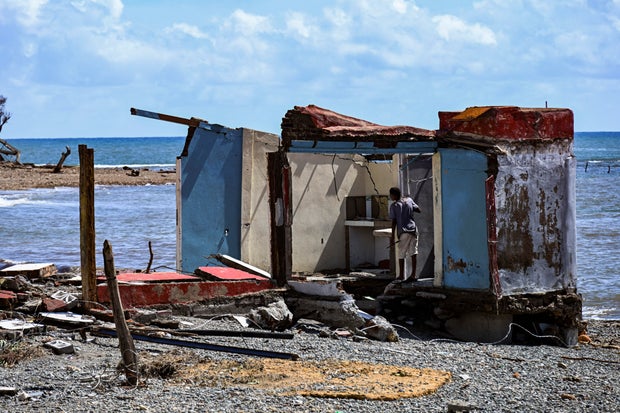
The town of El Cobre in the eastern province of Santiago de Cuba was one of the most affected. Home to about 7,000 people, it is also the site of the Basilica of Our Lady of Charity, the patron saint of Cuba who is deeply revered by Catholics and practitioners of Santería, an Afro-Cuban religion.
“We had a very bad time with this. So much wind, so much wind. The zinc roofs were torn off. Some houses completely collapsed. It was a disaster,” said Odalys Ojeda, a 61-year-old retiree, as she looked at the sky from her living room where the roof and other parts of the house were torn off.
Even the basilica was hit.
“Here in the sanctuary, the carpentry, stained glass and even the masonry suffered extensive damage,” said Father Rogelio Dean Puerta.
A televised Civil Defense meeting chaired by President Miguel Díaz-Canel did not provide an official estimate of the damage. However, officials from the affected provinces – Santiago, Granma, Holguín, Guantánamo and Las Tunas – reported losses of roofs, power lines and fiber optic cables for telecommunications, as well as roads cut off, isolating communities, and large losses in banana, cassava and coffee plantations.
Many communities were still without electricity, Internet or phone service due to downed transformers and power lines.
In an unusual statement on Thursday, the US State Department said Washington was “ready to help the Cuban people.” He said the United States “stands prepared to provide immediate humanitarian assistance directly and through local partners who can deliver it more effectively to those who need it.”
The statement does not specify how cooperation will be coordinated or whether contacts have been established with the Cuban government, with which it maintains a bitter conflict that includes six decades of economic and financial sanctions.
Haiti reeling
Melissa also unleashed catastrophic flooding in Haiti, where at least 20 people were reported missing, most in the southern region of the country. About 15,000 people also remained in shelters.
“It’s a sad moment for the country,” said Laurent Saint-Cyr, president of Haiti’s transitional presidential council.
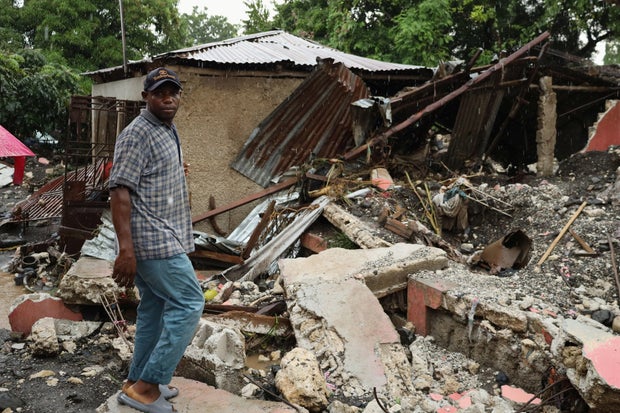
He said officials expect the death toll to rise and noted the government was mobilizing resources to search for people and provide emergency aid.
Haiti’s Civil Protection Agency said Hurricane Melissa killed at least 20 people, including 10 children, in Petit-Goâve, where more than 160 homes were damaged and another 80 destroyed.
Steven Guadard said that Melissa killed his entire family in Petit-Goâve, including four children ranging in age from 1 month to 8 years.
Michelet Dégange, who has lived in Petit-Goâve for three years, claims that Melissa left him homeless.
“There is no place to rest our bodies; we are hungry,” he said. “The authorities don’t think about us. I haven’t closed my eyes since the bad weather started.”
When Melissa made landfall in Jamaica as a Category 5 hurricane with maximum winds of 185 mph on Tuesday, it tied records for the strength of landfalling Atlantic hurricanes in both wind speed and barometric pressure.
Melissa brushed past the southeastern Bahamas on Wednesday, forcing authorities to evacuate 1,400 people ahead of the storm.
In:
- Cuba
- Haiti
- Jamaica
- Hurricane Melissa