



ICE plans operational change after Minneapolis killings: Report
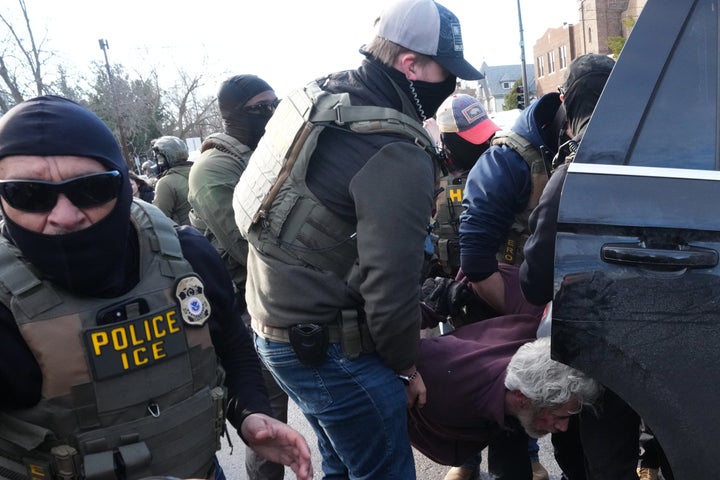
WASHINGTON, Jan 28 (Reuters) – ICE agents in Minnesota were instructed on Wednesday to avoid interacting with “agitators” as they carry out President Donald Trump’s immigration crackdown, according to internal guidance reviewed by Reuters.
The new guidance, which offers the most detailed look yet at how operations would change after two fatal shootings of U.S. citizens protesting in Minneapolis, also directs U.S. Immigration and Customs Enforcement agents to only target immigrants who have criminal charges or convictions.
This would mark a departure from the widespread raids that have sparked backlash and legal challenges in Minneapolis and other American cities.
“DO NOT COMMUNICATE OR WORK WITH AGITATORS,” said an email released by a senior ICE official. “It only serves to inflame the situation. No one is going to convince the other. The only communication should be for the officers to give orders.”
In response to a request for comment to the White House, an administration official said: “There are ongoing conversations about how to conduct operations more effectively in Minnesota. No guidance should be considered final until it is officially issued.”
The operational change comes after Trump said this week that his goal was to “de-escalate” Minneapolis and St. Paul after federal immigration agents killed two U.S. citizens there this month. In both cases, Trump officials quickly portrayed the deceased as attackers, a claim disproved by video evidence. Trump tasked border czar Tom Homan with taking charge of operations in Minnesota, in what a senior official told Reuters would be a shift toward a more “targeted” approach to law enforcement. Border Patrol Commander General Gregory Bovino, who led confrontational raids in Los Angeles, Chicago and other cities, has been demoted and will soon retire, Reuters reported.
Under the new guidelines outlined in the email, ICE agents will be given megaphones so they can issue commands to the public and “need to verbalize each step of the arrest process.”
The guidance does not describe what types of actions would trigger orders or what officers should do if orders are not followed.
AP Photo/Adam Gray
‘Targeted’ arrests and Border Patrol moves to support role
The updated guidance came from Marcos Charles, the top official in ICE’s Enforcement and Removal Operations division, according to the email. He said agents could only target immigration offenders who had prior criminal records.
“We are moving toward targeted enforcement of foreigners with criminal records,” it said. “This includes arrests, not just convictions. ALL TARGETS MUST HAVE A CRIMINAL NEXUS.”
Under former President Joe Biden, ICE agents were required to focus on serious criminals, but the Trump administration rescinded that policy, allowing agents to arrest non-criminals without restrictions.
ICE agents can conduct license plate checks for potential targets and must make an arrest if the vehicle’s registered owner is an immigrant with a criminal record, according to the guidance.
ICE will lead the operation in Minnesota with Border Patrol in a supporting role, he said, a change after months of clashes led by Bovino on city streets.
The guidance states that ICE has been getting more cooperation from state and local officials in Minnesota, and that the agency could have more opportunities to pick up immigrants released on parole or parole.
(Reporting by Kristina Cooke in San Francisco and Ted Hesson in Washington; Editing by Paul Thomasch and Edmund Klamann)