



Iran receives 15-point ceasefire plan from the United States, but rules out the idea of negotiating with Trump
DUBAI, United Arab Emirates (AP) — Iran received a 15-point U.S. plan for a ceasefire in the war against Iran through intermediaries from Pakistan, officials in Islamabad said Wednesday. The proposal was sent even as Washington began sending paratroopers to the Middle East to support a contingent of Marines already heading to the region.
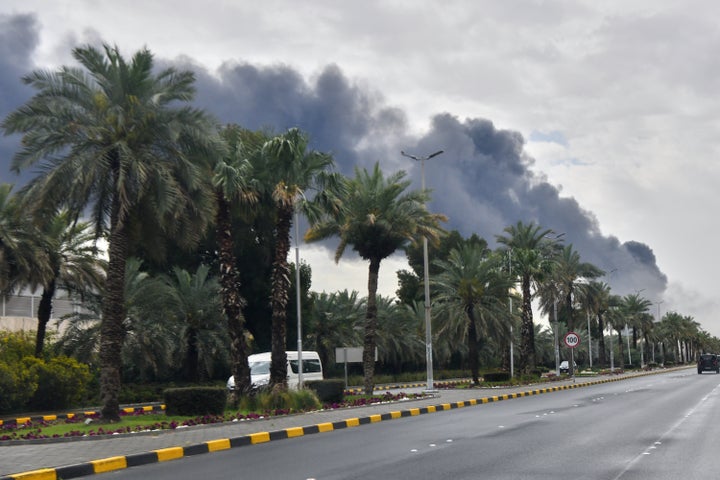
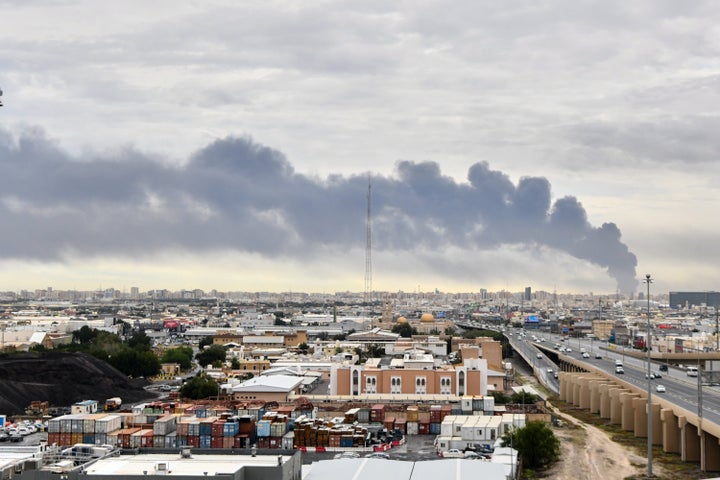
Iran’s military flouted diplomatic efforts and launched more attacks on Israel and the Persian Gulf region on Wednesday, including an attack that sparked a massive fire at Kuwait International Airport, sending black smoke into the sky.
via News
The Pakistani officials, who spoke on condition of anonymity because they were not authorized to disclose details, described the 15-point plan in broad terms as being about sanctions relief, civil nuclear cooperation, rolling back Iran’s nuclear program, monitoring by the International Atomic Energy Agency, missile limits and access for shipping through the Strait of Hormuz.
Iran’s attacks on regional energy infrastructure and its control over the Strait of Hormuz, a strategic waterway through which a fifth of the world’s oil is shipped, have sent oil prices soaring and rattled global markets over fears of a global energy crisis.
More US troops on the way even as diplomacy continues
At least 1,000 soldiers from the 82nd Airborne Division will be sent to the Middle East in the coming days, three people with knowledge of the plans told The News. They spoke on condition of anonymity to discuss sensitive military plans.
The Pentagon is also in the process of deploying two Marine units that will add some 5,000 Marines and thousands of sailors to the region.
AP Photo/Alex Brandon
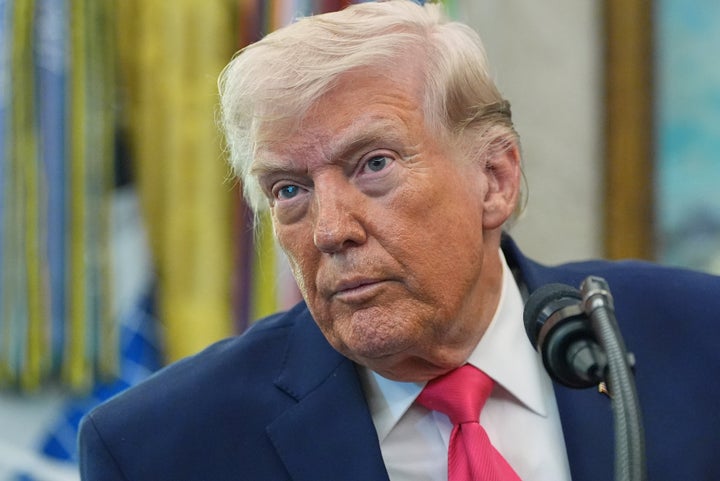
US President Donald Trump has said US officials are in negotiations with Iran, although he has not said who they are in contact with. Iran’s Khatam Al-Anbiya Central Headquarters, which commands both the regular army and the paramilitary Revolutionary Guard, suggested there are no talks.
“Have your internal conflicts reached the point where you are negotiating with yourself?” said Lt. Col. Ebrahim Zolfaghari, headquarters spokesman.
“Our first and last word has been the same since day one, and will continue to be: Someone like us will never come to terms with someone like you,” Zolfaghari said in the video statement broadcast on state television. “Not now nor ever.”
Israeli officials, who have been advocating for Trump to continue the war against Iran, were surprised by the presentation of a ceasefire plan, according to an official briefed on the proposal who spoke on condition of anonymity because he was not authorized to speak publicly about it.
The White House did not respond to requests for comment.
Israel launches new large-scale attacks against Iran
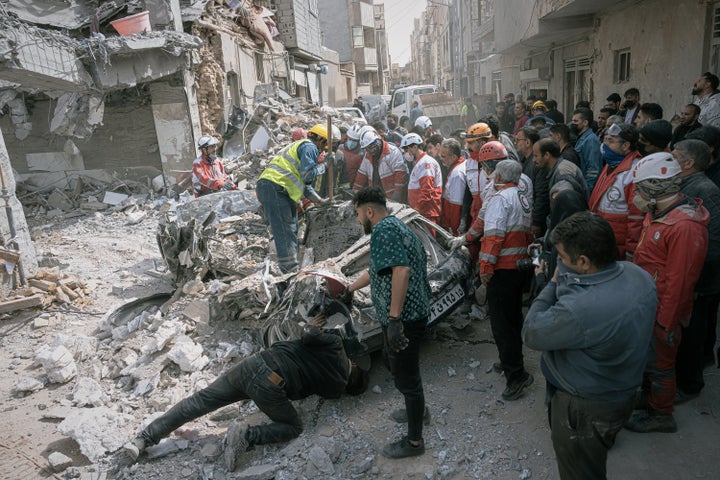
The Israeli military announced it had begun new large-scale attacks on Iran on Wednesday morning, targeting government infrastructure, and witnesses reported airstrikes on the northwestern city of Qazvin.
AP Photo/Matin Hashemi
Missile warning sirens sounded several times in Israel as Iran launched its own attacks, which have been a daily occurrence since Israel and the United States attacked Iran on February 28 to start the war.
Iran also kept up pressure on its Arab Gulf neighbors: Saudi Arabia’s Defense Ministry said it had destroyed at least eight drones in the kingdom’s oil-rich Eastern Province, and missile warning sirens sounded in Bahrain.
Kuwait said it shot down several drones, but one hit a fuel tank at Kuwait International Airport, causing a fire, the General Authority of Civil Aviation said. Firefighters were working to contain the fire.
via News
Brent crude oil, the international standard, approached $120 a barrel during the conflict but was trading around $100 in morning trading as talk of a possible ceasefire helped calm prices. This figure remains almost 40% higher since the beginning of the war.
Iran has allowed a small number of ships through the Strait of Hormuz, which runs from the Persian Gulf to the open ocean, but none from the United States, Israel or countries considered linked to them.
Asked in an interview with India Today on Tuesday whether Iran was charging ships for passage, Iranian Foreign Ministry spokesman Esmail Baghaei said “absolutely” but did not elaborate.
Diplomatic Efforts Calm Energy Prices, But Face Huge Obstacles
The 15-point plan now in Iranian hands is, in essence, “a comprehensive agreement” to reach a ceasefire in the war, according to an Egyptian official involved in the mediation efforts.
In addition to proposing to fully open the Strait of Hormuz, it also includes restrictions on Iran’s missile program and its arming of armed groups, and is being discussed as a basis for future negotiations between the nations, according to the official who spoke on condition of anonymity to discuss the still-released details of the proposal.
Any talks between the United States and Iran would face monumental challenges. Many of Washington’s evolving goals, particularly regarding Iran’s nuclear and ballistic missile programs, remain elusive.
Furthermore, it is unclear who in Iran’s government has the authority to negotiate, or would be willing to do so, as Israel has vowed to continue killing the country’s leaders.
Mediators are pushing for possible in-person talks between the Iranians and the Americans, perhaps as soon as Friday in Pakistan, the Egyptian official and the two Pakistani officials said.
However, that would require Americans to immediately begin traveling from the United States to arrive on time. Meanwhile, Iranian officials are likely to remain concerned about the Israelis, whose wartime airstrikes have killed many officials, including Supreme Leader Ayatollah Ali Khamenei.
Iran is also highly suspicious of the United States, which under the Trump administration has attacked twice during high-level diplomatic talks, including with the attacks that started the current war.
“We have a very catastrophic experience with American diplomacy,” Baghaei told India Today, adding that Iranian Foreign Minister Abbas Araghchi had been in touch with Pakistani and other diplomats, but that “there are no talks or negotiations between Iran and the United States.”
China, which sent a special envoy at the start of the war to push for a diplomatic solution, said Wednesday it supports all efforts to reduce tensions and start peace talks.
Chinese Foreign Minister Wang Yi told Araghchi in a phone call Tuesday that all parties should “seize every opportunity and window for peace” so that peace talks can begin as soon as possible, Foreign Ministry spokesman Lin Jian told reporters Wednesday in Beijing.
Zolfaghari said the United States was not in a position to negotiate.
“The strategic power they used to talk about has become a strategic failure,” he said. “Whoever claims to be a global superpower would have gotten out of this mess by now if they could.”
Trump has said that special envoy Steve Witkoff, his son-in-law Jared Kushner, Secretary of State Marco Rubio and Vice President JD Vance are already involved in the negotiations.
Lebanese authorities say Israeli attacks have killed more than 1,000 people in Lebanon and displaced more than 1 million.
The death toll in Iran has surpassed 1,500, its Health Ministry has said. 16 people have died in Israel. At least 13 US service members have been killed, along with more than a dozen civilians in the occupied West Bank and Arab Gulf states.
___
Madhani reported from Washington, Rising from Bangkok and Ahmed from Islamabad. News writers Samy Magdy in Cairo, Natalie Melzer in Tel Aviv, Israel and E. Eduardo Castillo in Beijing contributed to this report.