



Judge dismisses subpoenas in criminal investigation against Federal Reserve Chairman Jerome Powell
A federal judge dismissed subpoenas filed as part of a criminal investigation against Federal Reserve Chairman Jerome Powell as “mere pretexts” in a decision issued Friday.
Judge James Boasberg’s decision ends the investigation launched by the Trump administration on January 10 into alleged abuses of taxpayer funds incurred during a renovation of the Federal Reserve headquarters. But many, including Powell, understood the investigation as a pretext to remove him or pressure him to lower interest rates according to President Donald Trump’s wishes. Boasberg agreed.
“There is abundant evidence that the dominant (if not sole) purpose of the subpoenas is to harass and pressure Powell into deferring to the president or to resign and make way for a Federal Reserve chair who will do so,” Boasberg wrote. “On the other side of the scale, the Government has offered no evidence that Powell committed any crime other than displeasing the President. Therefore, the Court must conclude that the alleged justifications for these subpoenas are mere pretexts. Therefore, it will grant the Board’s motion to quash.”
The investigation marked the most public confrontation between a president and the Federal Reserve in its history as Trump sought to seize control of the independent agency. After the subpoenas became public, Powell issued an extraordinary statement accusing the administration of creating “pretexts” to remove him from office.
“It’s about whether the Federal Reserve will be able to continue setting interest rates based on evidence and economic conditions, or whether monetary policy will instead be driven by political pressure or intimidation,” Powell said.
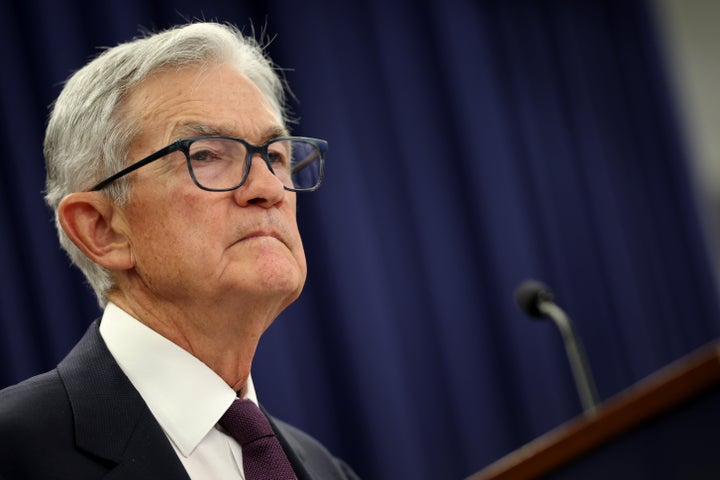
Kevin Dietsch via Getty Images
Since taking office in 2025, Trump has waged a relentless pressure campaign on Powell, whom he first appointed in 2018, to lower interest rates to boost the economy. Powell resisted pressure from Trump, even though the Federal Reserve lowered rates three times in 2025.
Boasberg’s order dismissing subpoenas filed by U.S. Attorney for the District of Columbia Jeanine Pirro includes a voluminous summary of Trump’s online posts pressuring Powell to lower rates and notes that this “mountain of evidence suggests that the dominant purpose is to harass Powell to pressure him to lower rates.”
The decision also states that when Trump’s pressure campaign didn’t work, his appointee at the Federal Housing Finance Authority, Bill Pulte, pushed the idea that Powell’s renovation of the Federal Reserve headquarters somehow violated the law. Pulte’s insinuations previously led to the impeachment and alleged firing of Federal Reserve Governor Lisa Cook. A district court later reinstated Cook and ruled that Trump had no power to fire her. The Supreme Court will issue a final decision in Cook’s case at the end of June.
Trump took up Pulte’s claims and, as Boasberg points out, “the US Attorney’s Office followed suit.”
“In short, the president spent years essentially wondering if no one would rid him of this problematic Federal Reserve chairman,” Boasberg wrote. “He then suggested a specific line of investigation into him, which had been proposed by a political appointee with no role in law enforcement, who suggested it might be a way to remove Powell. The president’s appointed prosecutor quickly complied. Those facts strongly imply that this investigation was initiated for an improper purpose, as do the resulting subpoenas.”
The decision notes that the administration was offered the opportunity to present evidence that could demonstrate wrongdoing by Powell or the Federal Reserve Board, but did not do so.
“Therefore, the Court has no credible reason to think that the Government is investigating suspicious events rather than targeting a disfavored official,” Boasberg wrote.
Following the decision, Pirro told reporters that his office would file a motion to reconsider, claiming Boasberg “got the dates wrong.”
Ironically, this would only hinder Trump’s ultimate goal of replacing Powell, whose term ends in May. Trump has nominated Kevin Warsh to replace Powell, but Sen. Thom Tillis (R.N.C.), the outgoing Republican member of the Banking Committee, has stated that he will not allow Warsh’s nomination to move forward until the administration completes its investigation into Powell.