



Listening to music after age 70 can reduce dementia risk by almost 40%, new study suggests
NEWNow you can listen to News articles!
A new study suggesting that listening to or playing music could reduce the risk of dementia could make you sing a new tune.
Adults over 70 who listen to music regularly were almost 40% less likely to develop dementia, a group of cognitive disorders that cause a decline in memory, thinking and other mental abilities, according to a new study from Monash University in Melbourne, Australia.
Those who always listened to music showed a 39% lower risk of developing dementia and better memory performance, while those who played instruments had a 35% lower risk.
A STUDY REVEALS WHY ‘SUPER AGED’ MAINTAIN ‘EXCEPTIONAL MEMORY’ UNTIL THE AGE OF 80
Doing both offered an even greater protective effect against cognitive decline, the researchers, led by Monash Honors student Emma Jaffa and Professor Joanne Ryan, found.
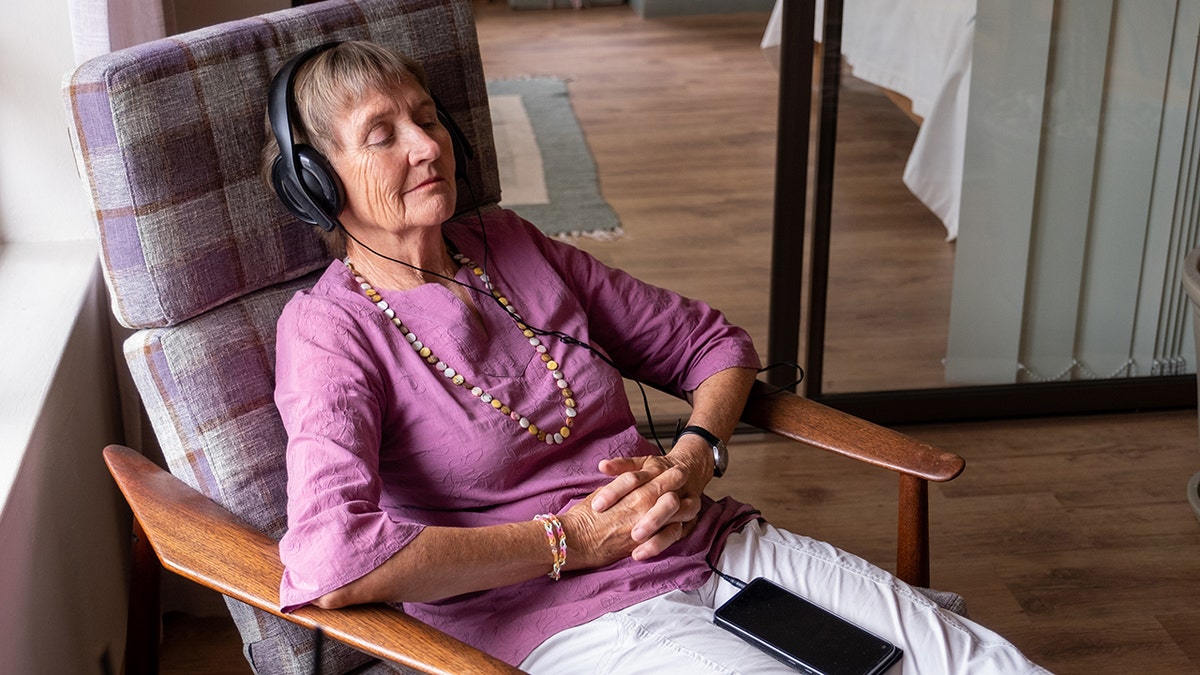
Researchers found that older people who play an instrument or listen to music regularly may have better brain health in later years. (iStock)
“With no cure currently available for dementia, the importance of identifying strategies to help prevent or delay the onset of the disease is critical,” Ryan said in a statement.
“Evidence suggests that brain aging is not based solely on age and genetics, but can be influenced by one’s own environmental and lifestyle choices,” he added.
EVEN SMALL AMOUNTS OF ALCOHOL LINKED TO HIGHER RISK OF DEMENTIA IN OLDER ADULTS, STUDY SHOWS
More than 10,800 adults aged 70 and older were followed for several years as part of long-running Australian studies, and were asked whether they always, often, sometimes, rarely or never listened to or played music, according to the paper published last month in the International Journal of Geriatric Psychiatry.
Listening to and playing music regularly also reduced the risk of mild cognitive impairment, which is less severe than dementia, by 22% and was associated with higher scores on general cognition and episodic memory, which helps people remember everyday events.

Scientists say playing a musical instrument later in life could help strengthen memory and thinking skills. (iStock)
Dementia affects about 57 million people worldwide, according to the World Health Organization, and the findings suggest that music may offer a simple way to help protect cognitive function, but they do not prove that it directly prevents dementia.
TRY OUR LATEST LIFESTYLE QUIZ
“Musical activities may be an accessible strategy to maintain cognitive health in older adults, although causality cannot be established,” the researchers noted.
The overall benefits of music were more pronounced among older adults with higher levels of education (those who had completed at least 16 years of education), while results were mixed for those with a moderate level of education.
CLICK HERE TO SUBSCRIBE TO OUR LIFESTYLE NEWSLETTER
The findings add to growing research showing that creative, social and mentally stimulating hobbies, such as music, reading and art, can help keep the brain healthy later in life, and a 2022 meta-analysis conducted in the US and Japan reported similar benefits for older adults who play musical instruments.

Staying mentally and socially active through hobbies like music can help keep your brain healthy. (iStock)
Dr. Morten Scheibye-Knudsen, associate professor of aging at the University of Copenhagen, cautioned that while mental stimulation is encouraged, the science is not settled on the matter.
CLICK HERE FOR MORE LIFESTYLE STORIES
“In general, training the brain is recommended, but the data is actually not that clear,” he recently told BBC Science Focus, noting that studies on activities such as music, puzzles or learning new skills have shown mixed results.
Still, he noted, “playing an instrument has additional benefits…including increased social interactions, which has been shown to be very important as we age.”
CLICK HERE TO GET THE News APP
News Digital has reached out to the study’s authors for comment.
Deirdre Bardolf is a lifestyle writer at News Digital.