



Live Updates: Iran war keeps oil and gas prices high, with Strait of Hormuz paralyzed despite Trump
Qatar condemns Iranian attack that killed one person in the United Arab Emirates
Qatar on Monday condemned an Iranian attack that it said “led to a missile hitting a civilian vehicle in the Al Bahia area” in the United Arab Emirates, killing one person.
“The Ministry of Foreign Affairs affirms that the continued opening of new fronts by the Islamic Republic of Iran and the widening of escalation with neighboring countries is extremely dangerous,” the ministry said in a statement.
He described the incident as “a serious escalation” and called on Iran “to immediately stop these irresponsible policies that undermine the security and stability of the region.”
Trump on Mojtaba Khamenei: “We don’t know… if he is dead or not”
President Trump was asked about Mojtaba Khamenei on Monday and said, “We don’t know… if he’s dead or not.”
Khamenei, 56, is the second son of the late Supreme Leader Ayatollah Ali Khamenei. He was selected to succeed his father and become Iran’s new supreme leader after his father was killed in American and Israeli attacks.
Trump made the comment before a meeting with the Kennedy Center board of directors, noting that “we haven’t seen” the new supreme leader “at all.”
“No one has seen it, which is unusual,” Trump said.
Read more here.
Iranian military issues vague threat to start attacking ‘US-owned industrial facilities’ in Middle East
Iranian state media on Monday broadcast a statement attributed to the country’s Islamic Revolutionary Guard Corps, vaguely threatening to begin attacks on “US-owned industrial facilities” across the Middle East.
Iran has already launched thousands of explosive drones and hundreds of missiles against US-allied Persian Gulf states, hitting US personnel in bases, energy infrastructure and civilian buildings, killing at least 40 people since the US and Israel launched the war on February 28.
“We warn the defeated US regime to evacuate all US-owned industrial facilities in the region. We also call on civilians in the areas surrounding these industrial facilities to evacuate to avoid damage,” the statement said. “These facilities will be targeted and targeted in the coming hours.”
Last week, Iran’s semi-official Tasnim news agency, linked to the IRGC, published a list of the top US technology companies in a post on social media, including Amazon, Microsoft, Palantir and Oracle, with the caption: “The enemy’s technological infrastructure: Iran’s new objectives in the region.”
Iranian drone attacks have already damaged data centers in the region, affecting Amazon facilities in the United Arab Emirates and Bahrain more than a week ago.
Trump: We want other nations to “help us with the Strait”
President Trump said Monday that the United States has the Strait of Hormuz in “very good condition.” But he encouraged other nations that depend on oil exported through the passage to “come and help us with the Strait.”
“Numerous countries have told me they are on the way,” the president said, although he did not specify which countries would help the United States ensure cross-Strait access. “Some are very excited about this and some are not.”
Trump said Secretary of State Marco Rubio and other administration officials would announce the countries that will help the United States reopen the Strait. He also lashed out at NATO, saying he doubted allies would step in to help the United States when necessary.
“We were going to protect them, but I always said, when we need it, they don’t protect us,” Trump said. “Now this is a necessity.”
Read more here.
Trump talks about Iran before Kennedy Center board meeting: ‘Literally erased’
President Trump said Monday that the United States has “literally destroyed” the Iranian regime as the third week of the war progresses and encouraged other nations to help open the Strait of Hormuz.
“Our powerful military campaign to end the threats posed by the Iranian regime has continued in full force over the last few days. They have been literally destroyed. The Air Force is gone. The Navy is gone. Many, many ships have been sunk,” Trump said. “They’re warships, but I guess they didn’t know how to use them. The anti-aircraft systems are decimated. Their radar is gone and their leaders are missing. Other than that, they’re doing pretty well.”
Trump provided an update on the conflict with Iran before a meeting with the Kennedy Center board of directors. He said more than 100 Iranian naval vessels have been “sunk or destroyed,” including 30 minelayer ships.
The president also said that the US military has struck more than 7,000 targets across Iran, which he said has seen a 90% reduction in ballistic missile launches and a 95% decrease in drone strikes.
Read more here.
Fuel tank fire near Dubai International Airport finally put out, authorities say
The government of Dubai, in the United Arab Emirates, said on Friday that a fire sparked early in the morning by an apparent drone attack had been extinguished and that “cooling operations are now underway.”
The Dubai Media Office said earlier in the day that a “drone-related incident” had sparked the fire, prompting a temporary suspension of flights at the main aviation hub.
Lebanon says death toll from escalating Israeli operation now stands at 886, including 38 health workers
Lebanon’s national Health Ministry said Friday that the death toll from Israel’s still-growing military operation against the Iran-backed Hezbollah group had killed at least 886 people, including 38 health workers.
Israel announced on Monday the start of a ground incursion into southern Lebanon, warning that hundreds of thousands of residents of cities and towns in the large area south of the Litani River would not be allowed to return to their homes until the Israeli army achieved its objectives.
Israeli strikes have also hit some southern suburbs of Beirut in recent weeks, where Hezbollah has had a long-standing presence.
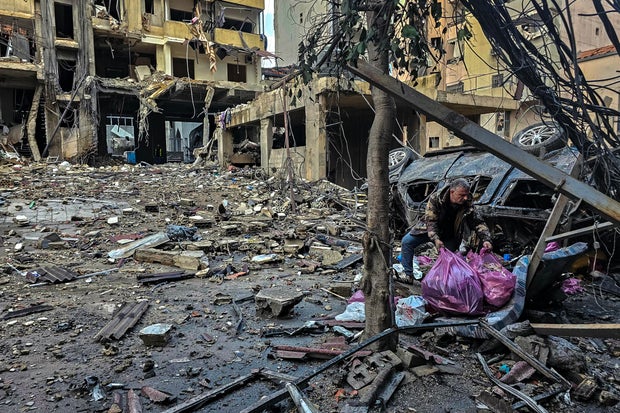
Pope Leo calls on the media to show “the face of war” and to be careful with information “that becomes propaganda”
Pope Leo XIV, the first American to lead the Catholic Church, on Monday called on news organizations to show “the face of war” and ensure stories are told “through the eyes of the victims.”
“In the dramatic circumstances of war, information must be protected against the risk of becoming propaganda,” Pope Leo said in a social media post, calling it “the duty of every journalist to verify the news, so as not to become a megaphone of power. They must show the suffering that war always brings to populations, which implies showing the face of war and telling it through the eyes of the victims.”
This has been a challenge with the ongoing war in the Middle East. While photos and videos are leaked from Iran, the country’s authorities have largely cut off Internet access and strictly control all other media.
Some US allies in the Gulf, which are hit daily by Iran’s retaliatory fire, including the United Arab Emirates, have also banned the sharing of any images showing damage from the attacks.
Gas prices rise and Brent crude remains above $100 per barrel
Gasoline prices rose slightly on Monday and Brent crude remained above $100 a barrel, as the Strait of Hormuza vital sea route for global energy supplies, remains paralyzed amid the Iran war.
The average price of a gallon of gasoline rose to $3.72 on Monday, up from $3.70 on Sunday and represents an increase of nearly 79 cents per gallon from the previous month, according to AAA data.
Brent crude, the international benchmark, fell about 2.4% on Monday to $101.93 a barrel, FactSet data shows. Meanwhile, a barrel of benchmark U.S. crude, West Texas Intermediate, fell 4.1% to $94.62, easing some pressure on the economy after topping $102 earlier in the morning.
Read more here.
News/AP
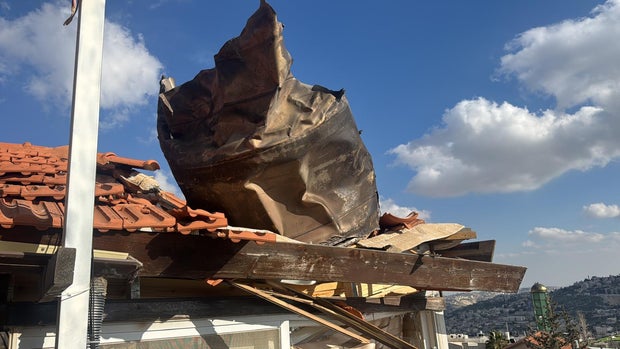
Debris intercepted by Iranian missiles hits buildings in East Jerusalem
Israeli emergency services responded on Friday to multiple sites in East Jerusalem, where debris from Iranian missile interceptions fell to the ground, damaging several buildings.
There were no immediate reports of casualties, but images shared by the National Fire and Rescue Authority showed what the agency said was a large interceptor fragment hitting a residential building in the East Jerusalem neighborhood of Silwan.
Rescuers “acted quickly, searched the area and ruled out the presence of anyone trapped” in the rubble, the rescue agency said.
Qatar says it intercepted two waves of Iranian missiles today
Qatar’s Defense Ministry said on Monday it had “successfully intercepted a second wave of missile attacks,” as Iran continued to launch missiles and drones at Persian Gulf countries.
The country reported an initial salvo of missiles early Monday, but there were no immediate reports of impact damage or debris from the interceptions.
A PBS reporter says Trump told her, “I don’t think it’ll be long” before the war ends and oil prices “drop like a rock.”
PBS News Hour White House correspondent Liz Landers said Monday that President Trump had told her in a brief phone interview that he expected oil prices to “drop like a rock as soon as it’s over,” referring to the war with Iran.
“I don’t think it will be long,” Landers said the president responded when asked for a timeline.
White House says Trump is right to ask allies to help reopen Strait of Hormuz, because they are “benefiting greatly”
News themezone’ Nancy Cordes asked White House Press Secretary Karoline Leavitt on Monday why other countries should respond to President Trump’s call to help safeguard ships in the Strait of Hormuz. given that they were not consulted or involved in the US and Israeli attacks on Iran that sparked the ongoing war.
“Because these other countries are benefiting greatly from the US military eliminating the threat from Iran,” Leavitt responded. “The rogue Iranian regime has long not only posed a threat to the United States of America, but, of course, to our Arab and Gulf partners in the region. Therefore, these countries are absolutely benefiting from ensuring that Iran can never obtain a nuclear weapon. This is something that not only the United States, but the entire Western world has agreed on for many, many years.”
He was asked why Trump told the UK this earlier. In the month that the United States did not need to send British aircraft carriers to help with the war effort, Leavitt pointed to Trump’s comments on Air Force One on Sunday night, when he told reporters that he wished Britain had intervened sooner and that he continues to talk to America’s allies and “ask them to do more.”
Leavitt did not reveal what plans the White House might be formulating to address Iran’s threat to shipping in the Strait of Hormuz if other countries decide not to help reopen the waterway.
Iran ‘determined to defend nation for as long as necessary’, says Foreign Ministry
Iran’s embattled theocratic rulers remain “determined to defend the nation for as long as necessary, until the enemy realizes that it cannot start a war against Iran whenever it wants, nor can it stop it at will,” Esmaeil Baqaei, a spokesman for Iran’s Foreign Ministry, said Monday in remarks broadcast on Iranian state television.
Citing the previous attack between the United States and Israel in June 2025, which, like the current war, was launched while Tehran was engaged in negotiations over its nuclear program, Baqaei said Iran would not accept that its enemies can “light a fire of war against our country, impose it and then, when it suits them – when they face problems in supplying equipment or defending themselves – propose a ceasefire, only to restart such aggression after a short time.”
“We did not start this war. Our nation will not accept that its country is attacked twice in nine months while they were engaged in diplomatic negotiations with diligence and good faith,” Baqaei said.
Kremlin spokesman says US-Israel war with Iran could increase Russian revenues
Russia’s widely read business newspaper Kommersant quoted Kremlin spokesman Dmitry Peskov as saying on Monday that rising global oil prices could help boost Russian state revenues.
Peskov specifically cited the Iranian regime’s stranglehold on the Strait of Hormuz as driving up energy prices. He pointed to the Trump administration’s controversial decision, seen as an attempt to keep gas prices in the United States under control, to temporarily ease sanctions against Russiaauthorizing the sale of Russian oil already loaded on tankers.
US Treasury Secretary Scott Bessent said when the measure was announced that it “would not provide a significant financial benefit to the Russian government, which derives most of its energy revenue from taxes levied at the point of extraction.”
UK to work with allies on ‘viable collective plan’ to reopen Strait of Hormuz
British Prime Minister Keir Starmer says the UK will not be drawn into a wider war in Iran but will work with its allies to create a “workable collective plan” to reopen the Strait of Hormuz to maritime traffic, a challenge he warns “will not be easy”.
Trump rebuked Starmer for a perceived lack of support for the war after the British leader refused to allow the United States to use British bases to attack Iran. He later granted U.S. forces permission to use three key bases, but only for defensive purposes, not to attack Iran.
Asked about any international efforts underway to reopen the Strait, Starmer said the UK “will ensure that it involves as many partners as possible”.
“To say the least, it’s not easy,” he said. “But we need to make sure we have a credible plan. In terms of what the precise options are, our mine hunting systems are already installed in the region. We have already talked about anti-drone capabilities, but it is not just about what the UK can do, this is how we can play a role in bringing all this together behind a viable plan. We are looking at the options. It is difficult, of course, let’s not hide it. Ultimately, we need to get the Strait opened. Otherwise, prices will continue going up.”
UAE says it ‘dealt with’ 6 Iranian missiles and 21 drones on Monday alone
The UAE Defense Ministry said the country “faced six ballistic missiles and 21 drones originating from Iran” on Monday alone.
“Since the start of the blatant Iranian strikes, UAE air defenses have engaged 304 ballistic missiles, 15 mobile missiles and 1,627 drones” in total, the ministry said, noting that the strikes had killed two members of the UAE armed forces, along with five civilians of Pakistani, Nepali, Bangladeshi and Palestinian nationality.
The statement said the UAE “stands ready to confront any threat and firmly address anything that aims to destabilize the security of the State, in a manner that ensures the preservation of its sovereignty, security and stability, and protects its national interests and capabilities.”
First non-Iranian oil tanker sails openly through Strait of Hormuz, suggesting ‘negotiated safe passage’, group says
Maritime monitoring group MarineTraffic said Monday that for the first time since the United States and Israel launched their war against Iran, a non-Iranian cargo ship safely transited the Strait of Hormuz with its Automatic Identification System (AIS) on, “suggesting that select shipments may be receiving negotiated safe passage” from Iran.
The ship monitoring organization said its data showed that the crude oil tanker “entered Iran’s Exclusive Economic Zone on March 15 at 11:33 UTC and crossed the Strait of Hormuz at 14:43 UTC. The vessel is currently sailing in the Gulf of Oman at around 9.6 knots, having successfully crossed the strait with AIS active.”
The group released a map showing the ship’s route through the strait and said the voyage followed “weeks of significantly reduced traffic through the strategic waterway.”
The first non-Iranian cargo transits the Strait of Hormuz with AIS activated
The Aframax Karachi tanker, carrying Abu Dhabi’s Das crude, has become the first non-Iranian cargo to transit the chokepoint while transmitting its AIS signal, suggesting select shipments may be receiving… pic.twitter.com/Q6j6W3Cxz3
– MarineTraffic (@MarineTraffic) March 16, 2026
The fifth member of Iran’s women’s soccer team changes her mind after accepting asylum in Australia
Another member of the Iranian women’s soccer team who accepted a refugee visa staying in Australia has decided to return to his homeland, a sports official said on Monday.
That leaves two of the squad’s initial seven members who accepted asylum and who are sticking to their original decisions.
The Iranian women’s soccer team had not yet revealed its plans to leave Malaysia when most of the seven team members who created a diplomatic furor by accepting asylum in Australia a week ago had joined their teammates in Kuala Lumpur, the sports official said.
The team flew out of Sydney on March 10 after being eliminated from the Women’s Asian Cup in Australia, leaving behind six players and one support staff member who had accepted protection visas.
Four players and staff have since rejoined the team. in Kuala Lumpur, the last flight on Monday. No reasons have been given for the changes of opinion, but the Iranian diaspora in Australia blames pressure from Tehran.
News/AP
Read more here.
Israel says ground invasion of Lebanon is underway and blames Hezbollah for displacing hundreds of thousands of people
Israeli Defense Minister Israel Katz said on Monday that forces had “begun a ground maneuver in Lebanon” and that hundreds of thousands of people forced to evacuate their homes in a vast swath of southern Lebanon “will not return to their homes” until the threat from the Iran-backed Hezbollah group in the region is eliminated.
“Prime Minister Benjamin Netanyahu and I have instructed the IDF to take action and destroy terrorist infrastructure in Lebanon’s border villages, to prevent threats and the return of Hezbollah there,” Katz said, pledging that the U.S.-Israeli designated terrorist group would “pay high prices for its aggression and activity in the Iranian axis to destroy Israel.”
He said Israeli leaders had “promised security to the residents of the north and that is exactly what we will do.”
Katz accused Hezbollah leader Naim Qassem of “hiding underground and turning more than a million Shiites from his community into refugees in his own country.”
Europe seeks ‘more clarity’ on US-Israeli goals as allies mull Trump’s demand for help in Strait of Hormuz
The European Union is seeking more strategic clarity on US and Israeli plans for Iran and when the conflict could end, as the bloc considers whether to send ships to help bolster security in the Persian Gulf.
Without confirming any specific international commitments, President Trump said in a social media post on Saturday that “many countries, especially those affected by Iran’s attempted closure of the Strait of Hormuz, will send warships, along with the United States of America, to keep the Strait open and safe.”
He said that “hopefully China, France, Japan, South Korea, the United Kingdom and others” would send warships to join a potential effort to escort ships through the Strait, which experts say would be the first require further degradation of Iran’s offensive capabilities.
“We are interested in keeping the Strait of Hormuz open, and that is why we are also discussing what we can do about it from the European side,” Kaja Kallas, the EU’s foreign policy chief, said on Monday before a meeting of the 27-nation bloc’s foreign ministers in Brussels.
Kallas said the EU could expand its Operation Aspides naval mission to protect shipping in the Red Sea to the Persian Gulf, or it could form a “coalition of the willing” with member countries contributing military capacity on an ad hoc basis.
France has said it is working with other countries on a possible international mission to escort ships through the strait, but has stressed that it must be when “circumstances allow”, when the fighting has subsided.
German Foreign Minister Johann Wadephul He said it was important for the United States and Israel to define “when they consider the military objectives of their deployment have been achieved,” adding: “We need more clarity here.”
Luxembourg Foreign Minister Xavier Bettel said the EU remains non-committal to any military action.
“The fact is that, at the moment, the EU is not directly part of the situation. So we have to decide whether we are going to be part or not. That is an important decision,” Bettel said.
News/AP
Israel says it destroyed plane used by Iran’s supreme leader
Israel’s military said in a statement on Monday that it had destroyed the plane used by Iran’s supreme leader with a “precise strike” at Tehran’s Mehrabad airport.
“The plane was used by Ali Khamenei, the supreme leader of the Iranian terrorist regime, other senior Iranian officials and military personnel,” the Israel Defense Forces said, adding that “the decommissioning of the plane disrupts the Iranian regime’s leadership’s coordination capabilities with the Axis countries, its military force buildup efforts, and its ability to rehabilitate its capabilities. As a result, another strategic asset of the regime has been downgraded.”
New Supreme Leader Mojtaba Khamenei, son of the last Iranian leader mentioned in the IDF statement, has yet to be seen in public since he was handed over the leadership more than a week ago.
Defense Secretary Pete Hegseth said last week that the new leader was “wounded and likely disfigured,” possibly in the same attack that killed his father, although U.S. officials have not confirmed his condition.
Iranian drone attack causes ‘significant fire’ in UAE’s Fujairah oil patch
Authorities in the United Arab Emirates said they were working Monday to contain a fire caused by a drone attack in the oil industries area of Fujairah.
The Fujairah regional government said no injuries were reported, but did not give any information on how much damage the fire may have caused to the coastal region’s oil infrastructure.
Iran’s retaliatory fire has been disproportionately directed at the United Arab Emirates, with some 309 missiles and around 1,600 drones targeted at the Gulf state since the war began. Most weapons are intercepted or insufficient, but seven people have been killed so far in the United Arab Emirates and there is growing concern that at least some Persian Gulf nations are running dangerously short of interceptors used to shoot down Iranian missiles.
Israel says more than 70% of Iran’s missile launchers and 85% of its defenses destroyed
Israel’s military said on Monday that with the joint US war against Iran in its third week, the strike on the Islamic Republic had destroyed more than 70% of the regime’s missile launchers and “neutralized more than 85% of the regime’s detection and defensive capabilities.”
“We have attacked more than 100 production and weapons targets. We have attacked more than 500 command and control targets, undermining the regime’s ability to manage its attacks. 400 waves of attacks have been carried out across Iran,” Israel Defense Forces spokesman Lt. Col. Nadav Shoshani said Monday.
“We continue to maintain the operational advantage over the Iranian regime, establishing the first 24 hours and so far maintaining air security, suppressing its offensive capabilities in real time in a combination of intelligence advantage, air advantage, eye in the sky and real-time high-level intelligence that is being produced by thousands of Israelis working around the clock,” he said.
Shoshani said Israel was “focused on achieving maximum achievements in a minimum period of time and ready to operate for as long as necessary,” stating that he had “identified declining morale and even refusals to follow orders” among Iranian forces.
He said there had also been “significant hits to the Iranian missile production industry, effectively eliminating its ability to manufacture missiles.”
UAE says air defense systems intercept missiles, drones
The United Arab Emirates’ air defense systems intercepted Iranian missiles and drones on Monday, the Gulf nation’s Defense Ministry said.
“UAE air defenses are currently responding to incoming missile and drone threats from Iran,” the UAE Ministry of Defense posted on social media.
Earlier, Dubai authorities said a “drone-related incident” had caused a fire near the airport and that flights had been temporarily suspended.
Dubai airport gradually resumes flights after nearby drone catches fire
A “drone-related incident” caused a fire in a fuel tank near Dubai airport on Monday and interrupted trip as Iran maintained its attacks in the Gulf, although officials said flights were gradually resuming.
“Flights to and from DXB are gradually resuming to selected destinations, following the temporary suspension implemented as a precautionary measure,” Dubai Airports said in a statement on social media.
The latest incident near what is typically the world’s busiest airport for international travel involved a fuel tank, Dubai’s press office said, later adding that authorities had contained a fire that broke out and no injuries were reported.
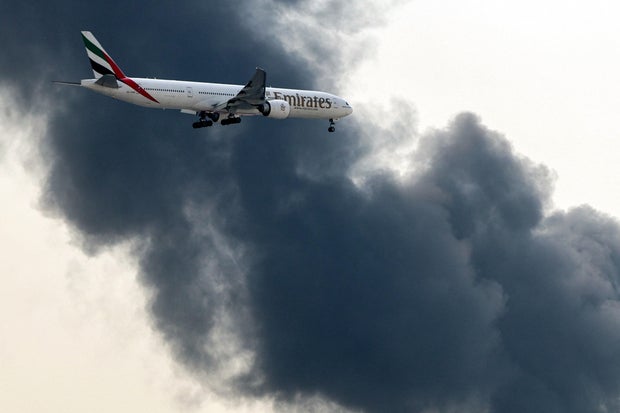
Two witnesses told News they saw thick black smoke rising from the airport around 10am local Dubai time, hours after the incident.
A witness at Dubai airport told News that passengers waiting for their flights were evacuated to a lower floor after the attack for several hours.
Iran attacks against Gulf states continue
Later, the UAE Defense Ministry said its forces were working to intercept another round of Iranian missiles and drones.
Saudi Arabia said it had intercepted a wave of 35 Iranian drones launched in its eastern region, home to major oil facilities.
Israel’s military said early Monday that Iran also launched missiles toward Israel.
One dead when missile hits civilian car in Abu Dhabi, authorities say
A Palestinian civilian was killed on the outskirts of the Emirates capital Abu Dhabi when a missile hit his car on Monday, officials said, as Iran continues its attacks on Gulf nations following US and Israeli attacks on Iran.
“Authorities of the Emirate of Abu Dhabi responded to an incident in the Al Bahia area involving a missile attack on a civilian vehicle, which resulted in the death of a Palestinian citizen,” the Abu Dhabi Media Office said in a statement.
Israeli army begins “limited and selective” ground operations against Hezbollah in southern Lebanon
Israeli troops have “begun limited, targeted ground operations against key Hezbollah strongholds in southern Lebanon,” the Israel Defense Forces said on social media on Monday.
The IDF said the move is “intended to improve the forward defense area” and is “part of broader defensive efforts to establish and strengthen a forward defensive posture, which includes the dismantling of terrorist infrastructure and the elimination of terrorists operating in the area, to create an additional layer of security for the residents of northern Israel.”
Rep. Dan Crenshaw says sending US troops to the Middle East is not a ‘deployment of boots on the ground’
Texas Republican Rep. Dan Crenshaw said sending U.S. troops to the Middle East should not be taken as a “field deployment, especially with only 5,000 troops.”
The Pentagon plans to send up to 5,000 additional sailors and Marines to the Middle East as the conflict with Iran escalates, News themezone learned last week.
Crenshaw, who served as a Navy SEAL, said in “Take on the Nation with Margaret Brennan” Sunday that these troops could be deployed for various operations that may be necessary, including the evacuation of American citizens from allied Gulf countries.
“The rules of engagement will be very clear and in place and written for our troops,” he said.
Read more here.
Trump says he could delay trip to China as he pressures Beijing to help reopen Strait of Hormuz
President Trump is suggesting he could delay his long-awaited visit to China later this month as he seeks to increase pressure on Beijing to help reopen the Strait of Hormuz and calm oil prices that have soared during the Iran war.
In an interview Sunday with the Financial Times, Trump said China’s dependence on Middle East oil means it should help with a new coalition he is trying to form to get tanker traffic moving through the strait after threats from Iran have choked off global oil flows. Trump said “we’d like to know” before the trip whether Beijing will help. “We may be delayed,” he said in the interview.
The uncertainty underscores the extent to which the US and Israeli attacks on Iran have reshaped global politics in the past two weeks. Canceling the face-to-face visit with Chinese President Xi Jinping could have its own major economic consequences: Relations between Washington and Beijing have been strained as both sides have threatened the other with high tariffs over the past year.
The White House did not immediately respond to requests for comment.
Lin Jian, a spokesperson for China’s Foreign Ministry, said at a news conference on Monday that China and the United States are “maintaining communication regarding President Trump’s visit to China,” but did not address Trump’s pressure on NATO allies and China to help reopen the Strait of Hormuz, according to the French news agency News.
News/News
Trump says he is in contact with “about seven” countries over the Strait of Hormuz
President Trump told reporters Sunday night that he has been in contact with “about seven” countries to help reopen the Strait of Hormuz, but did not say which ones.
Trump insisted: “It’s something we don’t need. And these countries do need it.”
Trump said oil prices “are going to drop as soon as this is over, and it will be over pretty quickly,” but he did not provide a timetable.
“They’re decimated. But I think we’ve hurt them right now. If we leave right now, it would take them 10 years and more to rebuild. But I’m not going to declare this over yet,” Trump said.