



Not all cancers should be treated immediately, medical experts say, here’s why
NEWNow you can listen to News articles!
When someone is diagnosed with cancer, the initial reaction is usually to undergo treatment as quickly as possible, but for some types of diseases, doctors may recommend a more conservative approach.
For certain types of cancer, immediate or aggressive treatment can cause more harm than good, according to several medical experts.
For example, treating slow-growing tumors with surgery, radiation, or chemotherapy could result in significant side effects without a survival benefit.
PROSTATE CANCER PATIENTS HAVE LONGER SURVIVAL WITH NEW COMBINATION MEDICATION
“The fact that so many cancers will never kill someone is no justification for not knowing, because there is still a lot of room for ‘watchful waiting,’ as well as interventions that can improve quality of life even if they don’t prolong life,” Dr. Marc Siegel, News senior medical analyst, told News Digital.
This is especially true as targeted cancer treatments emerge, which are more personalized and less likely to cause serious side effects, according to the doctor.

For very early-stage precancerous breast conditions, careful monitoring may be more prudent than immediate surgery, research shows. (iStock)
“The fact that cancers occur earlier is a justification for increased screening, not the opposite,” Siegel added. “Information is power; what you do with that information is based on clinical judgment and the art of medicine.”
Here are some types of cancer that may not warrant treatment, based on research and doctors’ recommendations.
No. 1: Prostate cancer (low risk)
While some types of prostate cancer need to be treated right away, others are best treated with “watchful waiting,” according to Sanoj Punnen, MD, a urologic oncologist at Sylvester Comprehensive Cancer Center, part of the University of Miami Health System.
“With respect to prostate cancer, for most low-risk cancers (Gleason 6 or grade group 1), we recommend initial observation and surveillance rather than immediate treatment,” he told News Digital.
NEW PROSTATE CANCER TEST IDENTIFIES DISEASE BETTER THAN PSA OPTION, STUDY FINDS
The Gleason score is a grading system that grades prostate cancer cells in terms of how abnormal they are, with 6 being the lowest grade and 10 being the highest grade (barely resembling normal cells).
“For high-grade tumors like Gleason 8, 9 or 10, we believe they progress rapidly, so we recommend treatment to prevent the risk of metastasis,” said Punnen, who is also vice president of research and professor at UHealth’s Desai Sethi Urology Institute. “For low-risk tumors, we think they pose little risk, so we simply recommend observation.”
“The fact that cancers occur earlier is a justification for intensifying screening, not the opposite.”
“But in the end, we can’t be sure, so our observation method includes serial monitoring of the cancer status with PSA, MRI, and occasional biopsy to ensure the tumor is not progressing.”
No. 2: Ductal carcinoma in situ (DCIS)
Also known as stage 0 breast cancer, DCIS is a non-invasive disease characterized by abnormal cells in the lining of the milk ducts of the breast. “In situ” is Latin for “in the original place,” which indicates that the cancer has not spread outside the milk ducts.
For this very early-stage, precancerous breast condition, careful monitoring may be more prudent than immediate surgery, research shows.

While some types of prostate cancer need to be treated right away, others are best treated with “watchful waiting,” according to a urologic oncologist. (iStock)
A 2024 study by the Dana-Farber Cancer Institute found that active monitoring for DCIS resulted in similar quality of life, mental health, and symptom progression over a two-year period compared to a standard surgical approach.
NEW STUDIES QUESTIONS WHETHER ANNUAL MAMMOGRAPHS ARE NECESSARY FOR MOST WOMEN
“These results suggest that, in the short term, active monitoring is a reasonable approach for the treatment of low-risk DCIS,” the lead researcher said in a news release. “If long-term follow-up supports the safety of active treatment from a cancer outcome perspective, this approach could be considered as an option for women with this condition.”
“But it’s also critical that we understand how women feel when they live with this ‘watch and wait’ approach and how it affects their overall quality of life.”
Other research has suggested that women with low-risk DCIS did not have a higher rate of invasive cancer after two years of active follow-up, although each patient should discuss their individual risk level with an oncologist.
#3: Indolent (slow-growing) lymphomas
Non-Hodgkin lymphoma (NHL) is a type of cancer that begins in the lymphatic system, which includes the lymph nodes, spleen, thymus, bone marrow, and other tissues.
Indolent lymphomas are those that “grow and spread slowly,” according to the American Cancer Society.
THE DEADLY CANCER HIDING IN PLAIN SIGHT AND WHY MOST PATIENTS NEVER GET TESTED
The National Comprehensive Cancer Network (NCCN) recommends watchful waiting for asymptomatic slow-growing follicular lymphoma as a way to avoid the toxicity of chemotherapy and immunotherapy until absolutely necessary.
The Lymphoma Research Foundation confirms that doctors recommend “active surveillance” for some patients with slow-growing lymphoma.
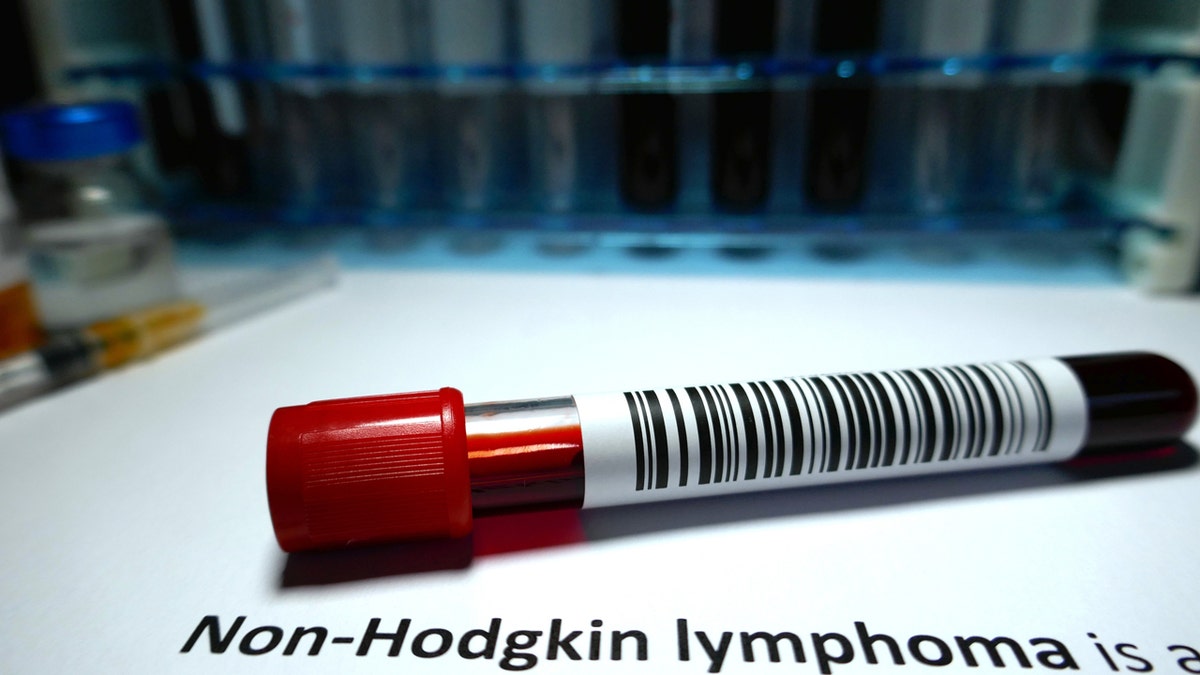
Indolent lymphomas are those that “grow and spread slowly,” according to the American Cancer Society. (iStock)
“This treatment can be started after the initial diagnosis or after a relapse, depending on the situation,” the foundation states on its website. “Active treatment is started if the patient begins to develop lymphoma-related symptoms or if there are signs that the disease is progressing.”
Treatment should be started immediately for aggressive (fast-growing) lymphomas.
No. 4: Chronic lymphocytic leukemia
One of the most common leukemias in adults, chronic lymphocytic leukemia (CLL), originates in white blood cells (lymphocytes) in the bone marrow and then spreads to the bloodstream, according to the American Cancer Society.
CLL tends to grow slowly and many patients do not experience symptoms for years. Over time, cancer sores can spread to the lymph nodes, liver, and spleen.
An innovative blood test could detect dozens of cancers before symptoms appear.
Some studies have shown that early treatment of CLL does not improve survival rates compared with observation and that the benefits may not outweigh the risks.
In a 2023 study presented at the 2023 European Hematology Association Congress in Frankfurt, Germany, researchers found that early treatment did not prolong overall survival compared with a placebo in patients with early asymptomatic CLL.
CLICK HERE TO SUBSCRIBE TO OUR HEALTH NEWSLETTER
“I think it’s fair to conclude that ‘watch and wait’ should remain the standard of care in the era of targeted drugs,” said researcher Petra Langerbeins, MD, presenting the findings.
No. 5: Low-grade endometrial cancer
For most patients with endometrial cancer, surgery is the first treatment, which involves removing the uterus, fallopian tubes and ovaries, according to the American Cancer Society.
However, in certain patients with low-grade cancer, such as older people, those with “frailty,” and people with significant health problems, doctors may recommend postponing surgery, which may pose a high risk.

The American Thyroid Association guidelines officially recommend active surveillance for very low-risk microcarcinomas. (iStock)
In cases where the patient has medical comorbidities or wants to preserve fertility, hormonal treatment may be used instead of surgery, according to the ACS.
“It is usually also considered for lower-grade, low-volume, slow-growing cancer,” said the source mentioned above.
No. 6: Some early kidney cancers
In cases of kidney cancer with small tumors (≤3 cm) or benign lesions, doctors may recommend monitoring them rather than having surgery to remove them.
CLICK HERE FOR MORE HEALTH STORIES
The American Urological Association confirms that active surveillance is an option for some small renal masses (localized tumors).
“I think it’s fair to conclude that ‘watch and wait’ should remain the standard of care in the era of targeted drugs.”
Deferred treatment is especially recommended for older patients or those with “significant comorbidities,” research shows.
“Shared decision-making on active surveillance should consider the risks of the intervention/competing mortality versus the potential oncologic benefits of the intervention,” the UAU states in its guidance.
CLICK HERE TO DOWNLOAD THE News APP
Data from the Deferred Intervention and Surveillance Registry for Small Renal Masses (DISSRM) showed that patients with active surveillance had a cancer-specific survival rate of 99% or greater, virtually the same as patients who received immediate treatment.
No. 7: Small papillary thyroid cancers
Papillary thyroid cancer (PTC), the most common type of thyroid cancer, may not warrant treatment for small tumors measuring 1 centimeter (10 mm) or smaller, which are called microcarcinomas.

A young multiracial woman undergoes a medical imaging procedure in a state-of-the-art hospital with a CT simulator. The image illustrates the use of cutting-edge technology for healthcare and treatment in a modern medical environment. The portrait highlights the precision, care and sophistication of contemporary medical practices. (iStock)
The research found that when active surveillance was used for 10 to 20 years, less than 10% experienced significant growth, only 5% developed lymph node spread, and there were no deaths from thyroid cancer.
The American Thyroid Association guidelines officially recommend active surveillance for very low-risk microcarcinomas.
TRY OUR LATEST LIFESTYLE QUIZ
While many patients with low-risk tumors can safely delay treatment, this does not apply to all cancers or all patients.
As cancer behavior and personal health factors vary widely, patients should consult their physician to determine the course of treatment. ntion most appropriate based on your individual risk level.
Melissa Rudy is a senior health editor and member of the lifestyle team at News Digital. Story tips can be sent to melissa.rudy@News.com.