



Scientists detect skyscraper-sized asteroid racing through solar system
NEWNow you can listen to News articles!
Astronomers have reportedly discovered a skyscraper-sized asteroid moving through our solar system at a near-record pace.
The asteroid, called 2025 SC79, orbits the Sun once every 128 days, making it the second-fastest known asteroid to orbit the solar system.
It was first observed by Carnegie Science astronomer Scott S. Sheppard on September 27, according to a statement from Carnegie Science.
UFO mania grips small town after mysterious sighting of glowing objects goes viral
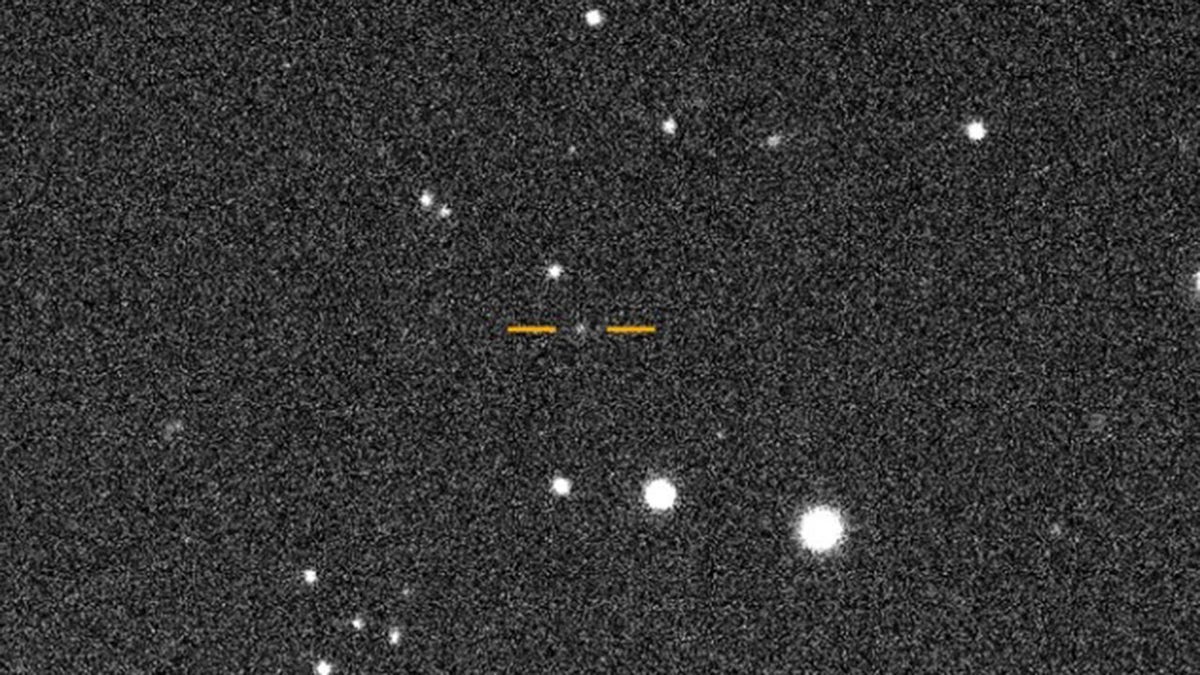
A skyscraper-sized asteroid, called 2025 SC79, was discovered hidden in the sun’s glare in September. (Carnegie Science)
The asteroid is the second known object with an orbit inside Venus, according to the statement. It crosses Mercury’s orbit during its 128-day journey around the sun.
“Many of the solar system’s asteroids inhabit one of the two space rock belts, but perturbations can send objects into closer orbits where they may be harder to detect,” Sheppard said. “Understanding how they got to these places can help us protect our planet and also help us learn more about the history of the solar system.”
The celestial body is now traveling behind the Sun and will be invisible to telescopes for several months.
HARVARD PHYSICIST SAYS MYSTERIOUS INTERSTELLAR OBJECT COULD BE A NUCLEAR DRIVE SPACECRAFT
Sheppard’s search for so-called “twilight” asteroids helps identify objects that could pose a risk of crashing into Earth, according to the statement.
The work, partially funded by NASA, uses the dark energy camera on the National Science Foundation’s 4-meter Blanco telescope to search for “planet-killer” asteroids in the sun’s glare that could pose a danger to Earth.
The NSF’s Gemini telescope and Carnegie Science’s Magellan telescopes were used to confirm the sighting of 2025 SC79, Carnegie Science said.
The fastest known asteroid was also discovered by Sheppard, who studies solar system objects including moons, dwarf planets and asteroids. and his colleagues in 2021.
CLICK HERE TO GET THE News APP
It takes 133 days to orbit the sun.