



Supreme Court appears inclined to limit race-based voting districts under Voting Rights Act
WASHINGTON (AP) — The Supreme Court on Wednesday appeared inclined to limit the use of the Voting Rights Act to force states to draw congressional districts favorable to minority voters.
The court’s six conservative justices, to one degree or another, seemed like they would vote to effectively repeal a majority-black House district in Louisiana because it depended too much on race.
Such an outcome could mark a fundamental change in the voting rights law, the central legislation of the Civil Rights Movement, which succeeded in opening the polls to black Americans and reducing persistent discrimination in voting.
A ruling for Louisiana could open the door for legislatures to redraw congressional maps across the South, which could boost Republican electoral prospects by eliminating majority-Black and Latino districts that tend to favor Democrats.
Just two years ago, the court, by a vote of 5 to 4, upheld a ruling that found a probable violation of the Voting Rights Act in a similar case over Alabama’s political boundaries. Chief Justice John Roberts and Justice Brett Kavanaugh joined their three more liberal colleagues in the outcome.
But Roberts and Kavanaugh struck a different tone Wednesday, especially in their questions to civil rights attorney Janai Nelson.
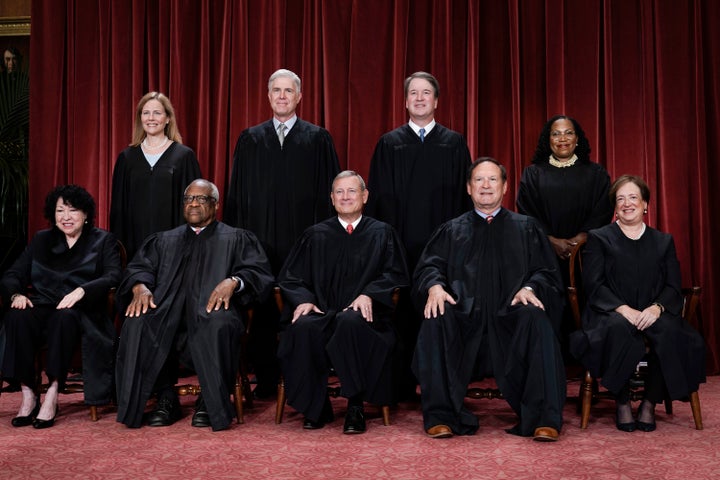
via News
Roberts suggested that Alabama’s decision focused largely on its facts and should not be interpreted to require a similar result in Louisiana.
Kavanaugh pressed Nelson on whether the time has come to end the use of racial districts under the Voting Rights Act, rather than “allowing it to extend forever.”
The court’s liberal justices focused on the Voting Rights Act’s history of eradicating discrimination in voting. Reaching the solution of redrawing districts only happens if, as Justice Elena Kagan said, a court finds “a specific violation of law identified and demonstrated.”
A mid-decade battle over congressional redistricting is already raging across the country after Republican President Donald Trump began urging Texas and other GOP-controlled states to redraw their lines to make it easier for the GOP to maintain its slim majority in the House.
The court’s conservative majority has been skeptical of racial considerations and recently ended affirmative action in college admissions. Twelve years ago, the court took a gavel to another pillar of landmark election law that required states with a history of racial discrimination to get prior approval from the Justice Department or federal judges before making election-related changes.
Separately, the court has given state legislatures wide latitude to gerrymander for political purposes, subject only to review by state supreme courts. If the Supreme Court now weakens or strikes down Section 2 of the Voting Rights Act, states would not be subject to any limits on how they draw congressional districts. Such an outcome would be expected to lead to extreme manipulation by the party in power at the state level.
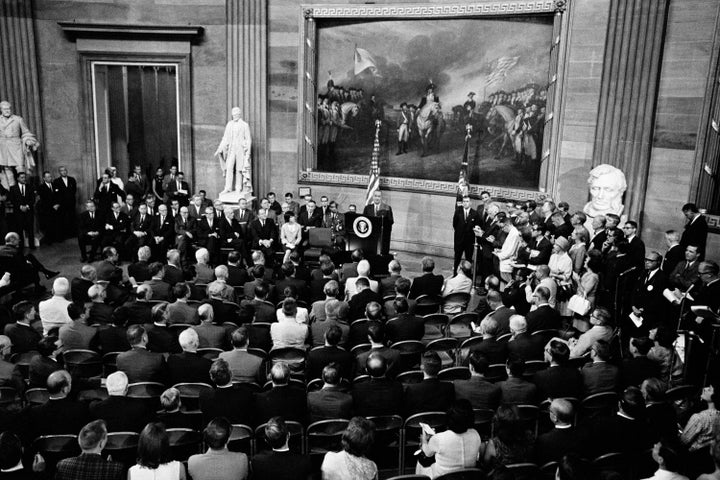
via News
The court’s decision in Alabama in 2023 led to new districts there and in Louisiana that sent two more black Democrats to Congress.
Now, however, the court has asked the parties to answer a fundamental question: “Whether the state’s intentional creation of a majority-minority 2nd Congressional District violates the Fourteenth or Fifteenth Amendments to the United States Constitution.”
In early arguments in the Louisiana case in March, Roberts was skeptical of the majority-black 2nd District, which last year elected Democratic Rep. Cleo Fields. Roberts described the district as a “snake” that stretches more than 200 miles (320 kilometers) to link parts of the Shreveport, Alexandria, Lafayette and Baton Rouge areas.
The court fight over Louisiana’s congressional districts has lasted three years.
The state’s Republican-dominated legislature drew a new congressional map in 2022 to account for population changes reflected in the 2020 census. But the changes effectively maintained the status quo of five majority-white, Republican-leaning districts and one majority-black, Democratic-leaning district.
Civil rights advocates won a lower court ruling that the districts likely discriminated against black voters.
UnlimitedFairthe truth.
Your supportFuelsOur Mission
Your supportFuelsOur Mission
Protect freedom of the press
Trump’s Defense Department wants News themezone journalists to sign a restrictive and clearly unconstitutional document. Our answer? Hell no! Join today and support a press that reports without restraint.
We remain committed to bringing you the unwavering, fact-based journalism everyone deserves.
Thank you again for your support along the way. We are truly grateful for readers like you! Your early support helped get us here and strengthened our newsroom, keeping us strong in uncertain times. As we continue, we need your help more than ever. We hope you will join us once again.
We remain committed to bringing you the unwavering, fact-based journalism everyone deserves.
Thank you again for your support along the way. We are truly grateful for readers like you! Your early support helped get us here and strengthened our newsroom, keeping us strong in uncertain times. As we continue, we need your help more than ever. We hope you will join us once again.
News themezone Support
Have you already contributed? Sign in to hide these messages.
The state finally drew a new map to comply with the court ruling and protect its influential Republican lawmakers, including House Speaker Mike Johnson. But white Louisiana voters claimed in their separate lawsuit that race was the predominant factor driving it. A three-judge court agreed, leading to the current High Court case.