



Tariffs are Trump
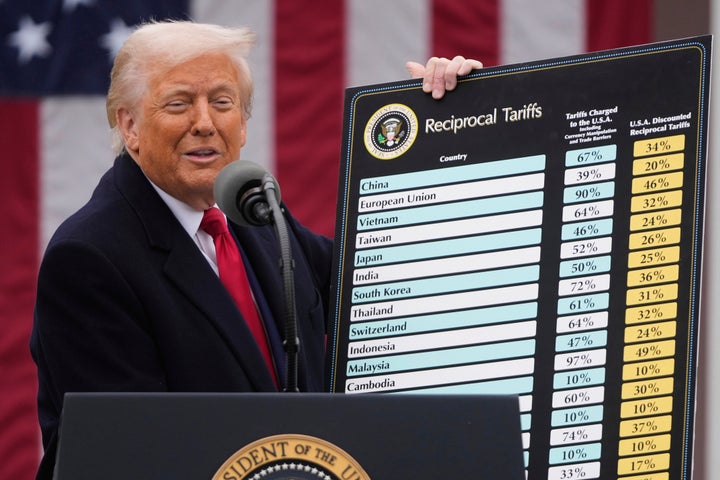
WASHINGTON (AP) — President Donald Trump sees tariffs — or the threat of them — as a powerful tool to bend nations to his will.
He has used them in an unprecedented way, not only as a pillar of his economic agenda, but also as a cornerstone of his foreign policy in his second term.
He has used import taxes as a threat to secure ceasefires from warring countries. It has used them to intimidate nations into promising to do more to stop people and drugs from crossing their borders. He has used them, in the case of Brazil, as political pressure because its judicial system prosecuted a former leader who was an ally of Trump, and in a recent confrontation with Canada, as punishment for a television advertisement.
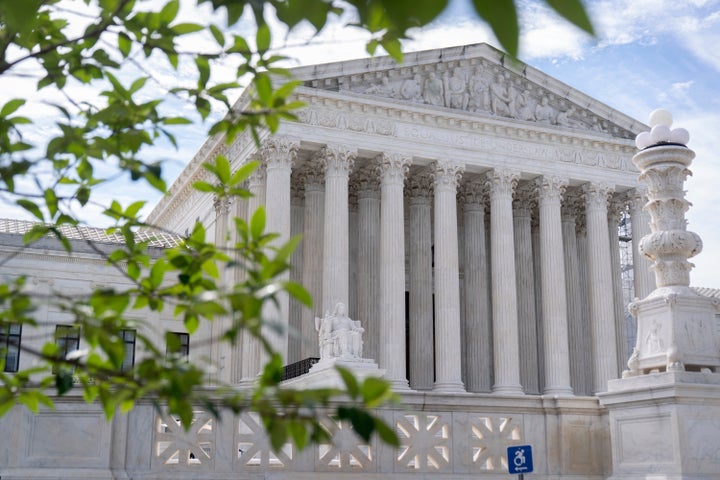
This week, the Supreme Court hears arguments about whether the Republican president has exceeded federal law with many of his tariffs. A ruling against him could limit or even eliminate that rapid and forceful influence on which much of his foreign policy has depended.
Trump has increasingly expressed agitation and anxiety about the impending decision in a case he says is one of the most important in American history.
He has said it would be a “disaster” for the United States if judges fail to overturn lower court rulings that found he went too far in using an emergency powers law to implement his tariffs.
Trump had said he wanted to take the highly unusual step of attending the arguments in person, but on Sunday he said he had ruled it out, saying he did not want to be a distraction. “I wanted to go so badly… I just don’t want to do anything that detracts from the importance of that decision,” he told reporters on Air Force One.
The Justice Department, in its defense of the tariffs, has highlighted the expansive way Trump has used them, arguing that trade sanctions are part of his power over foreign affairs, an area in which courts should not question the president.
Earlier this year, two lower courts and a majority of judges on the U.S. Court of Appeals for the Federal Circuit found that Trump had no power under the International Emergency Economic Powers Act (IEEPA) to set tariffs, a power the Constitution grants Congress. However, some dissenting justices on the court said the 1977 law allows the president to regulate imports during emergencies without specific limitations.
The courts left the tariffs in place while the Supreme Court considers the issue. Meanwhile, Trump has continued to use them while trying to pressure or punish other countries on trade-related (and non-trade) issues.
“The fact of the matter is that President Trump has acted lawfully in using the tariff powers granted to him by Congress in the IEEPA to address national emergencies and safeguard our national security and economy,” White House spokesman Kush Desai said in a statement. “We look forward to achieving final victory in this matter with the Supreme Court.”
Still, White House press secretary Karoline Leavitt said Trump’s trade team is working on contingency plans in case the high court rules against the Republican administration.
“We have backup plans,” Leavitt said on News’ “Sunday Morning Futures.” “But ultimately…we are hopeful that the Supreme Court will rule on the right side of the law and do what is right for our country. The importance of this case cannot be understated. The president should have emergency authority to use tariffs.”
AP Photo/Mark Schiefelbein, File
Most presidents have not used tariffs as a foreign policy tool.
Modern presidents have used financial sanctions such as asset freezes or trade blocks, not tariffs, for their foreign policy and national security goals, said Josh Lipsky, a former Obama White House and State Department official who is now chair of international economics at the Atlantic Council.
There are other laws that presidents can use to impose tariffs. But they require a months-long process to justify the fees.
Trump, citing the IEEPA, acts faster and more dramatically. He signs executive orders imposing new rates and makes social media posts threatening additional taxes on imports, as he did in late October when he became enraged over an anti-tariff television ad aired by the province of Ontario.
“Presidents have typically treated tariffs like a scalpel, not a sledgehammer,” Lipsky said.
In contrast, Trump has used tariffs as the backbone of his national security and foreign policy agenda, Lipsky said. “Everything is interconnected and rates are at the center of everything,” he said.
For example, earlier this year Trump had threatened a 30% tariff on European imports, a significant increase from 1.2% before he took office. Seeking to secure Trump’s support for the NATO military alliance and security guarantees for Ukraine in its war with Russia, the European Union reached an agreement to settle for 15% tariffs.
The EU Commission faced criticism from companies and member states for revealing too much. But Trade Commissioner Maroš Šefčovič argued that the deal “is not just about trade. It’s about security. It’s about Ukraine.”
Trump has been able to “use it in specific circumstances to get better deals, not just trade deals, but better deals in general than he could get otherwise,” Lipsky said. “On the other hand, you would say there’s probably some negative reaction.”
via News
Supreme Court decision could shake up geopolitics and wallets
Trump’s implementation of tough tariff measures has shaken relations with America’s friends and enemies. Some have responded by becoming more protectionist or seeking to foster relations with China, which has tried to be seen as a promoter of free trade.
There is also the impact on the pocketbook. Some companies have passed some of the costs onto consumers by raising prices, while others have waited to see where the rates end up.
Traditionally, tariffs have been used simply as a tool to address trade practices.
“There is literally no precedent for the way President Trump is using them,” said Emily Kilcrease, who was a former deputy U.S. trade representative and previously worked on trade issues at the National Security Council as a career official during the Obama, Trump and Biden administrations.
“Using tariffs the way President Trump is using them is just a large-scale attack on an economy as a way to incentivize a foreign government to change its stance,” said Kilcrease, now director of the Center for a New American Security think tank.
But he said the case is not clear. Kilcrease said he believes there is a “decent chance” that the Supreme Court will side with Trump because the IEEPA gives the president “broad and flexible emergency powers.”
The case will also come before a Supreme Court that has so far been reluctant to rein in Trump’s extensive use of executive powers.
If the court imposes restrictions on Trump, foreign governments could wonder whether they should try to renegotiate trade deals recently signed with the Trump administration, experts said. But there are also political realities at play, because failing to comply with the agreements could affect other economic or foreign policy priorities.
The administration could try to use other laws to justify the tariffs, although that could mean a more complex and bureaucratic process, Kilcrease said.
“It certainly doesn’t take tariffs off the table,” he said. “It just slows them down a little bit.”
InformationThatReal
Your supportFuelsOur Mission
Your supportFuelsOur Mission
Join News themezone today
This Election Day we are going to cut through the noise. Without billionaire influence or angles, we are here to inform voters and help them make sense of the chaos of Election Day. By becoming a member, you help drive this mission.
We remain committed to bringing you the unwavering, fact-based journalism everyone deserves.
Thank you again for your support along the way. We are truly grateful for readers like you! Your early support helped get us here and strengthened our newsroom, keeping us strong in uncertain times. As we continue, we need your help more than ever. We hope you will join us once again.
We remain committed to bringing you the unwavering, fact-based journalism everyone deserves.
Thank you again for your support along the way. We are truly grateful for readers like you! Your early support helped get us here and strengthened our newsroom, keeping us strong in uncertain times. As we continue, we need your help more than ever. We hope you will join us once again.
News themezone Support
Are you already a member? Sign in to hide these messages.
___
News writer Lindsay Whitehurst contributed to this report.