



The Argentine Police seeks a valuable portrait that is believed to be looted by the Nazis and has just seen in real estate
/ AP
Buenos Aires, Argentina -The Argentine police raided a villa in a quiet coastal resort on Tuesday as part of a search for an Italian portrait of the seventeenth century that is believed to be looted 80 years ago from a Jewish collector by a fugitive Nazi officer who settled in Argentina after World War II.
The investigation reopens a shady chapter in the history of this South American nation, which protected dozens of Nazis who fled from Europe to avoid prosecution for war crimes after World War II, including members of the High Rank Party and notorious architects of the Holocaust as Adolf Eichmann.
Under the government of the Argentine general Juan Perón, whose first mandate lasted from 1946 until his overthrow in 1955, The Fugitive German fascists brought a Jewish property looted with them From the other side of the world, including gold, bank deposits, paintings, sculptures and furniture.
The fate of these articles continues to make news decades later while the painful restitution process is dragged into Argentina and beyond.
In this case, the lost painting that the Argentine authorities are looking for is “portrait of a lady”, by the Italian Baroque artist Giuseppe Vitore Ghislandi.
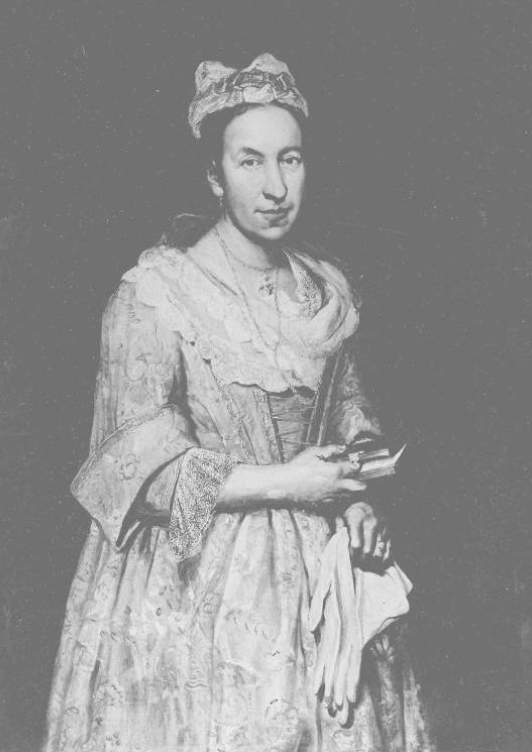
The journalists of the Dutch newspaper Algemeen Dagblad saw for the first time what seemed to be the famous painting on Monday in a real estate ad for a house that is believed to be owned by the descendants of the Nazi Friedrich Kadgien fugitive, while looking for stolen art from the Netherlands.
Citing Dutch art experts, the Rotterdam -based newspaper reported that the “original portrait” seemed to be hung on a green velvet sofa in the living room of a rustic brick villa for sale in the coastal city of Argentina in Mar del Plata.
The real estate agency, Robles Casas & Campos, did not respond to a request for comments.
The home list was still live on Tuesday night, but the image of the portrait, seen for the first time on a 3D tour through the interior of the house, seems to have been eliminated.
The next day, the Argentine authorities raided the house.
Federal prosecutor Carlos Martínez told News that the painting was not found in the house, but the officers confiscated “other articles that could be useful for the investigation, such as weapons, some engravings, impressions and period reproductions.”
He said researchers are examining possible hidden and smuggling positions.
The official Dutch database of the disappearance of art of World War II, maintained by the Cultural Heritage Agency of the Netherlands, identifies the “portrait of a lady” of the oil in Canvas that belongs to the Dutch art merchant Jacques Goudstikker before the Nazi shot of its prominent Amsterdam gallery as Germany invaded the Nalocraes in May 1940.
Through direct or coercive sales, the agents acting on behalf of the Nazis were made with innumerable works of art of private distributors of the Dutch Jews. Goudstikker’s inventory sold illegally to Hermann Goering, known as Adolf Hitler’s right man.
The only surviving heir of Goudstikker, Marei von Saher, has long followed the restitution for the stolen works of his father -in -law. In a 2006 historical case, the Dutch government agreed to return 202 paintings looted from the Goudstikker collection to Von Saher after a long legal battle.
Von Saher did not immediately respond to a request for comments through his lawyers.
The apparent movement of “portrait of a lady”
The Dutch archive lists the “portrait of a lady” who had passed to a man named Kadgien de Berlin.
A search in the German federal archives records the existence of a single member of the Nazi party with that surname: Friedrich Gustav Kadgien, membership No. 1,354,543, which supervised the foreign currency, precious metals and the sale of properties confiscated as financial aid to Goering.
After the defeat of Germany, Kadgien fled to Switzerland, then Argentina, according to a declassified report from the Central Intelligence Agency. The members of the Kadgien family and their businesses appear repeatedly in Argentine judicial and real estate records that begin in the 1950s.
Kadgien was never accused of crimes related to the Nazi regime for decades in Argentina.
He died in 1978 in Buenos Aires, according to local media reports.
- Nazi
- Argentina