



The man who was dragged from the car and brutalized by federal agents speaks out
Orbin Mauricio Henríquez Serrano, like many immigrants living in the Twin Cities, was afraid to go to work on January 11. Immigration agents had been prowling around Minneapolis and St. Paul for weeks, targeting neighborhoods with large immigrant populations and demanding documents from people based on their accent. Four days earlier, one of them had killed Renee Good. But several of his co-workers at a local tavern, where he was a cook and assistant manager, had called him, so he felt he had to go inside.
First, I had to get gas.
He stopped at a Speedway in St. Paul, bought a Red Bull, and sat in his car while it filled up. That’s when he noticed immigration agents surrounding his vehicle. As soon as he saw them he knew they wanted to arrest him, well aware of the seemingly random ambushes by masked agents across the region recently.
“They didn’t actually know who I was, until, I think, they scanned my license plates,” he recalled in Spanish.
Millions of people have seen that happened next.
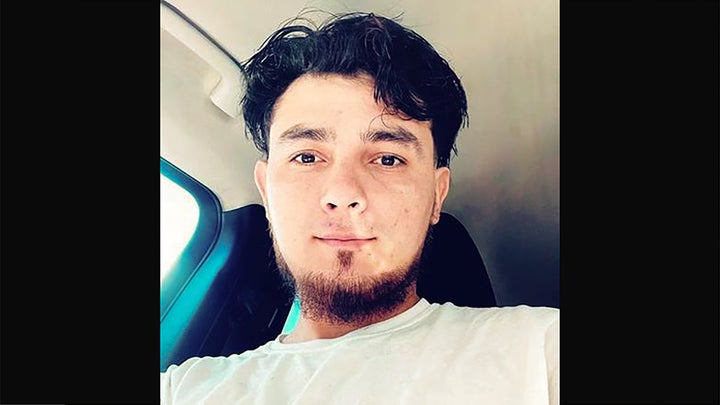
Photo: Orbin Mauricio Henríquez Serrano
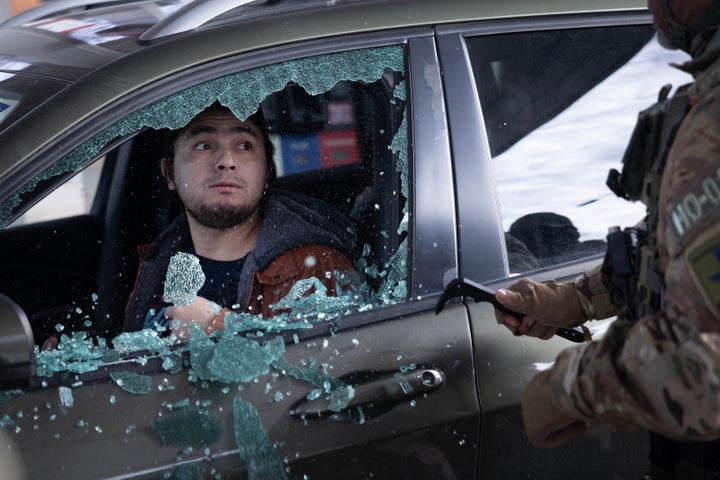
Henríquez Serrano only remembers fragments of it, before and after the agents pressed him to the ground until he lost consciousness. They asked him if he was a citizen and he said he would not answer questions. He tried to call a lawyer, thinking the officers would not violate his private property to make the arrest. But they broke his window and got inside his Jeep Cherokee to get him out.
He was about 25 feet away, close enough to see Greg Bovino, the roving Border Patrol commander now assigned to the Twin Cities who frequently attacks gas stations, shouting orders at passersby and journalists to “back off!”
Henríquez Serrano remembers one officer hitting his hand with a small hammer (potentially the same one used to break his window) and others calling him an “imbécile” in Spanish. The next thing he remembers is waking up in the back of an unmarked van. He saw protesters lined up in front of the Whipple Federal Building, where officers detained him. He was surprised by how many Latino immigration agents there were and how rude and unhelpful they were.
The video of Henríquez Serrano’s limp body being carried to a federal agent’s vehicle caused many people, including his own sister, Consuelo, to worry that he had died.
The next morning, he said, they put shackles on his hands and feet, which remained there for 11 hours. He and other detainees were taken to the airport, where they boarded a plane to Texas. There, they were taken to the infamous camp known as “Camp East Montana,” one of several Imitations of “Alcatraz Crocodile” around the country. Several people have died there since December, including one case that has been declared homicide.
It wasn’t until then, two days after his arrest, that he was able to speak with Consuelo and tell her and the world that he had survived.
“He just managed to tell me that he is very hurt,” he said. relayed to medescribing a call that lasted just a few seconds.
Scott Olson via Getty Images
Henríquez Serrano spent more than a week in the camp before he was handcuffed again and flown to Honduras, where he was born. When he spoke to News themezone last week, he still had the cough he had contracted in immigration jail.
Everything in the camp was terrible, he said. “Hygiene, there is none.”
“If there was a pandemic in this place, everyone would die because there is no way to be isolated from others,” he said. “There is no roof for every cell, just a roof for all cells.”
He said he was never able to speak to a lawyer. His one visit to a shoddy clinic (“I don’t think that’s an accurate word for what it was,” he said) downtown resulted in some cream and a handful of pills, presumably Tylenol. Henríquez Serrano believes that he may have serious damage to the tendons in his right knee. He is now working on getting an MRI in Honduras.
“I never received adequate medical care,” he said, noting that guards “treated me roughly in the areas where I was injured” after his arrest.
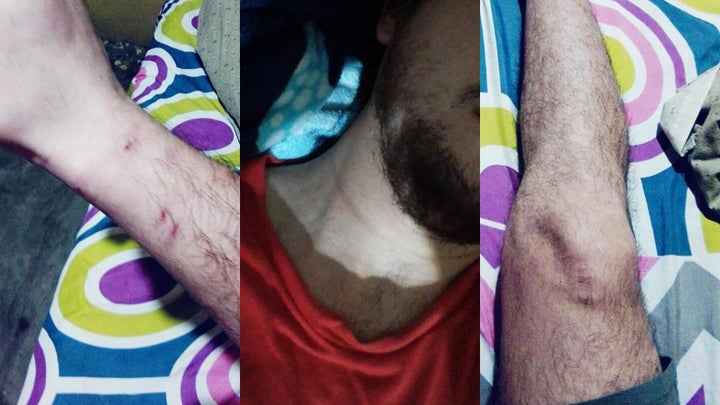
Photo: Orbin Mauricio Henríquez Serrano
Henriquez Serrano said he never spoke to an actual ICE agent or any other representative of the U.S. government during his entire time at Camp East Montana. Like many ICE detention centers, the immigration jail is private management and serviced by contractors. He said he would have tried to make a case to remain legally in the United States if he could have.
In fact, he said, he had tried to apply for asylum in 2019, during the “Remain in Mexico” policy, which required applicants to wait for U.S. court dates while staying south of the border. He planned to argue that he needed refuge in the United States from violent gangs in Honduras, who he said tried to recruit him before he fled the country. but he was kidnapped in Mexicoand his family paid $14,000 for his freedom, he said. After that, he acknowledged, he crossed the border.
He had come to the United States in search of a quiet, stable life, and he had achieved it for six years. He felt like he could walk the streets here without looking over his shoulder, unlike in Honduras. He spent his free time exercising, playing “FIFA” and “Grand Theft Auto,” and cheering on the Minnesota United Football Club. (“God willing,” he said, one day he will be able to go to a Minnesota United game.)
“My life was working, spending time with my family and that’s it,” he said.
He said he had no criminal record in the United States or his home country, other than a speeding ticket he received a few years ago in Arkansas.
After his arrest, the Trump administration stated that he had been subject to a 2020 deportation order. Henríquez Serrano said he had never been informed of such an order, not even when he was stopped for speeding in 2022.
The Department of Homeland Security did not respond to a detailed list of questions. Instead, spokeswoman Tricial McLaughlin said, apparently referring to Henríquez Serrano’s arrest, “authority under USC 1357 and of course reasonable suspicion are protected by the United States Constitution.” He denied that ICE engaged in racial profiling and said ICE facilities “meet national performance-based detention standards,” including, he added, “the best medical care that many foreign nationals have ever received.”

Photo: Consuelo Henríquez Serrano
Henríquez Serrano said he is relieved to be free of detention, but is concerned about his safety now that he is back in Honduras, after so many years living in the United States, the country he had called home.
He wanted people in America to know what he knows: that the immigrants President Donald Trump calls criminals are actually feeding them, building their homes and contributing to society. And he said he was heartened to see people protesting increased immigration enforcement measures.
“They are the voice that we Latinos have to repress out of fear,” he said.
Translation of this story was provided by Ashford King.