



The map is frozen: the red state puts a big brake on Trump’s plans
A Missouri group opposing a new congressional map drawn up by state Republicans to eliminate a House seat held by Democrats submitted 305,000 signatures Tuesday to put that map on the ballot in November 2026, potentially dealing a major setback to President Donald Trump’s push to use new district lines in red states to maintain control of Congress after the midterm elections.
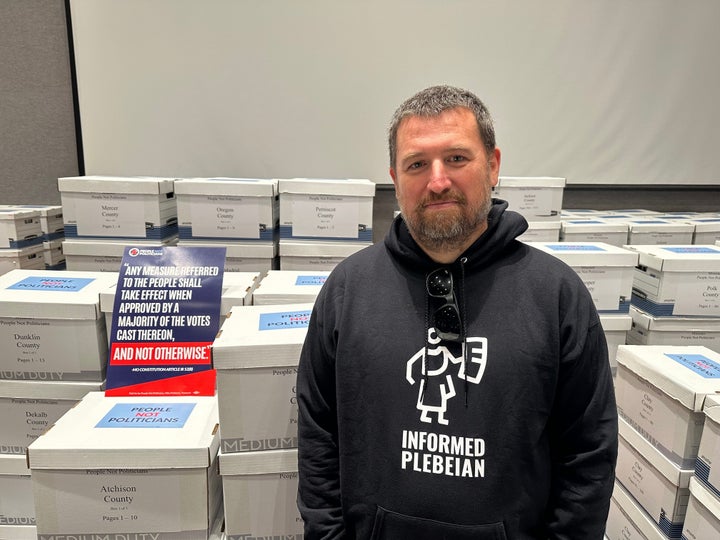
After submitting triple the 107,000 signatures required for a ballot initiative by Thursday’s deadline, “the map is frozen,” according to Richard von Glahn, executive director of People Not Politicians, the group behind the initiative. That means the mid-decade Republican gerrymander cannot be used in the 2026 midterms unless the elected Republican secretary of state deems the signatures the group gathered insufficient. Instead, voters will decide whether the map should go into effect in 2028.
Missouri followed Trump’s orders in September when it split the Kansas City seat held by Democratic Rep. Emanuel Cleaver and divided the city into three Republican-leaning districts, joining Texas and North Carolina in drawing new lines intended to favor Republicans.
When state Republicans did this, they were following the lead of Texas, where Trump had pressured the state legislature to redraw five congressional districts to be more favorable to the GOP. North Carolina Republicans also redrawn their map to eliminate a Democratic-held seat. But Democrats responded. California passed an initiative that would allow it to eliminate five GOP-held seats, undoing planned GOP gains in Texas. Meanwhile, a Utah court forced the state to seek a new safe Democratic seat for the 2026 election. With Missouri’s map likely suspended for 2026, it appears the redistricting war has reached a tie—for now.
People Not Politicians, which is supported by a coalition of civil rights groups, churches, unions, voter protection groups and others, launched its signature campaign shortly after Gov. Mike Kehoe, a Republican, signed the new map into law on Sept. 24. Republicans, including Missouri Secretary of State Denny Hoskins and state Attorney General Catherine Hanaway, responded by trying to shut down the signature-gathering process any way they could.
David A. Lieb via News
Hoskins repeatedly rejected People Not Politicians’ request to collect signatures for a referendum and claims that 92,000 signatures collected by the group before October 15 are now invalid. People Not Politicians challenged Hoskins’ decision in Missouri state court. For her part, Hanaway made unfounded claims that the company hired to collect signatures for People Not Politicians “allegedly employed illegal aliens” and that she had “referred this matter” to Immigration and Customs Enforcement. So far that company has not received any consultation from ICE, according to von Glahn.
Efforts to shut down the signature drive came not only from Republican officials, but also from GOP-backed opponents of the campaign, according to a lawsuit. Advanced Micro Targeting, Inc., the signature gathering company hired by People Not Politicians, alleged in a court file that opponents of the petition drive robbed their contractors by offering them large sums of money to switch sides and threatened and harassed those who did not switch. That case is ongoing.
“I have never seen a side so desperate to avoid a vote,” von Glahn said. “It’s really outrageous what we’ve been facing.”
Missouri Republicans have also sued, arguing that the ballot initiative is unconstitutional because only state legislatures can adopt or alter congressional district maps. This argument follows the so-called independent state legislature theory, which holds that state legislatures alone can make changes to state election laws. But this broad version of the theory was rejected by the United States Supreme Court in its Moore v. 2022 Harper.
Now that the signatures have been submitted, state and local election officials must review them to determine if they are valid. The secretary of state must then issue a certificate of sufficiency and approve the initiative for the November ballot or reject it. While it seems unlikely that nearly 200,000 of the signatures collected are invalid, Republicans’ efforts to stop this initiative show that they are willing to do whatever they can to stop it. People Not Politicians would plan to challenge any attempt to reject the initiative in court if that happens.
“If we need to continue litigating to enforce our constitutional rights, we will do so,” von Glahn said.
The most likely outcome, according to previous ballot initiative campaigns in the state, is that the initiative appears on the ballot and the state will be forced to use its 2021 map that retains the Democrat-held Kansas City district in the midterm elections. It is a less gerrymandered seat so that Republicans can reinforce their slim majority.