



The Righteous: Rescuing Marc Chagall from the Nazis
/News themezone
Add News themezone on Google
Marc Chagall once commented that if he were not Jewish, perhaps he would not have been an artist. His faith deeply influenced his works such as “The Praying Jew,” for example, as well as a never-before-seen work that Chagall gave to his granddaughter, Bella Meyer.
“He tells the story of Shabbat, from his memories,” Meyer said of the drawing.
He remembered seeing his grandfather work: “I saw him paint and I loved it. I adored him.”
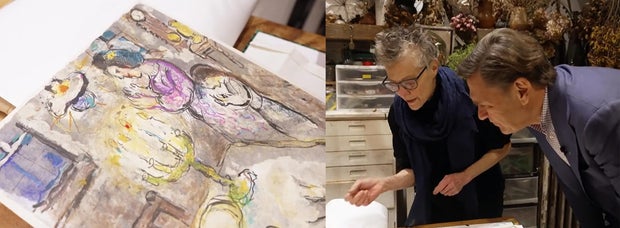
But his grandfather’s faith also got him into trouble. In Russia, where he was born, Chagall was imprisoned for not having his Jewish residency documents. He later moved to Paris. “France, to him, meant freedom,” Meyer said; freedom, of course, until the Nazis entered Paris in 1940.
“To him he was French, rather than Jewish,” Meyer said.
The Nazis didn’t see it that way. They considered Chagall’s work “degenerate art.” In 1941, the Vichy police located him in Marseille, southern France, and arrested him once again. Had it not been for the bravery of strangers (mostly non-Jews, who risked their own lives to help smuggle him and his paintings to safety), that might have been the last we heard of Marc Chagall.
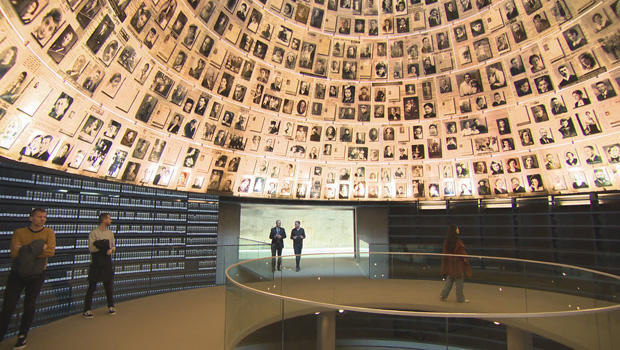
Yad VashemIsrael’s official memorial to Holocaust victims, has a name for these rescuers: The Righteous Among the Nations. However, there were not many righteous rescuers; It is easier to dismiss horror with blind eyes than with eyes wide open. Compared to the six million Jews murdered, there are fewer than 30,000 non-Jews who have been recognized for helping.
Using recorded interviews transcribed from the United States Holocaust Museum, filmmaker Nick Davis gathered 45 extraordinary stories from those non-Jews who did helps life.
“One of them said he didn’t care if they were Jewish, Catholic or Eskimo; they were persecuted people and they had to be helped,” Davis said.
His movie is called “This Ordinary Thing.”
“We’ve paid enough attention to the bad guys – Hitler, Himmler, Göring – and we don’t think as much about the good people who helped.” – Tina Strobos, Netherlands
“On a superficial level, I thought, ‘Ugh, haven’t we seen enough movies about the Holocaust?'” Davis said. “But when I looked at the stories we were going to tell, true kindness is what you do when no one is looking.”
Oscar winner Hellen Mirren expresses the sacrifices of Irene Gut Opdyke from Poland, who was forced to become the mistress of an elderly SS officer to buy his silence after discovering that she was hiding Jews in her villa.
“I won’t tell you it was easy. Not only because I was an old man, but I knew there were 12 lives depending on me… I never talked about what I did during the war. And I still wouldn’t if I hadn’t read that article in the newspaper that said the Holocaust didn’t happen.” – Irene Gut Opdyke
Alex and Mela Roslan hosted three Jewish siblings in Warsaw. They couldn’t call a doctor if things went wrong for fear of being discovered. Jeremy Irons dramatizes what happened to them, and many others:
“He says, ‘I’d feel better if you hugged me.’ I picked him up and he died in my arms. We buried him in the basement sitting up, because someone told me that’s how you bury a Jew.” – Alex Roslan, Poland
Dwork believes that whatever the motivation of the rescuers, in the case of the Holocaust, the ends often justified the means.
I asked him, “So there really isn’t necessarily a line that connects them all, other than the fact that they must have had good souls?”
“Sometimes they didn’t even have good souls!” Dwork said. “Sometimes greed motivated them. And I say three cheers for greed, because it was thanks to greed that they put their lives at risk, or put themselves in danger.”
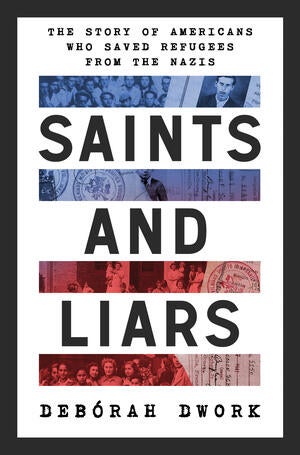
His latest book, “Saints and Liars: The Story of the Americans Who Saved Refugees from the Nazis” (WW Norton), is about the American aid workers who helped save Jewish refugees. You’ve probably never heard of most Americans. “Think about it: The best-known American is Varian Fry, and very few people know about him,” he said.
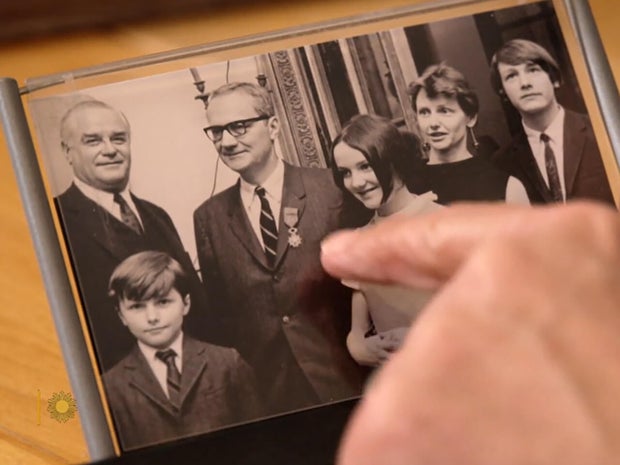
Varian Fry brings us full circle, as he was the man who helped organize Marc Chagall’s escape from France. He was the first American to receive the title of Righteous Among the Nations. His son James accepted the honor on his father’s behalf.
When asked why he thinks his father wasn’t recognized more, James Fry responded: “I think the country wanted to move on and focus on rebuilding, on getting life back to normal. I guess people didn’t want to remember.”
Varian Fry rarely talked about his time during the war, although Chagall paintings sometimes mysteriously appeared in the Fry home, presumably as thanks.
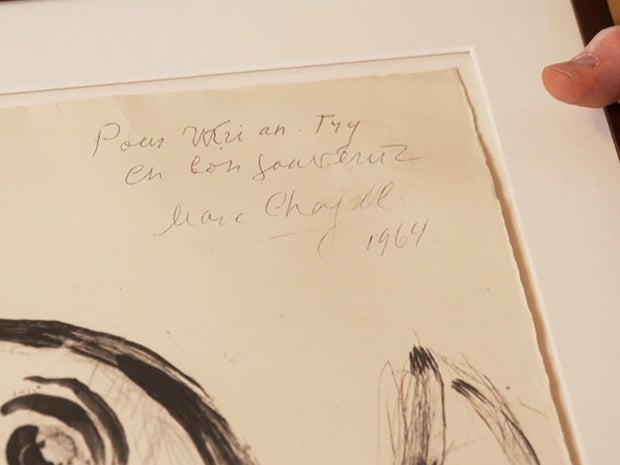
In retrospect, James says his father suffered enormous bouts of righteous indignation, to the point that he believes his father’s bravery may have arisen in part from his bipolarity. “I think he took advantage of his manic energy to do something that most people would have thought wasn’t worth trying,” he said.
And it is that – the part that is not worth trying – that haunts any discussion of these Righteous Among the Nations. What would I do? you do?
Nick Davis said: “I have an amazing wife and two daughters, and I don’t know if I would risk their lives for a complete stranger. Let me correct that: I know “I wouldn’t risk their lives for a complete stranger.”
Bella Meyer said, “I wish I had the courage to make even a small ounce.”
We will never know how many there were: those who hid Jews in attics, basements or crawl spaces rarely survived their generosity. But those who did it did more than save a life; they created opportunities for life, art and beauty for years to come.
When asked what she would say to Varian Fry if she could have a conversation with him now, Chagall’s granddaughter replied: “I would just hug him and thank him for existing.”
To watch a trailer for “This Ordinary Thing,” click on the video player below:
For more information:
- The Righteous Among the Nations (Yad Vashem)
- “Saints and Liars: The Story of the Americans Who Saved Refugees from the Nazis” by Debórah Dwork (WW Norton), in hardcover, e-book, and audio formats, available through Amazon, Barnes & Noble, and Bookshop.org
- Debórah Dwork (official site)
- Follow Debórah Dwork on Instagram
- Artwork: Marc Chagall © 2026 Artists Rights Society (ARS), New York/ADAGP, Paris
- “This Ordinary Thing” by Nick Davis
- Thanks to Fleurs Bella, New York.
Story produced by Amiel Weisfogel. Editor: Steven Tyler.
See also:
- From 2017: How music influenced the art of Marc Chagall (“Sunday morning”)
- Gallery: The art of Marc Chagall
In:
- Religion
- Holocaust