



The United States recognizes opposition candidate Edmundo González as winner of the Venezuelan presidential elections
/AP
Add News themezone on Google
The United States government on Thursday recognized Venezuelan opposition candidate Edmundo González as the winner of the elections. Presidential elections of the South American countrydiscrediting the results announced by the electoral authorities that declared President Nicolás Maduro the winner.
“Given the overwhelming evidence, it is clear to the United States and, most importantly, to the Venezuelan people that Edmundo González Urrutia received the most votes in Venezuela’s July 28 presidential election,” US Secretary of State Antony Blinken said in a statement.
The National Electoral Council declared Maduro the winner of Sunday’s highly anticipated election, but the president’s main rival, González, and opposition leader María Corina Machado have said they obtained more than two-thirds of the tally sheets that each electronic voting machine printed after the polls closed.
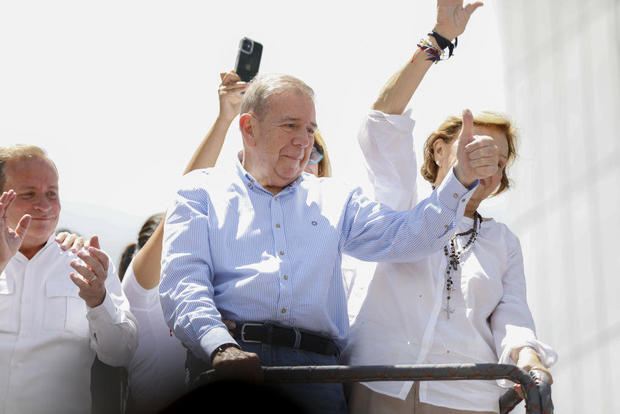
They said that the publication of data on those counts would show that Maduro lost.
The U.S. government’s announcement came amid diplomatic efforts to persuade Maduro to release the election vote count and growing calls for an independent review of the results, according to officials in Brazil and Mexico.
Government officials from Brazil, Colombia and Mexico have been in constant communication with the Maduro administration to convince it that it should show the vote count records from Sunday’s elections and allow for impartial verification, a Brazilian government official told The News on Thursday.
Officials have told Venezuela’s government that showing the data is the only way to dispel any doubts about the results, said the Brazilian official, who asked not to be identified because he is not authorized to speak publicly about the diplomatic efforts.
A Mexican official, who also spoke on condition of anonymity for the same reason, confirmed that the three governments have been discussing the issue with Venezuela but did not provide details. Earlier, Mexican President Andrés Manuel López Obrador said he planned to speak with President Luiz Inácio Lula da Silva of Brazil and President Gustavo Petro of Colombia, and that his government believes it is important for electoral counts to be made public.
Later on Thursday, the governments of Brazil, Colombia and Mexico issued a joint statement calling on Venezuela’s electoral authorities to “move quickly and publicly publish” detailed voting data, but did not confirm any behind-the-scenes diplomatic efforts to persuade Maduro’s government to publish vote counts.
“The fundamental principle of popular sovereignty must be respected through impartial verification of the results,” they said in the statement.
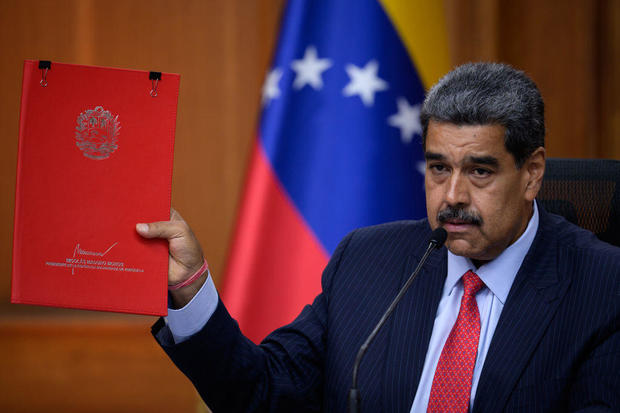
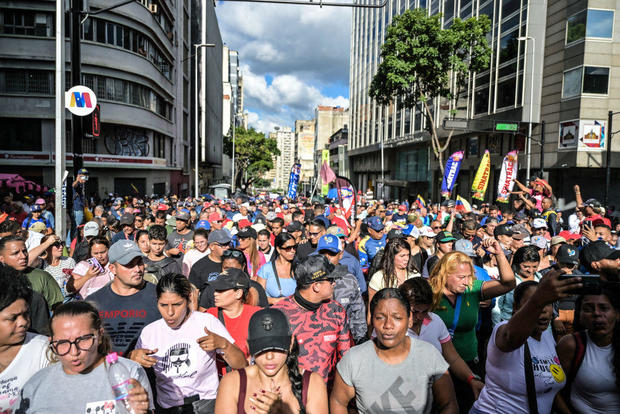
On Monday, after the National Electoral Council declared Maduro the winner of the election, thousands of opposition supporters took to the streets. the government He said he arrested hundreds of protesters and the Venezuela-based human rights organization Foro Penal said 11 people died. The next day, dozens more were arrested, including former opposition candidate Freddy Superlano.
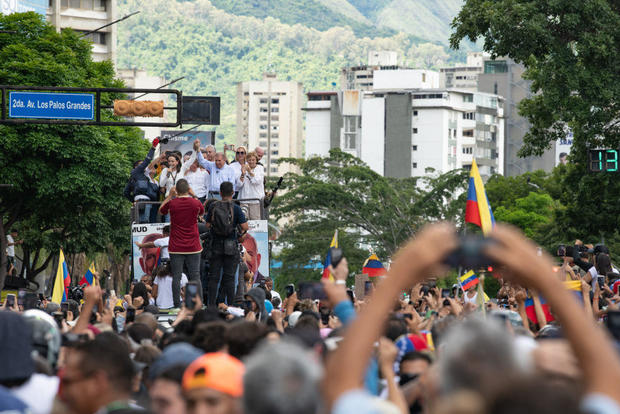
Opposition leader Machado, who was banned from running for president, and González addressed a large rally of his supporters in the capital, Caracas, on Tuesday, but have not been seen in public since. Later that day, the president of the National Assembly, Jorge Rodríguez, called for their arrest, calling them criminals and fascists.
In an op-ed published Thursday in the Wall Street Journal, Machado said he is “in hiding, fearing for my life, my freedom, and that of my compatriots.” He reaffirmed that the opposition has physical evidence that Maduro lost the elections and urged the international community to intervene.
“We have expelled Mr. Maduro,” he wrote. “It is now up to the international community to decide whether or not to tolerate a demonstrably illegitimate government.”
Government repression over the years has pushed opposition leaders into exile. After the op-ed was published, Machado’s team told the AP that she was “sheltering in.” Machado later posted a video on social media calling on his followers to gather Saturday morning across the country.
González’s campaign did not comment on the op-ed.
On Wednesday, Maduro asked Venezuela’s highest court to conduct an audit of the election, but that request drew almost immediate criticism from foreign observers who said the court is too close to the government to conduct an independent review.
It was unclear whether Maduro’s first concession to demands for greater transparency was the result of talks with Brazil, Colombia and Mexico. The president of Venezuela confirmed during a press conference on Wednesday that he had spoken with Petro about it.
Venezuela’s Supreme Court of Justice is closely aligned with the Maduro government. The court’s justices are nominated by federal officials and ratified by the National Assembly, dominated by Maduro supporters.
On Thursday, the court accepted Maduro’s request for an audit and ordered him, González and the eight other candidates who participated in the presidential election to appear before magistrates on Friday.
González and Machado say they got more than two-thirds of the tallies printed with electronic voting machines after the polls closed. They said that the publication of data on those counts would show that Maduro lost.
When asked why electoral authorities have not published detailed vote counts, Maduro said the National Electoral Council has been attacked, including cyberattacks, without providing further details.
The presidents of Colombia and Brazil, both close allies of the Venezuelan government, have urged Maduro to publish detailed vote counts.
The Brazilian official said diplomatic efforts are only aimed at promoting dialogue between Venezuelan stakeholders to negotiate a solution to the disputed elections. The official said this would include publishing voting data and allowing for independent verification.
López Obrador said that Mexico hopes that the will of the people of Venezuela is respected and that there is no violence. He added that Mexico waits “for the evidence, the minutes of electoral results, to be presented.”
Pressure on the president has been increasing since the election.
The National Electoral Council, loyal to Maduro’s United Socialist Party of Venezuela, has yet to release any results broken down by voting machine, as it did in past elections. However, he reported that Maduro received 5.1 million votes, compared to more than 4.4 million for González. But Machado, the opposition leader, has said vote counts show González received about 6.2 million votes compared to 2.7 million for Maduro.
Venezuela has the largest proven crude reserves in the world and once had the most advanced economy in Latin America, but it went into free fall after Maduro took charge in 2013. Falling oil prices, widespread shortages and hyperinflation that exceeded 130,000% led to social unrest and mass emigration.
In:
- Venezuela