



The Venezuelan army prepares a guerrilla-style response to a possible US attack
Nov 11 (Reuters) – Venezuela is deploying weapons, including decades-old Russian-made equipment, and plans to mount a guerrilla-style resistance or sow chaos in the event of a U.S. air or ground attack, according to sources with knowledge of the efforts and planning documents seen by Reuters.
The approach is a tacit admission of the South American country’s shortage of personnel and equipment.
US President Donald Trump has suggested the possibility of land operations in Venezuela, saying “land will be next” following multiple attacks on suspected drug trafficking vessels in the Caribbean and a large US military buildup in the region. He later denied that he was considering strikes inside Venezuela.
Venezuelan President Nicolás Maduro, in power since 2013, says Trump seeks to overthrow him and that Venezuelan citizens and military will resist any such attempt.
The U.S. military dwarfs that of Venezuela, which is weakened by a lack of training, low salaries and deteriorating equipment, six sources familiar with Venezuela’s military capabilities said.
Some unit commanders have even been forced to negotiate with local food producers to feed their troops because government supplies are insufficient, two sources with knowledge of state security forces told Reuters.
That reality has led the Maduro government to bet on two possible strategies: a guerrilla-style response to which high-ranking officials publicly refer, although without details, and another that officials have not recognized.
Creating anarchy in the streets
Federico Parra/News via Getty Images
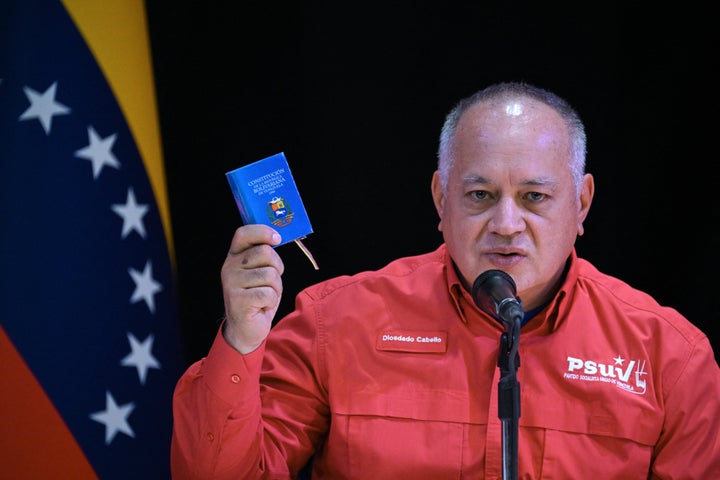
The guerrilla-style defense, which the government has called “prolonged resistance” and mentioned in state television broadcasts, would involve small military units in more than 280 locations carrying out acts of sabotage and other guerrilla tactics, according to sources and years-old planning documents for the tactic seen by Reuters.
The second strategy, called “anarchization,” would use intelligence services and armed supporters of the ruling party to create disorder in the streets of the capital, Caracas, and make Venezuela ungovernable to foreign forces, said a source with knowledge of the defense efforts and another source close to the opposition.
It was unclear when the government might deploy each of the tactics, which sources say are complementary, in the event of a U.S. attack.
Any resistance strategy faces high odds of success, the sources acknowledged.
“We wouldn’t last two hours in a conventional war,” said a source close to the government.
Another source with knowledge of defense and security within Venezuela said the country was “not prepared or professionalized for a conflict,” despite government claims to the contrary. “We are not prepared to face one of the most powerful and well-trained armies in the world,” the source said.
The Ministry of Communications, which handles media inquiries on behalf of the Venezuelan government, did not respond to questions.
Administration officials have publicly dismissed a U.S. military threat, although they have called for peace. “They think that with one bombing they will end everything. Here in this country?” mocked Interior Minister Diosdado Cabello on state television in early November, while Maduro has repeatedly praised the “soldiers of the homeland” as heirs of independence hero Simón Bolívar.
“Aggression will be responded to with national unity,” Defense Minister Vladimir Padrino said Tuesday, amid renewed military exercises across the country. “We are ready here, we do not want war.”
Soldiers’ salaries are low.
Juan Barreto/News via Getty Images
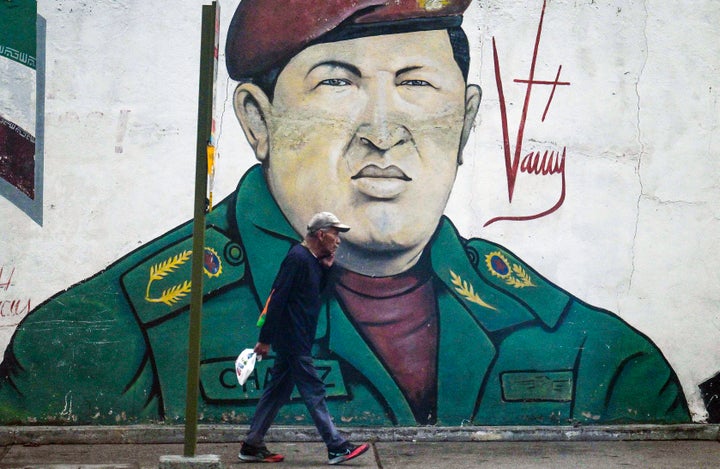
Maduro has enjoyed strong military loyalty by following the strategy of his predecessor Hugo Chávez, who placed officers in government roles such as ministers or heads of state-owned companies to ensure loyalty.
Military leaders backed Maduro’s victory in the 2024 elections, despite evidence, backed by many international observers, that the opposition candidate had won decisively.
However, Venezuelan troops have to deal with poor working conditions and there could be desertions in the event of an attack, the sources said.
Private soldiers earn approximately $100 a month in local currency, well below the estimated monthly cost of $500 for a basic food basket, according to April data from the Center for Documentation and Social Analysis of the Venezuelan Federation of Teachers.
In recent years, their main experience has been confronting unarmed civilians during street protests, the source close to the opposition said.
Maduro has said there are 8 million civilians training in militias to defend Venezuela, and some civilians have told Reuters in recent months that they are ready and willing to die to defend their homeland against a foreign force.
But a source with knowledge of defense and security estimated that in an anarchization scenario, only between 5,000 and 7,000 people would participate, including intelligence personnel, armed supporters of the ruling party and members of the militia.
Meanwhile, there are about 60,000 members of the Army and National Guard that the government would deploy for its guerrilla-style “war of resistance,” the source said.
The equipment is old.
Federico Parra/News via Getty Images
Military equipment, much of it Russian-made and decades old, is missing, the sources told Reuters.
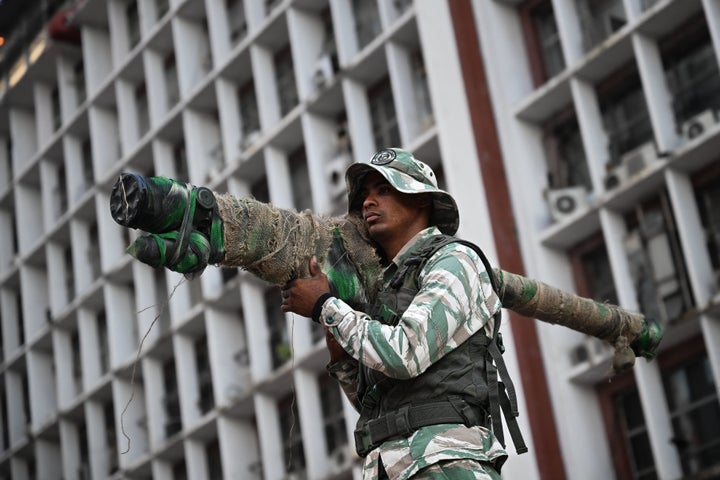
Venezuela bought about 20 Sukhoi fighter jets from the Russian company in the 2000s, but “next to the American B-2s, they are nothing,” the source with knowledge of defense and security said, adding that Venezuela’s Russian-made helicopters, tanks and shoulder missiles capable of destroying low-flying aircraft are also obsolete.
Russia’s Foreign Ministry said last week it was prepared to respond to Venezuela’s requests for assistance, while urging to avoid an escalation of tensions. Maduro has asked Moscow to repair Sukhoi aircraft, upgrade radar systems and deliver missile systems.
The 5,000 Russian-made Igla missiles in Venezuela have already been deployed, one of the sources said, and the military orders are that, upon receiving “the first blow from the gringos, all units must disperse or go with their weapons to retreat or hide in various places.”
“Any military force in the world knows the power of the Igla-S, and Venezuela has no less than 5,000 of them,” Maduro said during a recent broadcast on state television.
He added that the portable missiles and their operators had been deployed “to the last mountain, the last town and the last city in the territory.”
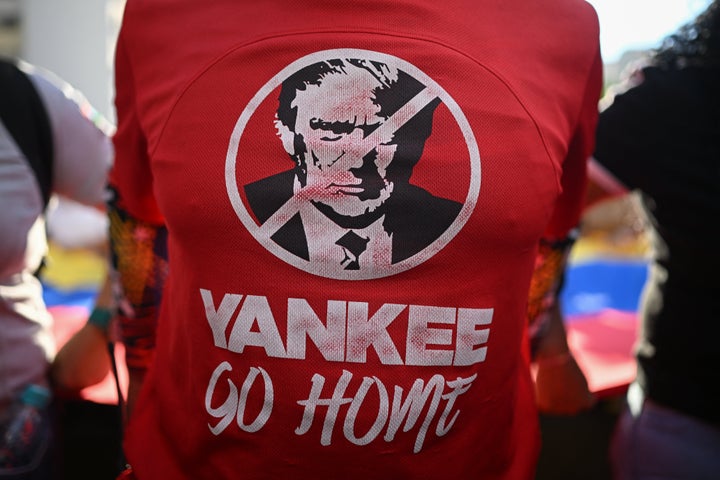
More than a dozen military planning and training documents dated between 2012 and 2022 and seen by Reuters show a long-term focus on planning a fight against “imperialist aggression.”
Federico Parra/News via Getty Images
One, from September 2019, details how platoons should position machine guns, grenade launchers and other equipment. Explains the features of an AK-103 assault rifle and how lone combatants can use a compass, the sun, and even the stars to orient themselves if they are on the move.
Venezuelan opposition groups, NGOs, Washington and some Latin American governments have accused the Maduro administration and the Venezuelan military of having links to drug trafficking, especially in the west of the country, where Colombian guerrilla groups such as the National Liberation Army operate and coca, the base ingredient for cocaine, is widely cultivated.
The government has consistently denied such links and says it is fighting Colombian drug traffickers.
But Maduro may be trying to send a message about the risks of an invasion through his appearances on state television, where he regularly displays military equipment, said Andrei Serbin Pont, a defense and security analyst.
“The underlying message is not actual military capability but deterrence through chaos: the threat that this equipment could end up in the hands of armed groups, guerrillas, paramilitaries or reorganized ex-military groups, worsening violence and instability during a possible transition,” Serbin said.