



There
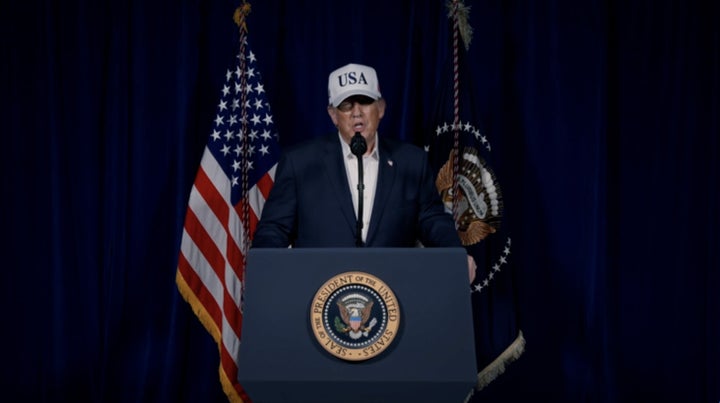
About twelve hours after launching a war against Iran early Saturday, President Donald Trump said his military campaign had killed the country’s supreme leader, Ayatollah Ali Khamenei.
“This is not only justice for the people of Iran, but for all great Americans and those people from many countries around the world who have been killed or maimed by Khamenei,” the president wrote in Truth Social.
But Trump’s effort to frame his war of choice as fair and worthy of international celebration is a remote possibility. Instead, the administration’s latest military escalation is driving a global perception that could permanently and significantly damage the role of the United States and Americans in the world: the view of the United States as a rogue actor, fueling instability, acting illogically and even illegally, and risking innocent lives.
For all the remaining questions about the offensive: How long will it last? Does the United States have a plan to replace the regime if it falls? Is there any hope left for de-escalation? — a further degradation of the United States’ image abroad, even among its traditional allies, is one of the few certainties.
“Even before today, the pattern was clear: This is a state that actively ignores international law and its protection for civilians, making civilians – children, pregnant mothers, people who have nothing to do with geopolitical objectives – less safe everywhere: in Gaza, in Canada, in Europe, in Asia,” said Mark Kersten, a professor at the University of the Fraser Valley in Canada. “Even in the United States itself, because international law is an important way to protect people in their own countries.”
Kersten characterized the new war as “unequivocally illegal… a clear and senseless violation” of the United Nations Charter.
Anadolu via Getty Images
Trump began his offensive in Iran, in partnership with Israel, without even attempting to gain broader support from other countries or any legal basis for an attack through the UN Security Council, as former President George W. Bush did before the invasion of Iraq. He proceeded to assassinate Khamenei, who, although widely vilified, was a sitting head of state.
An anonymous US official eventually told reporters that the US had acted preventively in anticipation of an Iranian missile attack on US forces, but the administration has not released evidence of an imminent attack, experts view that prospect as highly unlikely and another anonymous source contradicted the Trump administration’s claim of cnn. And the war represented the second time in less than a year that Washington sought to prioritize diplomacy with Tehran before choosing war.
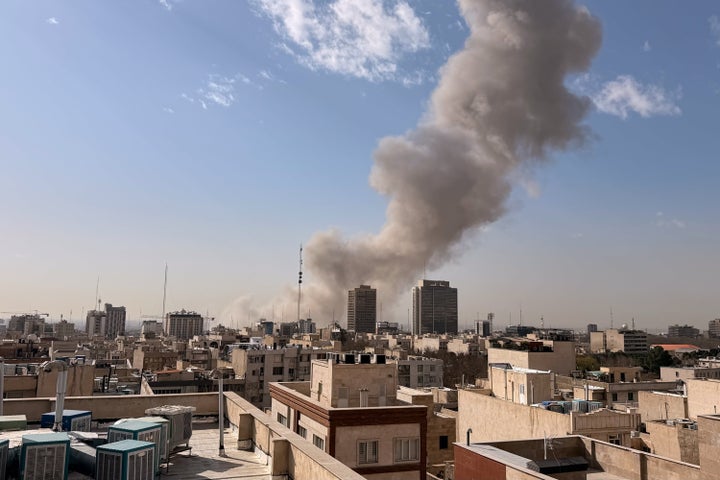
Meanwhile, the administration has offered no American plan to prevent a spiral of violence and atrocities in Iran and across the Middle East. An attack in the US-Israeli operation hit an Iranian primary school. murder More than 100 people, mostly schoolgirls, and throughout Saturday, Iranian reprisals. struck Neighboring countries aligned themselves with the United States, injuring people and attacking civilian sites such as airports and a hotel.
Given these developments, officials in the region and Europe are alarmed, and it is unlikely that their American counterparts will be able to reassure them and build confidence in Trump’s strategy, said Jennifer Gavito, a former State Department official with senior positions in administrations of both parties.
via News
“I look back at Libya and Iraq,” he said, referring to the chaos and mass deaths following US regime change missions in both countries. “I don’t know what peace of mind could have been given at that time, and especially with the benefit of history now on our side, how “success” is confidently projected.
Gavito made the public notice comments denouncing the war by the foreign minister of Oman, who had tried to mediate between the United States and Iran: “He talks about the betrayal that [other nations] I think that once again we apparently use the negotiations as a cover and pretext for a strike that makes us a less credible partner in the future.”
Information They suggest that American and Israeli officials quietly planned the Iran campaign for months, even as Trump repeatedly said publicly that he wanted a deal.
The coming days and weeks are likely to increase skepticism about U.S. strategy as Trump has offered conflicting views on resolving the conflict, saying he wants Iranian civilians to abandon and overthrow the government and that he plans to continue bombing. It is difficult to imagine a quick solution in the central area of disagreement between Tehran and Washington – Iran’s nuclear and missile capabilities – as a tougher leadership is expected to succeed Khamenei and seek to project strength and resilience.
“We have already made this existential for the Iranian regime… so they have no incentive,” Gavito said. Iran, already reluctant to make major concessions, this week reportedly offered greater limits on its nuclear development than it had offered in a previous nuclear deal with world powers, which Trump abandoned.
Waging a nationwide bloody struggle unpopular and an unauthorized war with no clear end, the Trump administration is unlikely to attract greater international support.
The policy’s ingrained disdain toward Iran will compound wariness of U.S. conduct and judgment in recent years in a variety of contexts, from Trump’s kidnapping of Venezuela’s president last month to Gaza, where Trump and President Joe Biden before him have defied calls to reconsider strong U.S. support for devastating Israeli policies condemned by most countries.
“After the Gaza war, where the United States was seen violating international law and working against all human rights statutes by allowing Israeli genocide, we now have another example of another administrator with a different political vision, confirming once again that the United States does not work in accordance with international law,” said Randa Slim of the Stimson Center think tank. “The United States is increasingly seen as a country that does not follow the rules.”
Michael M. Santiago via Getty Images
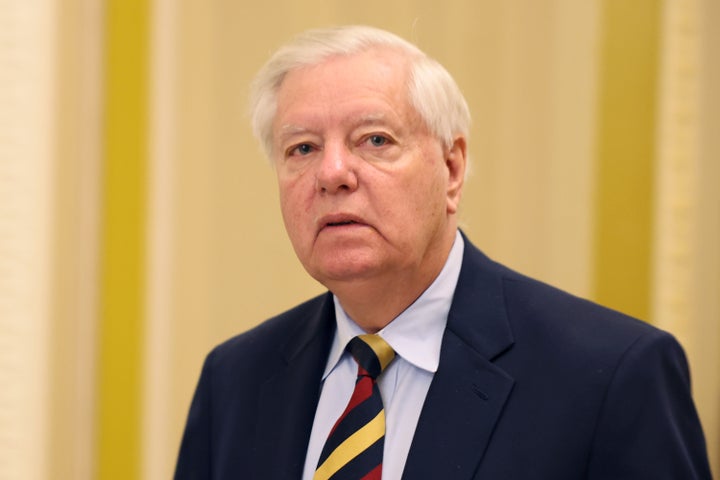
For the Trump administration, its allies and others, global goodwill and legitimacy may seem irrelevant. Senator Lindsey Graham (R.S.C.), a strong supporter of attacking Iran and defender of Israeli conduct, on Saturday attacked European countries for suggesting that the United States should return to diplomacy with Tehran.
“It is very sad to see Western democracies lose their passion for justice and sense of right and wrong,” Graham wrote in X. “You are suggesting that we should continue negotiating with religious Nazis. It is pathetic.”
And on Saturday, Iran also drew criticism from legal and national security analysts and other observers for its attacks on neighboring countries, which had repeatedly said they did not want to see a war with their neighbor and sought to overcome years of mutual distrust.
“These actions… set back years of rapprochement,” Slim said, noting that Arab nations had recently come to view Israel’s greater regional power as a greater threat, but that the risk posed by Iran was now “re-emphasized.”
But now with many people around the world wondering how American policy could turn unexpectedly and hurt them, Kersten described a greater foreign focus on unsettling Washington policymaking and hoping to change it.
“Blatant threats to [Canada’s] Sovereignty was in some ways a harbinger of how states can navigate [the Trump era] and I don’t think they’ve figured out how to deal with this,” he said, pointing to Canadian Prime Minister Mark Carney’s speech. encompass of the attack on Iran despite his recent high-profile comments urging countries to re-emphasize the importance of laws and principles in international politics.
Kersten suggested that foreigners are still looking for “voices of reason” in the United States and are dismayed by what they are seeing.
“If this dangerous path is stopped, it will only be stopped because of the actions of people inside the United States,” Kersten said. “Canada cannot stop it…Middle East partners have shown they cannot stop it…the UN will not. No international organization, court or coalition of states, whether [the European Union] or any other entity can do so.”