



Trump administration ordered to fully fund SNAP benefits in November
A federal judge in Rhode Island on Thursday ordered the Trump administration to find the money to fully fund SNAP benefits by November, a decision the administration immediately appealed.
The ruling by U.S. District Judge John J. McConnell Jr. gave President Donald Trump’s administration until Friday to make payments through the Supplemental Nutrition Assistance Program, although the 42 million Americans — about 1 in 8, most of them in poverty — are unlikely to see money on the debit cards they use to buy food nearly as quickly.
The order was in response to a challenge from cities and nonprofits that complained that the administration was only offering to cover 65% of the maximum benefit, a decision that would have left some recipients receiving nothing this month.
“Defendants failed to consider the practical consequences associated with this decision to only partially fund SNAP,” McConnell said in a court ruling after a brief hearing. “They knew there would be a long delay in the payment of partial SNAP payments and they did not consider the harm that would be suffered by people who depend on those benefits.”
McConnell was one of two judges who ruled last week that the administration couldn’t skip November benefits entirely because of the federal shutdown.
Shortly after the judges’ rulings, Trump administration lawyers filed an appeal motion, challenging both Thursday’s and earlier Saturday’s decisions that ordered the federal government to use emergency reserves to fund the food program throughout November.
The White House did not immediately respond to a request for comment Thursday.
But Vice President JD Vance criticized the judge’s ruling.
“It’s an absurd ruling because we have a federal judge effectively telling us what to do in the middle of a Democratic government shutdown,” Vance told the Hill during a roundtable with Central Asian leaders at the White House. “What we would like to do is have the Democrats open the government, of course, then we can fund SNAP and we can also do a lot of other good things for the American people. But in the middle of a shutdown we can’t have a federal court telling the president how to classify the situation.”
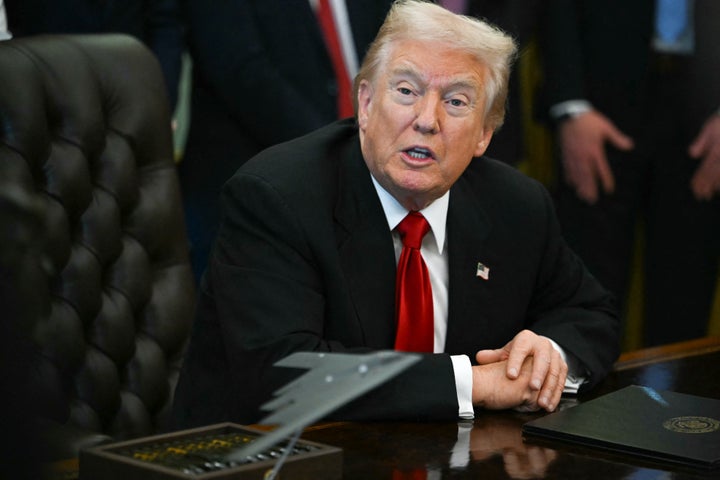
ANDREW CABALLERO-REYNOLDS via Getty Images
The Trump administration opted for partial payments this week
Last month, the administration said it would suspend November SNAP payments if the government shutdown was not resolved.
A coalition of cities and nonprofits filed suit in federal court in Rhode Island, and Democratic state officials across the country did so in Massachusetts.
In both cases, the judges ordered the government to use an emergency reserve fund containing more than $4.6 billion to pay for November’s SNAP, but gave it room to draw on other money to make the full payments, which cost between $8.5 billion and $9 billion each month.
On Monday, the administration said it would not use additional money, saying it was up to Congress to allocate the funds for the program and that the rest of the money was needed to shore up other childhood hunger programs.
Partial financing brought complications
McConnell sharply criticized the Trump administration for making that decision.
“Without SNAP funding for the month of November, 16 million children are immediately at risk of going hungry,” he said. “This should never happen in America. In fact, SNAP recipients are likely going hungry while we sit here.”
Tyler Becker, the government lawyer, argued unsuccessfully that the Trump administration had followed the court order in issuing the partial payments. “This is all because Congress has not appropriated funds due to the government shutdown,” he said.
Kristin Bateman, an attorney for the coalition of cities and nonprofits, told the judge that the administration had other reasons for not fully funding the benefits.
“What the defendants are really trying to do is take advantage of people’s hunger to gain partisan political advantage in the shutdown fight,” Bateman told the court.
McConnell said last week’s order required those payments to be made “quickly” and “efficiently” — and by Wednesday — or a full payment would be required. “Nothing was done consistent with the court’s order to clear the way to resolve it quickly,” McConnell said.

via News
There were other twists and turns this week
The administration said in a court filing Monday that it could take weeks or even months for some states to make calculations and changes to the system for charging debit cards used in the SNAP program. At the time, it said it would fund 50% of maximum benefits.
The next day, Trump appeared to threaten to not pay any benefits unless Democrats in Congress agreed to reopen the government. His press secretary later said that partial benefits would be paid by November and that it is future payments that are at risk if the shutdown continues.
And on Wednesday night he recalculated and told states there was enough money to pay 65% of maximum benefits.
Under a decades-old formula in federal regulations, everyone who received less than the maximum benefit would get a larger percentage reduction. Some families would have received nothing and some single people and two-person households could have received as little as $16.
Carmel Scaife, a former Milwaukee daycare owner who hasn’t been able to work since suffering multiple serious injuries in a car accident seven years ago, said she normally receives $130 a month from SNAP. He said despite the bargain hunting, that’s not enough to buy a month’s worth of food.
Scaife, 56, said any cut to his benefit will mean he will have to dip even deeper into his Social Security income to buy food. “That will take money away from the bills I pay,” he said. “But that’s the only way I can survive.”
The next legal step is unclear
This type of order is not typically subject to appeal, but the Trump administration has challenged similar rulings before.
An organization whose lawyers filed the challenge said it would continue the battle if necessary.
“We shouldn’t have to force the president to care about his citizens,” Democracy Forward President and CEO Skye Perryman said in a statement, “but we will do whatever it takes to protect people and communities.”
It often takes a week or more for SNAP benefits to be loaded onto debit cards once states begin the process.
___
HeTidehas become
Your supportFuelsOur Mission
Your supportFuelsOur Mission
Cut the chaos
Americans just sent Trump a clear message, and Democrats are calling it “a five-alarm fire” for the president. Our reporters are here to keep you informed and make sense of the chaos in Washington. Join News themezone and be a part of what happens next.
We remain committed to bringing you the unwavering, fact-based journalism everyone deserves.
Thank you again for your support along the way. We are truly grateful for readers like you! Your early support helped get us here and strengthened our newsroom, keeping us strong in uncertain times. As we continue, we need your help more than ever. We hope you will join us once again.
We remain committed to bringing you the unwavering, fact-based journalism everyone deserves.
Thank you again for your support along the way. We are truly grateful for readers like you! Your early support helped get us here and strengthened our newsroom, keeping us strong in uncertain times. As we continue, we need your help more than ever. We hope you will join us once again.
News themezone Support
Are you already a member? Sign in to hide these messages.
News writers Sara Cline in Baton Rouge, Louisiana; Susan Haigh in Hartford, Connecticut; and Gary Robertson in Raleigh, North Carolina, contributed to this report.