



Trump’s EPA Nearly Doubles Amount of Formaldehyde Considered Safe to Inhale, According to Former Chemical Industry Experts
This story was originally published by ProPublica.
The chemical industry finally got its wish.
Industry lobbyists have long pressed the federal government to adopt a less stringent approach to measuring the cancer risk of chemicals, one that would help loosen regulations on companies that make or use them.
Last week, in a highly unusual move, the Environmental Protection Agency took that approach, announcing that it is reviewing an assessment of the health hazards posed by formaldehyde, a widespread pollutant that causes far more cancer than any other airborne chemical. Working on that effort were two of those former industry experts, who are now senior EPA officials.
The proposed revisions to the assessment, released Wednesday, nearly double the amount of formaldehyde considered safe to inhale compared to the version finalized in the final weeks of the Biden administration. Even that earlier assessment significantly underestimated the dangers posed by formaldehyde, a ProPublica investigation published last year found.
Under previous Republican and Democratic administrations, EPA scientists were instructed to assume that chemicals that cause cancer by damaging DNA (the largest group of carcinogens, which includes formaldehyde) pose a “linear” risk, meaning that even small exposures can be dangerous. The agency adopted this approach nearly 40 years ago to protect against the multitude of low-level cancer threats the public faces daily. But the industry’s preferred approach assumes that certain carcinogens pose no risk at lower levels and that danger should only be considered once exposure reaches a certain threshold.
The Trump administration has already criticized the use of the linear model to calculate cancer risk from radiation and could rule out its use when examining other chemicals.
EPA’s adoption of this threshold model for formaldehyde might not come as a surprise given that some of the scientists who have promoted the approach on behalf of companies now run the agency.
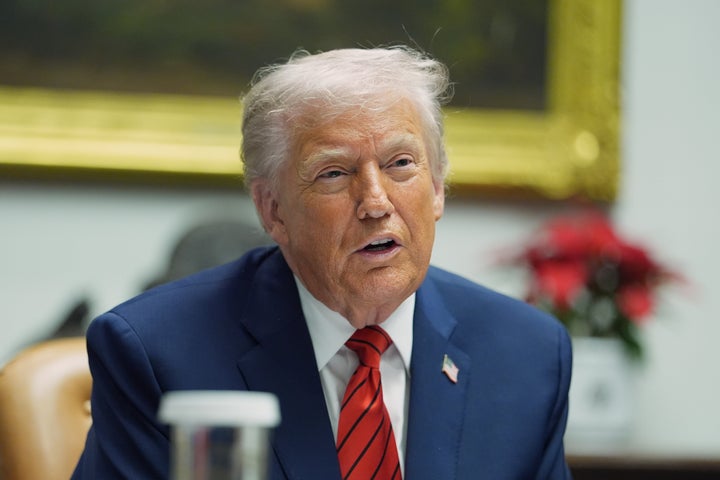
via News
Among them are Nancy Beck and Lynn Dekleva, who previously worked for the chemical industry’s main trade group, the American Chemistry Council, which represents more than 190 companies and has strongly rejected the EPA’s efforts to regulate formaldehyde. As recently as 2022, Dekleva, then a senior director of the trade group’s chemicals and technology division, wrote to an EPA scientist to advocate for using the threshold approach in evaluating the chemical. The EPA subsequently explored (and dismissed) the suggestion; The National Academies of Sciences, Engineering and Medicine independently reviewed the decision and supported it.
Dekleva currently serves as deputy assistant administrator of EPA’s Office of Chemical Safety and Pollution Prevention, which conducted the formaldehyde evaluation. Beck, a senior deputy administrator who heads the office, signed the official agency memo outlining the changes.
Under federal conflict of interest rules, EPA employees are prohibited for one year from working on specific issues in which their former employer is a party or represents one, unless they first obtain written permission from the agency’s ethics office. Beck and Dekleva did not respond to requests for comment.
When asked about Dekleva and Beck’s involvement in the recent decision to change the agency’s approach to formaldehyde risks, an EPA spokesperson wrote in an email to ProPublica that Beck and Dekleva had obtained ethical advice from the agency that approved their work on the issue. “Because formaldehyde is produced by many manufacturers and is used in many industrial sectors, this risk assessment is not a matter specific to the parties that would give them concerns under federal ethics rules,” the spokesperson wrote.
The spokesperson described the changes to the formaldehyde assessment as corrections to past scientific errors. “Through a rigorous peer review process, we determined that the Biden Administration used flawed analyzes in its formaldehyde risk assessment,” the spokesperson wrote. “We are correcting the record to reflect the best available science and our fundamental legal obligations.”
The assessment released during the Biden administration found 58 situations in which workers or consumers face an unreasonable health risk from formaldehyde, a designation that requires the agency to mitigate it. Items that can emit dangerous levels of the chemical include car care products, such as car waxes, along with craft supplies, ink and toner, photographic supplies and fabrics, building materials, textiles and leather goods. The EPA is reversing the conclusion that formaldehyde poses an unreasonable health risk in five situations and leaving dozens more standing. One of those five involves the manufacturing of wood products.
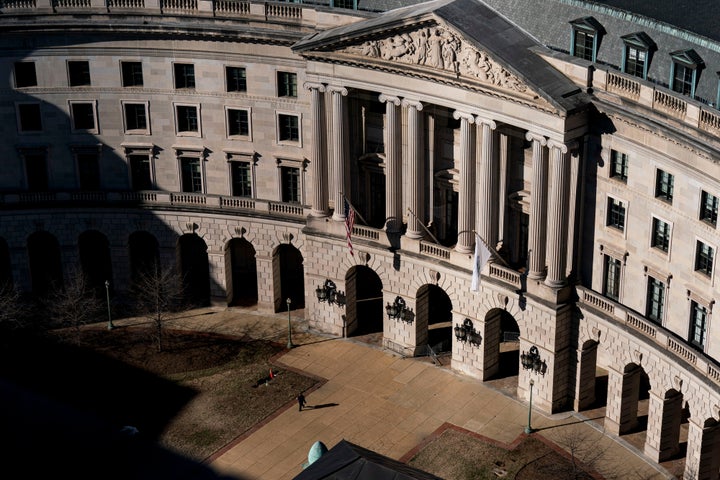
Bloomberg via Getty Images
The agency maintains that the level of formaldehyde that EPA now considers acceptable under the revised assessment will protect people from cancer and other harmful effects, including asthma, miscarriages and fertility problems.
But environmental advocates see the Trump administration’s change of course on cancer risk as a reflection of the industry’s influence over the agency.
“The science on formaldehyde has not changed; these are the same arguments the chemical industry has been selling for the last decade,” said Jonathan Kalmuss-Katz, an attorney with Earthjustice, the nation’s largest public interest environmental law firm. “The only difference is that they finally found an administration willing to ignore the findings of their own scientists.”
For decades, formaldehyde has been at the center of bitter battles between industry and regulators. Sometimes described as the backbone of American commerce, the chemical is used in everything from bonding particle board in furniture to serving as a building block in plastic and preserving bodies, and has fierce defenders in many sectors.
Our research identified significant levels of formaldehyde inside cars, shops and in our own homes. ProPublica’s analysis of EPA data also found that in every census block in the country, the risk of getting cancer from lifetime exposure to formaldehyde in outdoor air is higher than the limit of one cancer incidence per million people, the agency’s goal for air pollutants. According to our analysis, about 320 million people (almost all Americans) live in areas of the United States where the lifetime cancer risk from exposure to outdoor formaldehyde is 10 times higher than the agency’s ideal.
Until last year, official EPA estimates put the average risk from formaldehyde in the air at 20 times the limit. But, as our research found, that figure doesn’t reflect the risk of myeloid leukemia, a potentially deadly blood cancer. (EPA scientists calculated that risk but, due to internal disputes over its accuracy, omitted it from their final figure.) When myeloid leukemia is included, the risk of cancer from formaldehyde jumps to 77 times the limit.
Former EPA veterans fear that the threshold approach to assessing cancer risk could be applied to facilitate health-based protections against other carcinogens. “This will open the floodgates,” said Tracey Woodruff, a scientist at the University of California, San Francisco School of Medicine who worked at the EPA for 13 years. “Chemical companies want every carcinogen to be considered a threshold carcinogen, which would allow them to say their chemicals are safe when we know that’s not true.”
The agency is in the process of producing risk assessments for several other potentially carcinogenic chemicals, including 1,2-dichloroethane and 1,3-butadiene, which are used in plastics manufacturing. These decisions are especially consequential because once EPA finalizes a rule based on the assessment, states are prohibited from issuing their own protections for the same chemical.
EPA may finalize proposed changes to its formaldehyde assessment after the public comment period ends on February 2. It must then issue a rule that addresses any unreasonable risks posed by the chemical.
The Trump administration is also targeting the use of the linear approach to radiation cancer risk. An executive order issued in May found the method for assessing a chemical’s cancer risk flawed and ordered the Nuclear Regulatory Commission to consider adopting new radiation exposure limits. Project 2025, the plan for Trump’s presidency, similarly calls on the EPA office that handles radiation to reevaluate the linear approach it has taken in the past to the risk of cancer from radiation. The EPA press office did not respond to a question about whether this work is underway.
The new formaldehyde assessment revision also marks a sharp break from the Integrated Risk Information System, or IRIS, an EPA program that quantified health risks from formaldehyde last year. Previously, reports such as the formaldehyde assessment, which was conducted under the federal chemicals law known as the Toxic Substances Control Act, were based on values calculated by IRIS. But in what appears to be an agency first, the EPA rejected the levels the program calculated for the chemical last year.
The IRIS exclusion was another item on the chemical industry’s wish list, and with the EPA’s latest changes on formaldehyde, it also appears to be nearly complete. Project 2025 called for the elimination of the program. Of the 55 scientists who worked on its recent assessments, only eight remain in their jobs after an agency reorganization, ProPublica found in October. The EPA has not yet released the most recent IRIS report te, an evaluation of the toxicity of the permanent chemical PFNA, which was completed in April.
The EPA did not respond to questions about when it plans to release the PFNA assessment or the status of the program.
ProPublica is a nonprofit newsroom that investigates abuses of power. Sign up to receive your biggest stories as soon as they’re published.