



Trump’s science and technology man lays out the White House’s global AI strategy
NEWNow you can listen to News articles!
American politics is often informed through advertisements, personalities, and regulatory skirmishes. Much less attention is paid to the economic mechanisms that actually move structures and determine outcomes.
To understand how the White House is putting together a multi-pronged strategy for AI adoption and export, and how its pieces are supposed to work together in practice, I sat down exclusively with Michael Kratsios, assistant to the president and director of the White House Office of Science and Technology Policy.
Tanvi Ratna: The key issue he will discuss at the summit is the growing gap in AI adoption between the developed and developing world. What makes that a concern for the White House right now?
Michael Kratsios: The divergence in AI adoption between developed and developing countries is growing by the day. We see the world in two broad categories and different tools are needed for each.
WHAT REPLACES USAID? INSIDE THE TRUMP ADMINISTRATION’S GLOBAL HEALTH REFORM
Developing countries risk being left behind at a critical turning point. That’s why we urge you to prioritize AI adoption in sectors that provide concrete benefits: healthcare, education, energy infrastructure, agriculture, and citizen-facing government services.
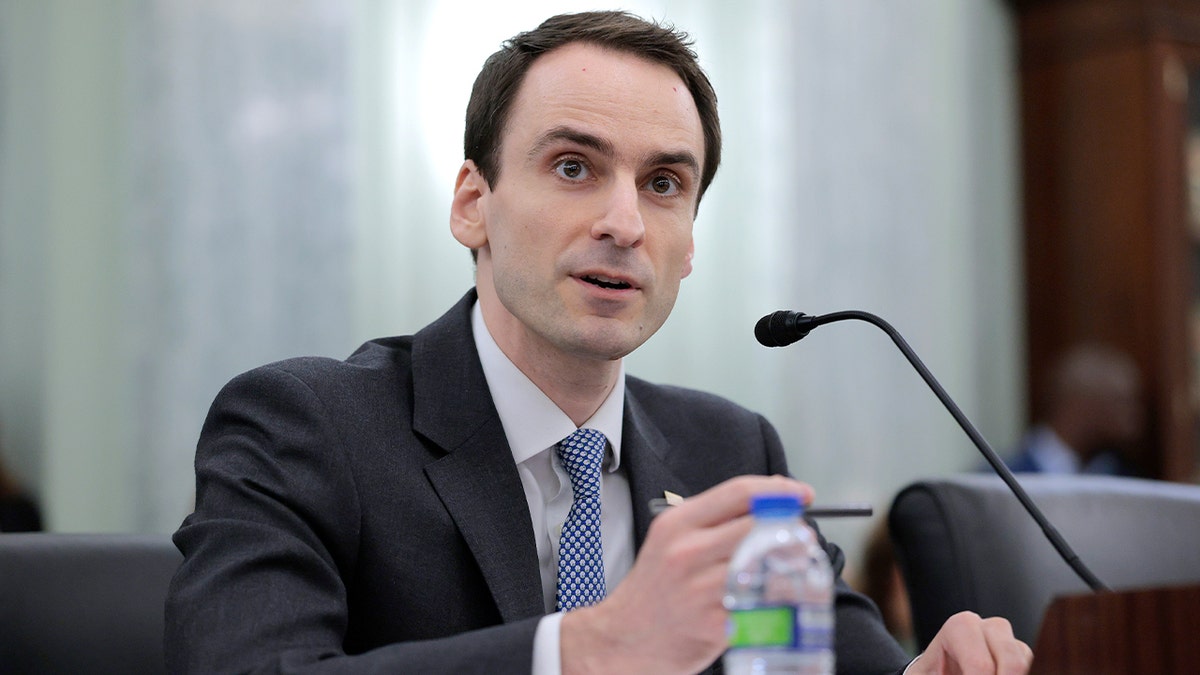
Michael Kratsios testifies before the Science, Manufacturing and Competitiveness Subcommittee of the Senate Committee on Commerce, Science and Transportation on Capitol Hill on September 10, 2025. (Chip Somodevilla/Getty)
For too long, countries seeking support for development faced a false choice. We believe the US AI Export Program offers a different path: trusted, world-class technology, funding to overcome adoption barriers, and implementation support, so governments can learn how and where to use these tools.
The United States remains the undisputed leader in AI, from GPUs to data centers to cutting-edge models and applications. That leadership carries the responsibility of sharing the foundations of a new era of innovation. We are ready to work with partners around the world so that creativity, freedom and prosperity shape today’s technological revolution.
AI RULES AT THE STATE LEVEL SURVIVE, FOR NOW, WHILE THE SENATE SINKS THE MORATORIUM DESPITE PRESSURE FROM THE WHITE HOUSE
Tanvi Ratna: Many governments say they want leadership in AI. His delegation arrived talking about real AI sovereignty, rejecting global governance and launching a multi-pronged export program. What is fundamentally different about this approach and how should countries understand the system being built?
Michael Kratsios: The hope for the United States is that the pursuit of true AI sovereignty, the adoption and deployment of sovereign infrastructure, sovereign data, sovereign models, and sovereign policies within national borders and under national control, will become an occasion for bilateral diplomacy, international development, and global economic dynamism. The US AI Export Program exists to make that happen.
True AI sovereignty means owning and using best-in-class technology for the benefit of its people and charting its national destiny amidst global transformations. We urge nations to focus on strategic autonomy along with rapid adoption of AI rather than aiming for complete self-sufficiency. AI adoption cannot lead to a better future if it is subject to bureaucracies and centralized control.
PALANTIR’S SHYAM SANKAR: US MUST USE AI AS A ‘TIRE’ AGAINST CHINA OR FACE ECONOMIC DEFEAT
We deeply believe that the best path for the developing world to fully realize the untold benefits of AI is by adopting the American AI stack. The American AI stack has the best chips, the best models, and the best applications in the world, and that is what countries ultimately need to implement AI effectively.
Tanvi Ratna: When you talk about the American AI stack, are you talking about selling products or shaping the foundations that countries build on while keeping sensitive data under national control?
Michael Kratsios: Working with the American AI stack allows nations to leverage the world’s best technologies while keeping sensitive data within their borders. Independent partners are critical to unlocking the prosperity that AI adoption can bring. That’s why the president launched the American AI Export Program.
THE TRUMP ADMINISTRATION’S TOP SCIENTIFIC PRIORITY IS AI, SECRETARY OF ENERGY SAYS
US companies can build a large, independent AI infrastructure with secure and robust supply chains that minimize backdoor risk. They build it and it belongs to the country that implements it.
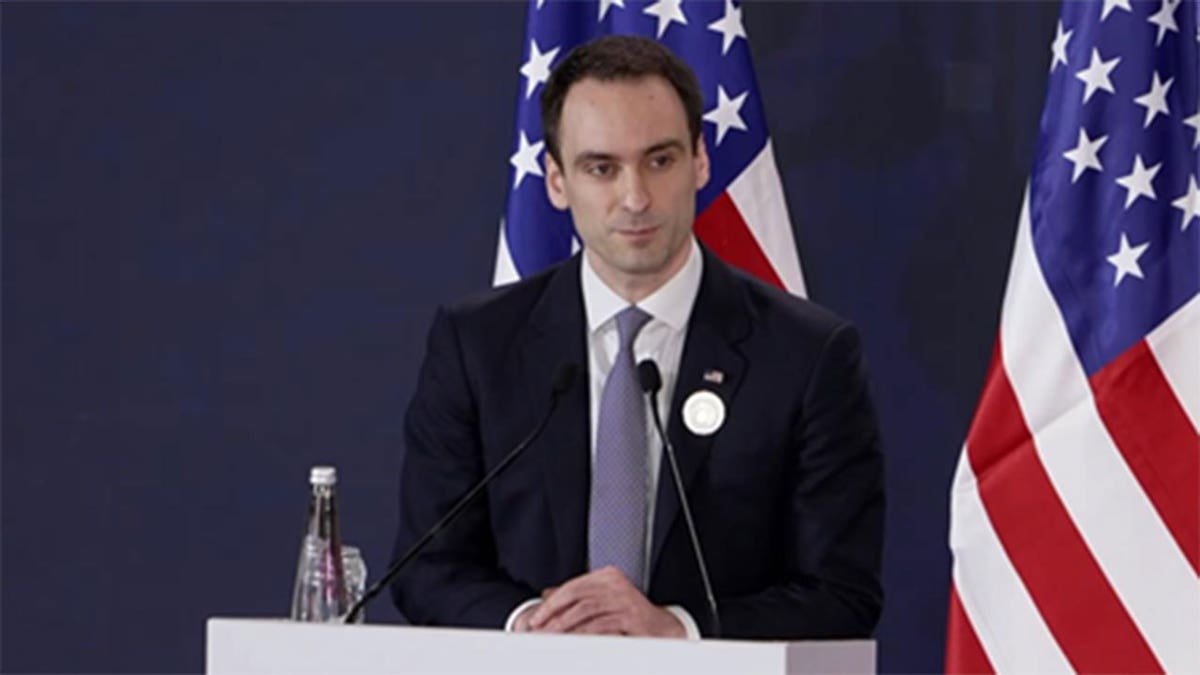
Michael Kratsios, assistant to the president and director of the White House Office of Science and Technology Policy, speaks at the India AI Impact Summit in New Delhi on February 21, 2026.
Tanvi Ratna: If it is an adoption strategy, then cost and complexity become the obstacles. Their public comments emphasize financing and deployment sophistication as the two biggest obstacles for developing countries. How are those barriers actually being removed?
Michael Kratsios: Developing countries face two major obstacles to AI adoption. One is financing. The AI stack is expensive. Through the energetic and material demands of its infrastructure, it returns the digital transformation of our world to physical reality. Data centers, semiconductors, and energy production require real manpower and resources.
CHINA MAKES ADVANCES ON AI: TRUMP WARNS THAT THE UNITED STATES CANNOT REGULATE TOWARDS DEFEAT
The second barrier is the deficit in the technical sophistication necessary to implement AI tools effectively. To address this, we announced a set of government-wide support initiatives to facilitate the global adoption of trusted AI systems, create a competitive and interoperable AI ecosystem, and promote the US AI Export Program in developed and developing partner countries.
Tanvi Ratna: Spell that suite. What are the tips, capital, integration, standards, execution and what agencies are being activated?
Michael Kratsios: We unveiled a new set of initiatives across the federal government that support the American AI Exports Program, which was launched by executive order last July.
TRUMP CALLS FOR FEDERAL AI STANDARDS AND AN END TO ‘PARTICULAR’ STATE REGULATIONS THAT ‘THREATEN’ ECONOMIC GROWTH
The first new initiative within it is the National Champions Initiative. It is designed to bring leading technology companies from partner countries directly into the US AI stack. We want the best technologies from all of our partners and allies to be part of that ecosystem wherever the American AI stack goes.
The second is a complete set of financing and financing opportunities. We are mobilizing support through the U.S. International Development Finance Corporation, the Export Import Bank, the Millennium Challenge Corporation, the U.S. Trade and Development Agency, and a new World Bank fund, with additional programs launched by the Treasury and other parts of the U.S. government. The message is simple: this is serious. All possible sources of financing are being used.
The third is the creation of the United States Tech Corps. It’s a reimagining of how the Peace Corps can make an impact in the modern era. We’re looking for technically trained Americans who can help deploy American technology abroad, because there is no better tool to drive economic development, health improvements, and quality of life than AI.
WAR DEPARTMENT REFOCUSES ON AI, HYPERSONICS AND DIRECTED ENERGY IN MAJOR STRATEGY REVIEW
And finally, we believe that one of the fastest ways to drive global adoption is through standards, particularly as the next wave of innovation focuses on AI agents. The way those agents communicate and coordinate their actions will benefit from unified standards, which is why NIST has launched a specific initiative.
Tanvi Ratna: The National Champions Initiative is easy to misunderstand. Critics hear that Americans are hoarding and assuming dependency. His approach suggests the opposite: integrate champion partners so that countries do not have to choose between importing the package and developing national capacity. Is that the point?
Michael Kratsios: Exactly. To integrate companies in partner countries with the US AI stack and ensure that no country has to choose between completing the stack and developing domestic AI, we established the National Champions Initiative. Partners need the opportunity to build native technology industries, and facilitating that is a core part of the export program.
TRUMP ADMINISTRATOR TO RECRUIT 1,000 TECHNOLOGISTS FOR ELITE ‘TECH FORCE’ TO MODERNIZE GOVERNMENT
Tanvi Ratna: He has also criticized previous US approaches to the spread of AI for restricting partners. What went wrong strategically?
Michael Kratsios: The previous approach treated partners as second-tier actors with significant restrictions on access to advanced technology. That was a lose-lose AI diplomatic strategy. It kept partners from the best technology and limited American companies from competing globally.
Under President Trump, the United States is reconsidering how to promote international development and how technology can make a lasting impact. We believe that both developed and developing countries can develop sovereign AI capability if given the opportunity.
News AI BULLETIN: TRUMP ACTIVATES ‘TECHNICAL FORCE’
Tanvi Ratna: Let’s talk about the Tech Corps, because it would be easy to dismiss it as a feel-good addition. In your model, it sounds like an execution layer. What would these teams actually do on the ground?
Michael Kratsios: They will be like Peace Corps volunteers, except the focus will be on technology. We are looking for people with technical experience who want to help implement AI solutions.
If a country wants to improve agriculture through precision farming, apply AI to health systems to improve hospital efficiency, or modernize digital public services, American technologists through the Tech Corps and the Peace Corps will be able to support those efforts.
WE ARE ON OPPOSITE SIDES OF THE HALLWAY. BUT WE KNOW THE UNITED STATES MUST WIN THE AI RACE, OR ELSE
Many young people today care deeply about real-world impact. The special thing right now is that the United States has incredible technology, the best chips, models and applications, and we are being more intentional about sharing them.
Tanvi Ratna: You put an unusual emphasis on AI agents and interoperability. Why does the White House now see rules as a strategic lever?
Michael Kratsios: The next wave of innovation in AI over the next year or two will focus on agents. The way those agents communicate and orchestrate their actions would benefit greatly from unified standards. NIST has launched an initiative to develop standards for agents so that these systems can interoperate securely and effectively.
IN 2026, THE NEW FRONT OF THE ENERGY WAR IS AI, AND WE MUST WIN THAT BATTLE, SAYS API CHIEF
Tanvi Ratna: It also linked this export architecture to supply chains, from chips to data centers, energy and minerals. Where does Pax Silica fit in? Is it the basic plugin of the adoption layer?
Michael Kratsios: Pax Silica is a broader alliance focused on supply chain challenges that the United States and many partner countries have faced. It is a small, select group of countries working together to alleviate these challenges. India is a tremendous addition.
AI adoption depends on secure physical inputs. The AI stack is tangible: data centers, semiconductors, power generation. Pax Silica helps address those vulnerabilities while the export program accelerates adoption. They are complementary.
TRUMP’S NATIONAL SECURITY PLAN DECLARES ERA OF MASS MIGRATION IS UNDER SIGHT, Points to China’s Rise
Tanvi Ratna: Given that India hosted the summit and joined Pax Silica, what role do you see for India within this strategy?
Michael Kratsios: India is a technological powerhouse. It graduates an incredible number of engineers, has great internal talent, and is building solid products and applications. We look forward to working with them.
India has long been a strong partner in how the United States shares technology abroad. Our major hyperscalers have data centers and research operations here and employ a large number of Indian engineers. We believe that many Indian companies can ultimately become part of the American AI stack.
Tanvi Ratna: When critics posit that this is about China, one resists that characterization. How does the administration view the competition?
CLICK HERE TO DOWNLOAD THE News APP
Michael Kratsios: We do not consider this to be any particular competitor. It’s about the fact that the United States has the best AI technology in the world and many countries want it in their ecosystems. We are excited to share it and build mutually beneficial partnerships globally.
Tanvi Ratna is a policy analyst and engineer with a decade of experience in statecraft at the intersection of geopolitics, economics and technology. He has worked on Capitol Hill, EY, CoinDesk and others, shaping policy across sectors from manufacturing to artificial intelligence. Follow his views on statecraft at unknown and Substack.