



Typhoon Kalmaegi hits Vietnam after killing more than 140 people in the Philippines
/News/News
Nha Trang, Vietnam — Typhoon Kalmaegi hit Vietnam on Thursday after killing more than 140 people in the Philippines, making landfall north of Gia Lai province in central Vietnam and lashing the region with fierce winds and torrential rains.
The storm hit as the central provinces were already recovering from days of flooding caused by record rainfall that has already claimed 47 lives. Forecasters warned that Kalmaegi could dump more than 24 inches of additional rain in some areas, raising fears of deadly landslides and flash flooding.
Power outages were reported in several provinces, while trees were uprooted and roofs ripped off houses. Authorities also warned of flooding risks in major cities, including Danang and Ho Chi Minh.

Kalmaegi killed at least 142 people and left 127 others missing after causing devastating floods in the central Philippines before heading towards Vietnam, official figures showed on Thursday.
The typhoon is so far the world’s deadliest in 2025, according to the EM-DAT disaster database. Trami, which also hit the Philippines, was the third deadliest typhoon last year, with 191 fatalities.
Floods described as unprecedented swept through towns and cities in Cebu province this week, sweeping away cars, riverside shacks and even huge shipping containers.
The national civil defense office confirmed 114 deaths on Thursday, although that count does not include an additional 28 recorded by Cebu provincial authorities. More than 500,000 Filipinos remain displaced.
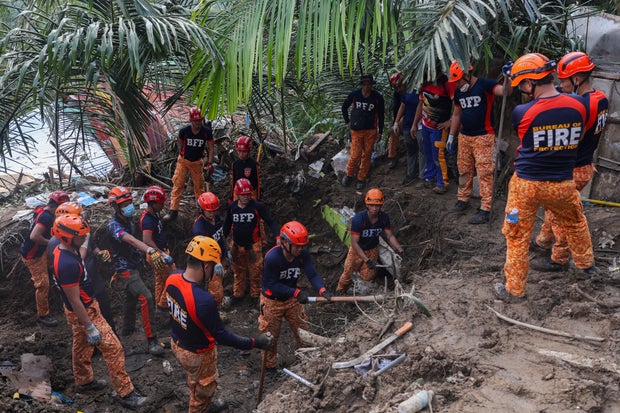
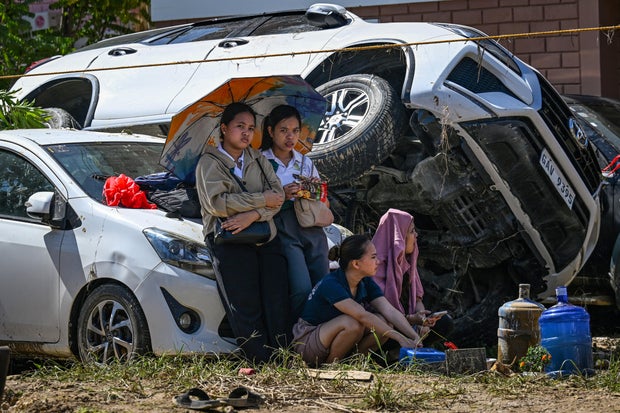
In Liloan, a town near Cebu where 35 bodies were recovered, News journalists saw cars piled up in floodwaters and roofs torn off buildings as residents tried to dig through the mud.
Christine Aton’s sister Michelle, who has a disability, was among Liloan’s victims, trapped in her bedroom as waters rose inside her home.
“We tried to open (their bedroom door) with a kitchen knife and a crowbar, but it didn’t move… Then the refrigerator started floating,” said Atón, 29.
“I opened a window and my father and I swam. We were crying because we wanted to save my older sister. But my father told me that we couldn’t do anything for her, that all three of us could end up dead.”
Chyros Roa, a 42-year-old father of two, said his family was saved by the barking of their dog when water entered their house in the early hours of the morning, giving them enough time to reach the roof.
“The current was very strong. We tried to ask for rescue, but no one came. They told us that the rescuers were swept away by the current,” he said.
On Thursday, President Ferdinand Marcos declared a “state of national calamity,” a move that allows the government to release funds for aid and impose price caps on basic needs.
“Unfortunately, another (typhoon) is coming with the potential to become an even stronger one,” Marcos said at an afternoon news conference.
Still more than 930 miles east of the country, Tropical Storm Fung-wong is slowly gaining strength as it heads toward the Philippines’ main island of Luzon. It could reach super typhoon status before making landfall on Monday.
State weather service meteorologist Benison Estareja told News that rainfall along the Kalmaegi road was 1.5 times what would normally fall in Cebu for the entire month of November, saying it was a “once every 20 years” occurrence.
The “highly urbanized” nature of the worst-affected communities around Cebu City made it even deadlier, he added.
“Around four or five in the morning, the water was so strong that you couldn’t even get out,” said Reynaldo Vergara, 53, adding that everything in his small store in Mandaue had been lost when a nearby river overflowed. “Nothing like this had ever happened. The water was angry.”
In a radio interview, provincial governor Pamela Balicuatro described the situation as “recently new.”
Scientists warn that storms are Increasingly powerful due to human-driven climate change.. Warmer oceans allow typhoons to strengthen quickly, and a warmer atmosphere retains more moisture, which means heavier rain.
Vietnam, which suffers about a dozen typhoons and storms a year, has been hit by a relentless series this year, leaving little time to recover between disasters.
Deputy Prime Minister Tran Hong Ha urged local authorities to treat Kalmaegi as “urgent and dangerous,” calling it a “very abnormal” storm in a statement Wednesday.
Authorities ordered the evacuation of thousands of people from coastal communities, and in the city of Quy Nhon, an News journalist saw officials knocking on doors on Thursday and warning people to flee before making landfall.
Kalmaegi is the 13th typhoon or tropical storm of 2025 to affect Vietnam. The Philippines has already reached its average of 20 such storms with Kalmaegi, state meteorologist Charmagne Varilla told News, adding that at least “three to five more storms” could be expected by the end of December.
In:
- Tropical Cyclone
- Typhoon
- Climate Change
- Tropical storm
- Vietnam
- Global Warming
- Philippines
- Asia