



UC Santa Barbara develops new soft robotic system for emergency intubation procedures
NEWNow you can listen to News articles!
When someone stops breathing, the clock starts ticking. First responders often need to get air into the lungs quickly, and one of the most reliable ways is to slide a tube into the windpipe. This process, called intubation, keeps the airways open so oxygen can flow again.
Here’s the kicker: intubation is incredibly difficult. Even trained doctors can struggle, and every extra second puts the patient at greater risk. Now, researchers at UC Santa Barbara have designed a soft robotic device that could change the way first responders handle these emergencies. Helps guide the breathing tube into place quickly, safely and with much less training than traditional methods.
Sign up to receive my FREE CyberGuy report
Get my best tech tips, urgent security alerts, and exclusive offers delivered straight to your inbox. Plus, you’ll get instant access to my Ultimate Guide to Surviving Scams, free when you join me CYBERGUY.COM information sheet.
Why are breathing tubes so difficult to place?
Our bodies are designed to keep food and foreign objects out of our lungs. A small flap called the epiglottis blocks the trachea during swallowing and the path to the trachea is narrow and curved. To overcome these obstacles, current tools are rigid. Doctors have to lift the epiglottis with a metal endoscope and carefully tilt the tube forward. If, however, it slides into the esophagus, oxygen reaches the stomach instead of the lungs. “Traditional tools have to be rigid so you can push them, and they only rotate by pressing on sensitive tissue,” explained Elliot Hawkes, a professor of mechanical engineering at UCSB.
DANGEROUS HEART DISEASES DETECTED IN SECONDS WITH AN AI STETHOSCOPE
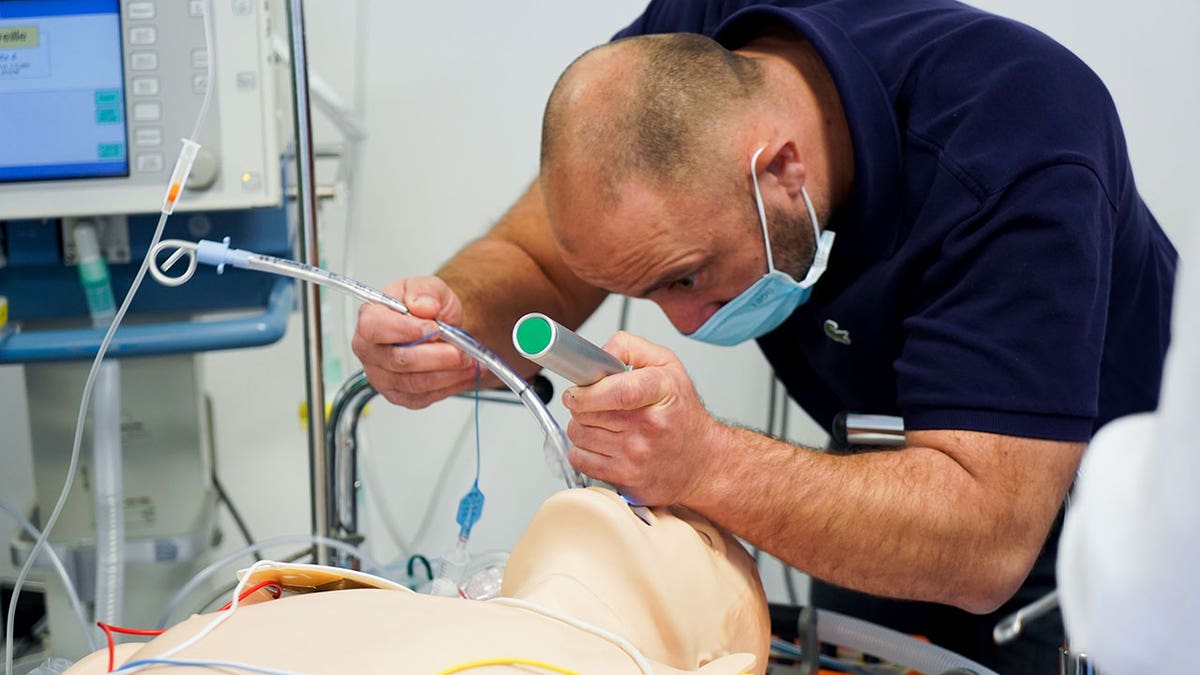
Even trained doctors can have difficulty with intubation. (Universal Images Group/Getty Images)
How the soft robot works
The new system, called soft robotic intubation system (SIRS), takes a gentler approach. First, a curved guide is located at the back of the throat. Then, a soft inflatable tube is slowly unrolled from the inside out as it goes. Instead of being forced inward, it naturally follows the correct path towards the trachea. This reduces friction, reduces the risk of injury and automatically adapts to different body shapes. “This growing paradigm naturally explains minor variations in anatomy,” said lead author David Haggerty, a recent UCSB Ph.D. graduate.
What the tests show
The results are revealing:
- Experts had a 100% success rate.
- Paramedics and emergency medical technicians It achieved a 96% success rate with just five minutes of training.
- Non-experts It placed the tube in an average of 21 seconds, less than half the time needed with advanced video laryngoscopes.
Why this device could save more lives
Millions of emergency intubations occur each year in the U.S. Many take place in chaotic, low-light, or stressful situations where current tools don’t always work. A device that facilitates the process could save the lives of:
- Paramedics at the scene of the accident.
- Military doctors in combat zones.
- Doctors in hospitals with limited equipment
AI VIDEO TECH Accelerates the TRAINING OF HUMANOID ROBOTS
In trials, both experts and non-experts achieved faster and more successful intubations using the new airway management system, improving the efficiency of the emergency response. (Kurt Knutsson)
The UCSB team is now preparing for clinical trials and FDA approval.
HOW MICRO-ROBOTS COULD SOON TREAT YOUR SINUS INFECTIONS
What does this mean to you?
If this device delivers on its initial promise, it could mean more patients survive emergencies in which breathing stops. For families, it means a higher chance that first responders will be able to keep their loved ones alive until they reach the hospital. For clinicians, it offers a safer, faster tool when seconds really matter.
Take my quiz: How safe is your online security?
Do you think your devices and data are really protected? Take this quick quiz to see where you stand digitally. From passwords to Wi-Fi settings, you’ll get a personalized breakdown of what you’re doing well and what you need to improve. Take my quiz here: Cyberguy.com.
Kurt’s Key Takeaways
Breathing is life, but securing the airway is one of the most difficult jobs in emergency care. This soft robotic system can help turn a high-risk procedure into something more predictable and safer. While there is still more testing ahead, early data shows how robotics could make a difference in saving patient lives around the world.
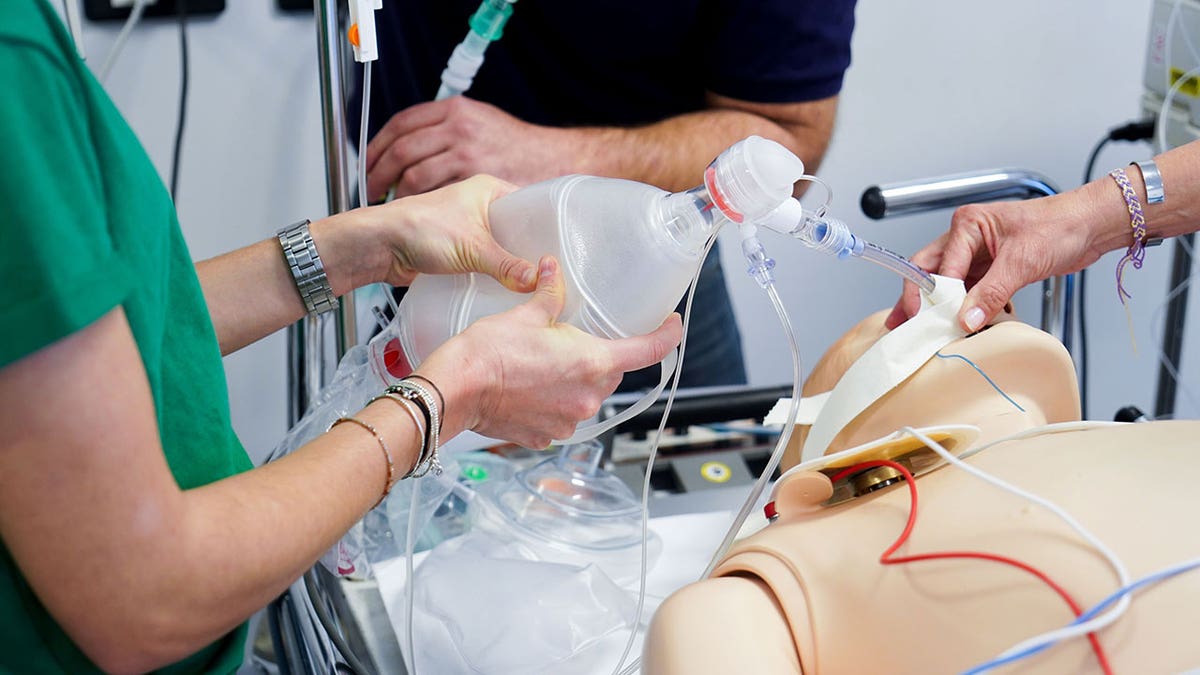
Medical staff participate in hands-on training to practice resuscitation and emergency response techniques using a realistic simulation mannequin. (Universal Images Group/Getty Images)
CLICK HERE TO GET THE News APP
Would you feel safer knowing that first responders in your community had access to this type of life-saving robot? Let us know by writing to us at Cyberguy.com.
Sign up to receive my FREE CyberGuy report
Get my best tech tips, urgent security alerts, and exclusive offers delivered straight to your inbox. Plus, you’ll get instant access to my Ultimate Guide to Surviving Scams, free when you join me CYBERGUY.COM information sheet.
Copyright 2025 CyberGuy.com. All rights reserved.
Kurt “CyberGuy” Knutsson is an award-winning technology journalist with a deep love for technology, gear and gadgets that improve lives with his contributions to News and News Business since mornings on “News & Friends.” Do you have any technical questions? Get Kurt’s free CyberGuy newsletter, share your voice, a story idea or comment on CyberGuy.com.