



UN and aid groups push for second phase of ceasefire between Israel and Hamas and opening of vital Rafah crossing
/News/AP
Add News themezone on Google
After Israel brought home the remains of its last hostage from Gaza on Monday, attention turned to the next and most challenging phase of its ceasefire with Hamas, which should include reopening the Gaza border crossing with Egypt and deploying an international security force to secure the Palestinian enclave.
The remains of an Israeli police officer Ran Gviliwho was murdered during the Hamas-led attack on October 7, 2023, were found in a cemetery in northern Gaza, Israeli officials confirmed on Monday.
“You should see the honor you are receiving here,” Gvili’s father, Itzik, said Tuesday, kissing his son’s coffin, which was draped in an Israeli flag. “All the police are here with you, all the army is with you, all the people. I am proud of you.”
What comes next?
Netanyahu’s office said in a statement on Sunday that a “limited reopening” of the Rafah crossing was “conditional on the return of all live hostages and a 100% effort by Hamas to locate and return all deceased hostages.”
The return of all remaining hostages, alive and dead, had been a key term of the first phase of the US-brokered ceasefire in Gaza. When the Israeli military confirmed that “all abductees have been returned” on Monday, Hamas said it had met those terms.
The group’s spokesman, Hazem Qassem, said in a statement following the confirmed recovery of Gvili’s body that Hamas confirmed its “commitment to all the terms of the agreement to stop the war in the Gaza Strip, including the exchange route and its complete completion in accordance with the agreement. Hamas will continue to adhere to all aspects of the agreement, including facilitating the work of the National Committee for the Administration of Gaza and ensuring its success.”
Qassem called on all ceasefire mediators, and the United States in particular, to force Israel “to stop its violations of the agreement and to implement the obligations required of it.”
The most immediate next step would be the opening of the Rafah crossing between southern Gaza and Egypt.
A United Nations children’s agency official said Monday there was a delay in supplies in Egypt ready to move to Gaza when the crossing opens to aid traffic.
“We have supplies positioned,” said Ted Chaiban, UNICEF deputy executive director. “We have our excellent staff doing good work on the ground. We have plans that can be activated immediately if access is granted.”
The next phase should include not only bringing in more humanitarian and commercial supplies but also permanent shelter materials and items to repair infrastructure, he added.
On Monday, spokesman for UN Secretary-General Antonio Guterres said that “the full implementation of the ceasefire agreements in Gaza is absolutely critical.”
“The Secretary-General urges all parties to move forward in good faith and, without delay, in subsequent phases, facilitate sustained and unimpeded humanitarian access, including through the Rafah crossing.”
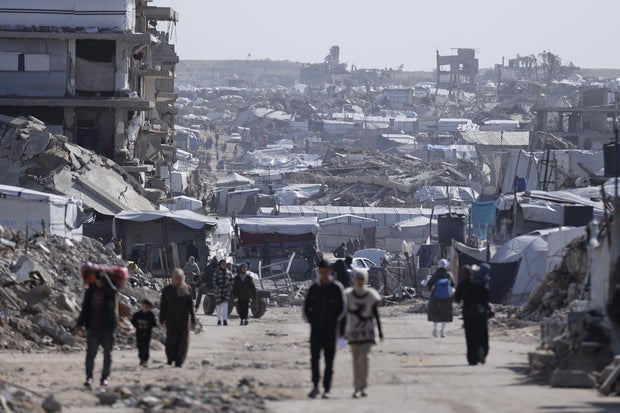
Palestinians see the crossing, which has been virtually closed since May 2024, as a lifeline to the outside world. Some are optimistic that the opening of the Rafah crossing will allow travel to and from the enclave, along with the evacuation of people in need of medical care.
“We hope this closes Israel’s pretexts and opens the crossing,” Abdel-Rahman Radwan, a Gaza City resident whose mother has cancer and requires treatment outside Gaza, told the AP.
Ahmed Ruqab, a father who lives with his family of six in a tent in the Nuseirat refugee camp, called on mediators and the United States to pressure Israel to allow more aid.
“We need to turn the page and restart,” he said by phone.
In addition to opening the border, the second phase of the ceasefire also calls for the deployment of an international security force, the disarmament of Hamas, a further pullback of Israeli soldiers and efforts to rebuild Gaza.
However, speaking before the Israeli parliament on Monday, Netanyahu said: “The next phase is to disarm Hamas and demilitarize the Gaza Strip. The next phase is not reconstruction.”
Hamas under pressure to disarm
Speaking on Monday, U.S. officials, who insisted on anonymity under the rules of a call set by the White House, said they hope Israel will help both sides move toward the second phase of the ceasefire, and they want Hamas — a U.S.-Israeli-designated terrorist group that has ruled Gaza for two decades — to disarm in accordance with the deal, and they believe it will.
“We’re hearing a lot of their people talk about disarmament. We think they’re going to do it,” one of the US officials said on the call, according to the Reuters news agency. “If they don’t disarm, then they will have breached the agreement. We believe that disarmament comes with some kind of amnesty and, frankly, we believe that we have a very, very good program for disarmament.”
Hamas “signed a deal; they have no choice, and that’s what we’re going to work on to make happen,” a second official said, according to Politico, adding: “If they decide to play, then obviously President Trump will take other actions.”
President Trump’s 20-point plan for Gaza stipulates that once all hostages are returned, Hamas members who “commit to peaceful coexistence and dismantle their weapons will receive amnesty,” and those “who wish to leave Gaza will have safe passage to receiving countries.”
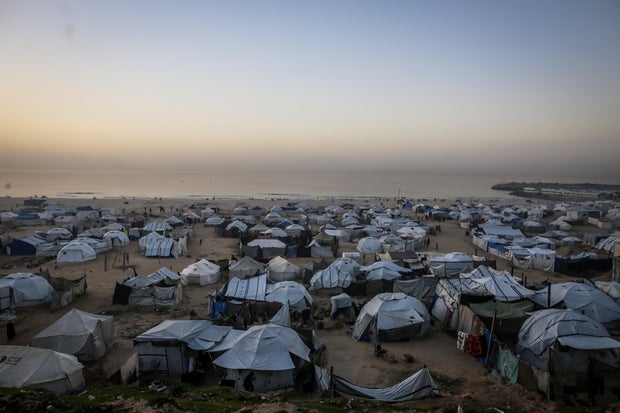
The Oct. 7, 2023, Hamas-led attack on Israel that sparked the war killed about 1,200 people and took 251 hostage. Gaza’s Hamas-run Health Ministry says more than 71,000 Palestinians died in the territory during the war.
Palestinians in Gaza who spoke to the AP in recent weeks questioned whether the ceasefire’s next steps will improve conditions, noting ongoing bloodshed and the current challenges to guarantee basic needs.
The Israel Foreign Press Association on Monday asked the country’s Supreme Court to allow journalists to enter Gaza freely and independently.
The FPA represents dozens of global news organizations and has been pushing for independent media access to Gaza throughout the war. Israel has banned journalists from entering Gaza independently since the Hamas attack in 2023, arguing that entry could put journalists and soldiers at risk.
Lawyers for the FPA told the court that the restrictions are not justified and that, since aid workers enter and leave Gaza, journalists should be allowed entry. They said tightly controlled visits under strict military supervision are no substitute for independent access. The judges are expected to rule soon.
In:
- War
- Hamas
- Israel
- Cease-fire
- donald trump
- Loop
- Palestinians
- Middle East
- Benjamin Netanyahu
Israel on the recovery of the remains of the last hostage
Israel says it has recovered the remains of the hostage from October 7
(00:33)