



US bans five Europeans who it says pressured tech companies to censor US views online
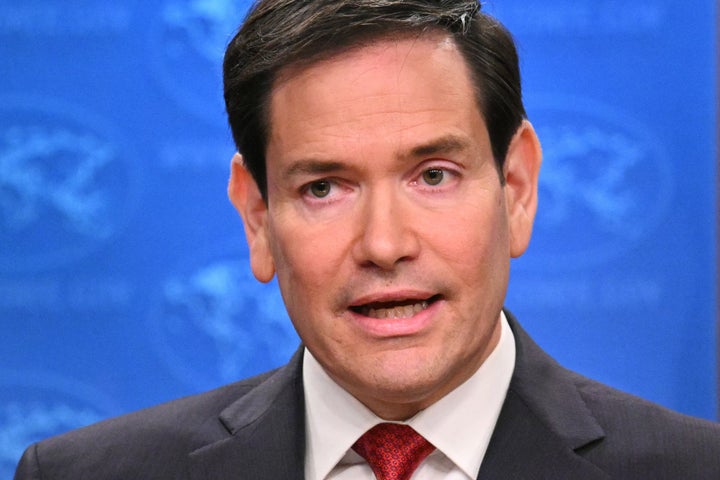
WASHINGTON (AP) — The State Department announced Tuesday that it was banning five Europeans it accused of leading efforts to pressure U.S. technology companies to censor or suppress American views.
The Europeans, characterized by Secretary of State Marco Rubio as “radical” activists and “armed” nongovernmental organizations, ran afoul of a new visa policy announced in May to restrict the entry of foreigners deemed responsible for the censorship of protected speech in the United States.
“For too long, ideologues in Europe have led organized efforts to coerce US platforms into punishing US views they oppose,” Rubio posted on X. “The Trump administration will no longer tolerate these egregious acts of extraterritorial censorship.”
Mandel and/News
The five Europeans were identified by Sarah Rogers, undersecretary of state for public diplomacy, in a series of social media posts. They include leaders of organizations tackling digital hate and a former European Union commissioner who clashed with tech billionaire Elon Musk for streaming an online interview with Donald Trump.
Rubio’s statement said they fueled censorship campaigns by foreign governments against Americans and American companies, which he said created “potentially serious adverse foreign policy consequences” for the United States.
The move to exclude them from the United States is part of a Trump administration campaign against foreign influence in online speech, using immigration law rather than platform regulations or sanctions.
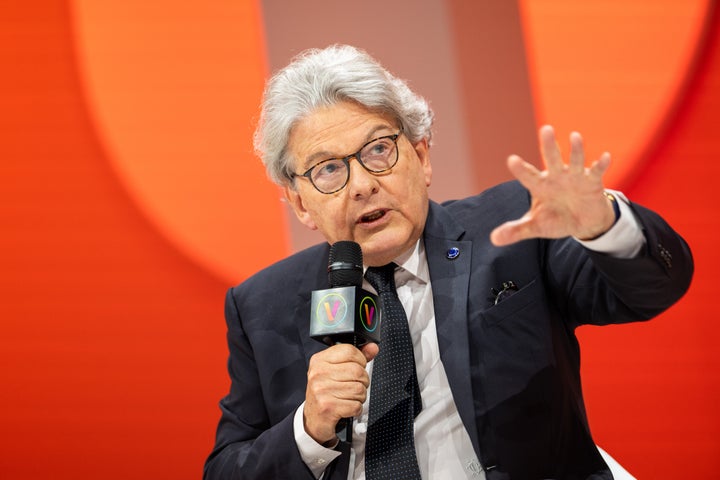
The five Europeans named by Rogers are: Imran Ahmed, executive director of the Center for Countering Digital Hate; Josephine Ballon and Anna-Lena von Hodenberg, leaders of HateAid, a German organization; Clare Melford, who runs the Global Misinformation Index; and former EU commissioner Thierry Breton, head of digital affairs.
Rogers, in his post on This includes flagging harmful or illegal content, such as hate speech.
He referred to Breton warning Musk about possible “amplification of harmful content” when broadcasting his live interview with Trump in August 2024, when he was running for president.
Breton responded to
Benjamin Girette/Bloomberg via Getty Images
French Foreign Minister Jean-Noël Barrot said France condemns the visa restrictions on Breton and the four others. Also in X, he said the DSA was adopted to ensure that “what is illegal offline is also illegal online.” He said it “has absolutely no extraterritorial reach and in no way concerns the United States.”
Most Europeans are covered by the Visa Waiver Programme, meaning they do not necessarily need visas to enter the country. However, they must complete an online application before arriving under a system run by the Department of Homeland Security, so it is possible that at least some of these five people have been flagged to DHS, said a U.S. official who spoke on condition of anonymity to discuss details that were not publicly disclosed.
Other visa restriction policies were announced this year, along with bans targeting foreign visitors from certain African and Middle Eastern countries and the Palestinian Authority. Visitors to some countries may be required to provide a financial bond when applying for a visa.
___
News diplomatic writer Matthew Lee contributed to this report.