



US, Russia hold peace talks in Abu Dhabi as missiles bomb Kyiv
WASHINGTON/kyiv (Reuters) – U.S. Army Secretary Dan Driscoll held unannounced talks with Russian officials in Abu Dhabi as part of an intense new push by President Donald Trump’s administration to end the war in Ukraine, with more meetings expected on Tuesday.
The talks come as U.S. and Ukrainian officials sought to narrow differences between them over a peace plan, with key issues still unresolved and Ukraine fearful of being forced to accept a deal largely on the Kremlin’s terms.
The exact nature of the talks in Abu Dhabi, which were confirmed to Reuters by a US official, was not immediately clear and it was not known who was in the Russian delegation. The US official added that Driscoll, who has become a point man for US diplomatic efforts, was also expected to meet with Ukrainian officials while in Abu Dhabi.
Underscoring what is at stake for Ukraine, its capital, kyiv, was hit by a barrage of missiles and hundreds of drones overnight in an attack that killed at least six people. Residents took shelter underground in winter jackets and some in tents.
Zelenskyy: will discuss sensitive issues with Trump
American policy toward the war in Ukraine has zigzagged in recent months.
A hastily arranged summit between Trump and Russian President Vladimir Putin in Alaska in August raised concerns in kyiv and European capitals that Washington might agree to many Russian demands, but ultimately resulted in increased American pressure on Russia.
The latest U.S. peace proposal, a 28-point plan that emerged last week, caught many in the U.S. government, kyiv and Europe off guard and raised fresh concerns that the Trump administration might be willing to pressure Ukraine into signing a peace deal heavily tilted toward Moscow.
The plan would require kyiv to cede more territory, agree to restrictions on its military and prohibit it from joining NATO, conditions kyiv has long rejected as tantamount to surrender.
The sudden American push increases pressure on Ukrainian President Volodymyr Zelenskyy, who is now at his most vulnerable since the start of the war in 2022 after a corruption scandal led to the dismissal of two of his ministers and as Russia advances on the battlefield.
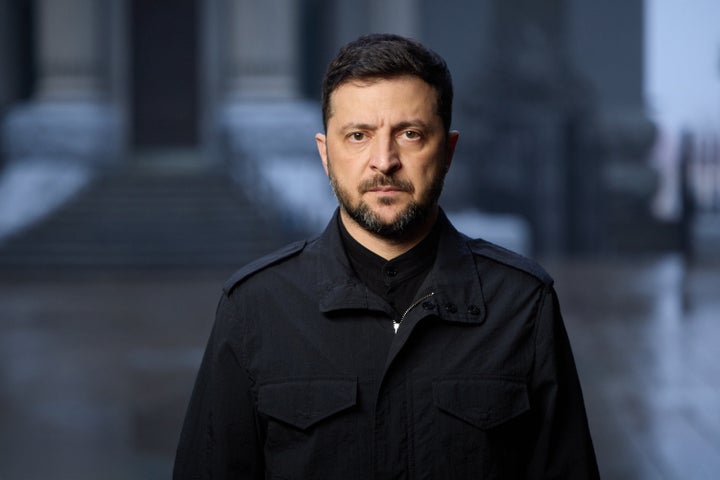
Press service of the president of Ukraine via AP
Zelenskyy said on Monday that the latest proposed peace plan had incorporated “correct” points after weekend talks in Geneva, but that there were still sensitive issues to discuss with Trump.
“From now on, after Geneva, there are fewer points, no longer 28, and many correct elements have been incorporated into this framework,” Zelenskyy said in his evening video speech.
“Our team has already reported today on the new draft measures and this is truly the right approach. The sensitive issues, the most sensitive points, I will discuss with President Trump.”
Zelenskyy said the process of drafting a final document would be difficult. The Kremlin said it had nothing yet to say about the reports of the Abu Dhabi meeting.
“Currently, the only substantial thing is the American project, the Trump project,” Kremlin spokesman Dmitry Peskov said. “We think this could become a very good basis for negotiations.”
Macron warns against European capitulation
A group of countries supporting Ukraine, known as the coalition of the willing and including Britain and France, were scheduled to hold a virtual meeting on Tuesday.
“It is an initiative that is going in the right direction: peace. However, there are aspects of that plan that deserve to be discussed, negotiated and improved,” French President Emmanuel Macron told RTL radio about the peace plan proposed by the United States. “We want peace, but we don’t want a peace that is a capitulation.”
He added that only Ukrainians can decide what territorial concessions they are willing to make.
“What was put on the table gives us an idea of what would be acceptable to the Russians. Does that mean that is what the Ukrainians and the Europeans should accept? The answer is no,” Macron added.
Ukraine should not have to accept limits on the size of its army, he said. Macron also said that frozen Russian assets are in Europe and that only Europe can decide what to do with them.
In another development, Romania sent fighter jets to track drones that broke into its territory near the border with Ukraine early on Tuesday, and one was still advancing deeper into the country, the Defense Ministry said.
Tensions have risen along Europe’s eastern flank in recent months after suspected Russian drones violated the airspace of several NATO states.
(Reporting by Idrees Ali, Devika Nair, Pavel Polityuk, Alessandro Parodi, Michel Rose, Luiza Ilie Writing by Matthias Williams Editing by Frances Kerry)