



We discovered that more than 170 US citizens have been detained by immigration agents. They have been kicked, dragged and detained for days.
When the Supreme Court recently allowed immigration agents in the Los Angeles area to take race into consideration during raids, Justice Brett Kavanaugh said citizens should not worry.
“If officers learn that the individual they detained is a U.S. citizen or legally present in the United States,” Kavanaugh wrote, “they immediately let him or her go.”
But that is far from the reality that many citizens have experienced. Immigration agents have dragged, knocked down, beaten, electrocuted and shot Americans. They have brought their necks to their knees. They were kept outside in the rain while in their underwear. At least three citizens were pregnant when the agents detained them. One of those women had already had her front door blown off as Department of Homeland Security Secretary Kristi Noem watched.
About two dozen Americans have said they were held for more than a day without being able to call their lawyers or loved ones.
Videos of American citizens being mistreated by immigration agents have filled social media, but there is little clarity on the bigger picture. The government does not track how often immigration agents detain Americans.
So ProPublica created its own count.
We collected and reviewed every case we could find of officers holding citizens against their will, whether during immigration raids or protests. While the count is almost certainly incomplete, we found more than 170 such incidents during the first nine months of President Donald Trump’s second administration.
Among the detained citizens are nearly 20 children, including two with cancer. That includes four who were detained for weeks with their undocumented mother and without access to the family’s attorney until a congresswoman intervened.
Immigration agents have the authority to detain Americans in limited circumstances. Officers can detain people they reasonably suspect are in the country illegally. We found more than 50 Americans who were detained after agents questioned their citizenship. Almost all of them were Latino.
Immigration agents can also arrest citizens who allegedly interfered with or assaulted agents. We compiled cases of about 130 Americans, including a dozen elected officials, accused of assaulting or impeding officials.
These cases have often failed under scrutiny. In nearly 50 cases we have identified so far, charges were never filed or the cases were dismissed. Our count found that a handful of citizens pleaded guilty, mostly to minor crimes.
Among the arrests in which the accusations have not been successful, masked agents pointed a gun, sprayed pepper spray and beat a young man who had filmed them looking for his relative. In another, officers tackled and then tackled a 79-year-old car wash owner to the ground, pressing their knees into his neck and back. His lawyer said he was held for 12 hours and received no medical attention despite breaking his ribs in the incident and having recently undergone heart surgery. In a third case, officers grabbed and handcuffed a woman on her way to work who was caught up in a chaotic raid on street vendors. In a complaint filed against the government, she described being detained for more than two days, not allowed contact with the outside world for much of that time. (The Supreme Court has ruled that two days is generally the longest federal officials can hold Americans without charge.)

Sarahbeth Maney/ProPublica
In response to questions from ProPublica, the Department of Homeland Security said agents do not racially profile or target Americans. “We do not arrest American citizens to enforce immigration law,” spokeswoman Tricia McLaughlin wrote.
A top immigration official recently acknowledged that agents do consider a person’s appearance. “How do they look compared to you, say?” Border Patrol Chief Gregory Bovino told a white reporter in Chicago.
The White House told ProPublica that anyone who assaults federal immigration agents would be prosecuted. “Interfering with law enforcement and assaulting law enforcement is a crime and anyone, regardless of immigration status, will be held accountable,” said Deputy Press Secretary Abigail Jackson. “Officers act heroically to enforce the law, arrest criminal illegal aliens, and protect American communities with the utmost professionalism.”
A spokesperson for Kavanaugh did not respond to an emailed request for comment.
Counting the number of Americans detained by immigration agents is inherently confusing and incomplete. The government has long ignored recommendations to track such cases, even though the United States has a history of detaining and even deporting citizens, including during the Obama administration and Trump’s first term.
We compile cases by examining social media, lawsuits, court records and local media reports in English and Spanish. We do not include arrests of protesters by local police or the National Guard. We also do not count cases where arrests were made at a later date after a judicial process. That included cases of some people charged with serious crimes, such as throwing rocks or setting off a flare to start a fire.
Experts say Americans appear to be being targeted more now as a result of the government doing something it hasn’t done for decades: Large-scale immigration is sweeping across the country, often in communities that don’t want them.
In previous administrations, deportation agents used intelligence to target specific individuals, said Scott Shuchart, a senior immigration official in the Biden, Obama and first Trump administrations. “The new idea is to use those resources in an unintelligent way,” with agents targeting communities or workplaces where undocumented immigrants may be.
When federal agents sweep through communities in the way the Supreme Court allowed, the constitutional rights of both citizens and noncitizens are inevitably violated, argued David Bier, director of immigration studies at the libertarian Cato Institute. He recently discussed how the raids in Los Angeles have led to racial discrimination. “If the government can capture someone because they belong to a certain demographic that correlates with some category of crime, then they can do it in any context.”
Cody Wofsy, a lawyer for the American Civil Liberties Union, put it even more clearly. “Any one of us could be next.”
When Kavanaugh issued his opinion that immigration agents can consider race and other factors, the Supreme Court’s three liberal justices strongly disagreed. They warned that citizens were at risk of being “grabbed, thrown to the ground and handcuffed simply because of their appearance, their accent and the fact that they earn their living doing manual labor.”
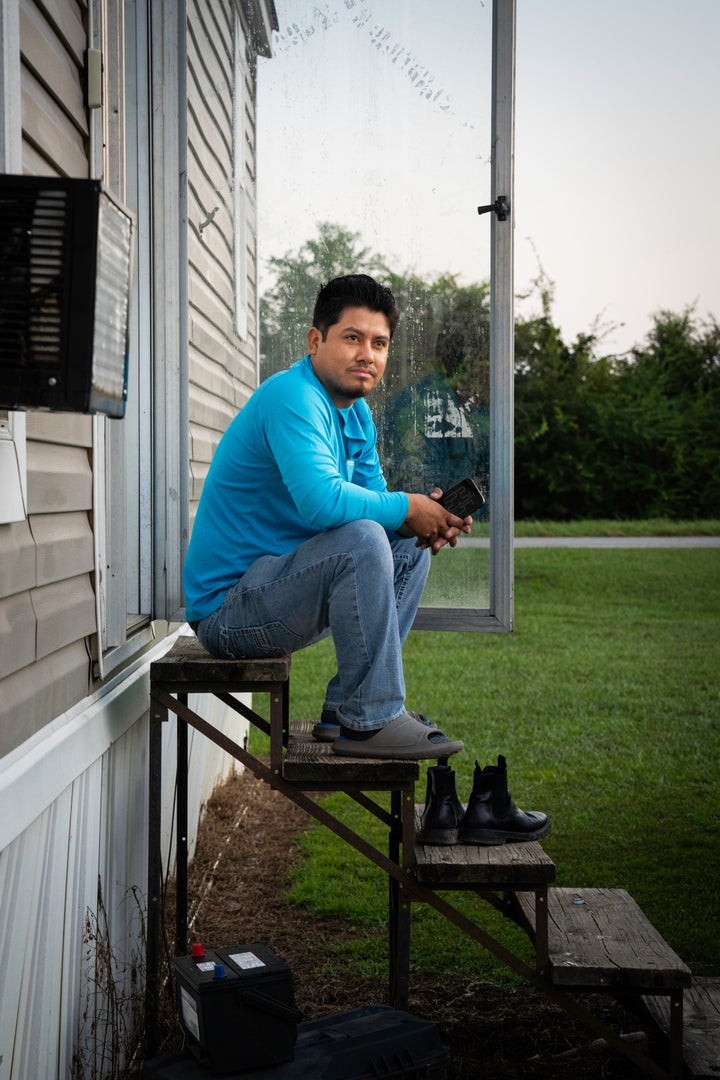
Leonardo García Venegas seems to have been one of those cases. He was working at a construction site on the Alabama coast when he saw masked immigration agents from Homeland Security Investigations jump a fence and run past a “No Trespassing” sign. García Venegas recalled that they approached Latino workers, ignoring white and black workers.
García Venegas began filming after his undocumented brother asked agents for a warrant. In response, the footage shows, the officers threw his brother to the ground and pushed his face into the wet cement. García Venegas continued filming until the agents grabbed him too and threw his phone to the ground.
Other co-workers filmed what happened next, when immigration agents twisted the 25-year-old’s arms. They repeatedly tried to throw him to the ground while he shouted: “I am a citizen!”
Officers pulled out his REAL ID, which Alabama only issues to those legally in the U.S. But officers dismissed it as fake. The agents kept García Venegas handcuffed for more than an hour. His brother was later deported.
Sarahbeth Maney/ProPublica
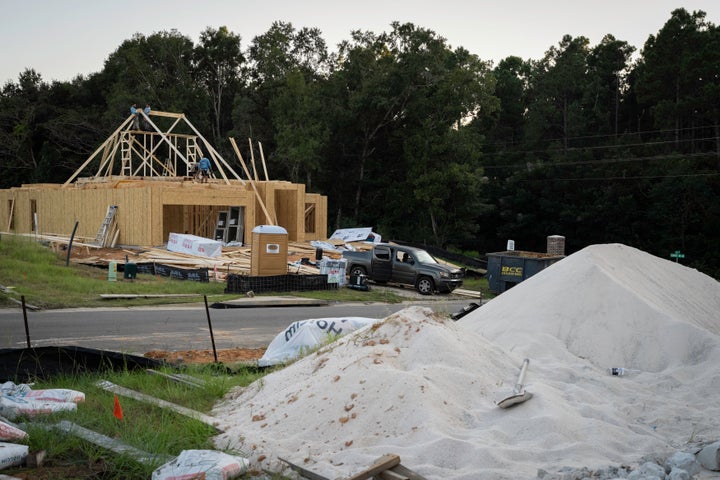
García Venegas was so shaken that he missed work for two weeks. Shortly after his return, he was working alone inside a nearly built house listening to music on his headphones when he felt someone watching him. A masked immigration agent stood at the bedroom door.
This time, the officers did not approach him. But again they discarded his REAL ID. And then they held him to verify his citizenship. García Venegas says agents also detained two other workers who had legal status.
DHS did not respond to ProPublica’s questions about García Venegas’ detentions or a federal lawsuit it filed last month. The agency previously defended the officers’ conduct, saying they “physically interposed themselves between the officers and the subject” during the first incident. The images do not show that and García Venegas was never charged with obstruction or any other crime.
García Venegas’ lawyers at the nonprofit Institute for Justice hope others will join his lawsuit. After all, the repercussions of the immigration raids are being widely felt. García Venegas said he knows of 15 more raids on nearby construction sites, and that the industry along his portion of the Gulf Coast is struggling due to a lack of workers.
Kavanaugh’s assurances have little weight for García Venegas. He is an American citizen of Mexican descent, who speaks little English and works in construction. Even with his REAL ID and Social Security card in his wallet, García Venegas worries that immigration agents will continue to harass him.
“If they decide they want to arrest you,” he said. “You’re not getting out of this.”
Sarahbeth Maney/ProPublica
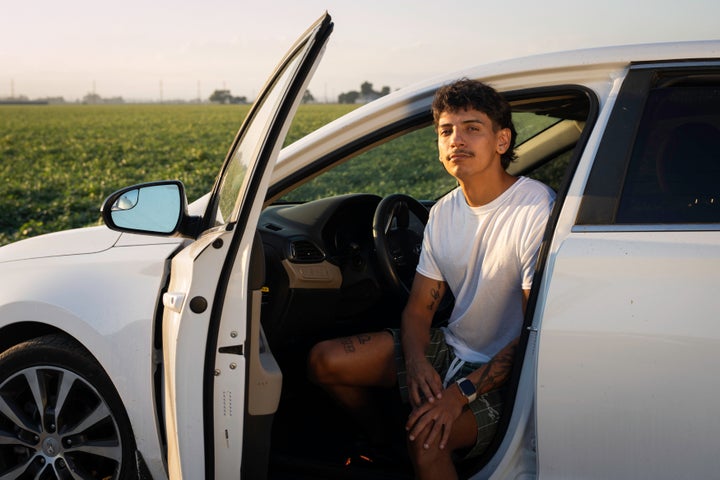
George Retes was among the citizens arrested even though immigration agents appeared to know his legal status. He also disappeared into the system for days without being able to contact anyone from the outside.
The only clue Retes’ family had at first was a brief call he managed to make on his Apple Watch with hands handcuffed behind his back. He quickly told his wife that “ICE” had arrested him during a massive raid and protest at the marijuana farm where he worked as a security guard.
Still, Retes’ family couldn’t find him. They called every law enforcement agency they could think of. Nobody gave them any answers.
Finally, they watched a TikTok video showing Retes driving to work and trying to slowly back out while trapped between officers and protesters. Through the tear gas and dust, his family recognized Retes’ car and the veteran sticker on his window. The full video shows a man, Retes, lying on the ground surrounded by officers.
“They broke his window, they sprayed him with pepper spray, they grabbed him, they threw him to the ground,” his sister told a journalist between sobs. “We don’t know what to do. We’re just asking that they let my brother go. He didn’t do anything wrong. He’s a veteran and disabled citizen. He says it in his car.”
Retes was held for three days without being given the opportunity to make a call. His family did not know where he had been until after his release. His leg had been cut by broken glass, Retes told ProPublica, and lingering pepper spray burned his hands. He tried to calm them by filling sandwich bags with water.
Retes recalled that the agents knew he was a citizen. “They didn’t care.” He said a DHS official laughed at him and told him he shouldn’t have come to work that day. “They still sent me to jail.” He added that cases like his Kavanaugh show were “completely wrong.”
DHS did not respond to our questions about Retes. He responded in X after Retes wrote an op-ed. First month at the San Francisco Chronicle. An agency post claimed he was arrested for assault after he “became violent and refused to comply with authorities.” However, Retes had been released without charge. In fact, he says he was never told why he was arrested.
Sarahbeth Maney/ProPublica
The Justice Department has encouraged agents to arrest anyone who interferes with immigration operations, and has twice ordered authorities to prioritize the cases of those suspected of obstructing, interfering with or assaulting immigration officials.
But the government’s claims in those cases have often not been confirmed.
Daniel Montenegro was filming a raid at a Home Depot in Van Nuys, California, with other labor advocates this summer when, he told ProPublica, he was approached by several officers who injured his back.
Bovino, the Border Patrol chief who oversaw the raids in Los Angeles and has since led similar operations to cities including Sacramento and Chicago, tweeted the names and photos of Montenegro and three others, accusing them of using homemade tire spikes to disable vehicles.
“I had no idea where that story came from,” Montenegro told ProPublica. “I didn’t find out until we were released. People were saying, ‘We saw you on Twitter and the news and you’re terrorists, you were planning to slash tires.’ I never saw those things that burst tires with spikes.”
Authorities have not charged Montenegro or the others with any crime. (Bovino did not respond to a request for comment, while DHS defended him in a statement to ProPublica: “Chief Bovino’s success in bringing out the worst of the worst in the country speaks for itself.”)
Government cases are sometimes so confusing that it is not clear why agents arrested a citizen.
Andrea Velez was accused of assaulting an officer after she was accidentally let go to work during a raid on street vendors in downtown Los Angeles. She said in a federal complaint that agents repeatedly assumed she did not speak English. Federal agents later requested access to his phone in an attempt to prove that he was in cahoots with another citizen arrested that day, who was charged with assault. She was one of the Americans held for more than two days.
DHS did not respond to our questions about Velez, but previously charged her with assaulting an officer. A federal judge has dismissed the charges.
Other citizens also said agents accused them of crimes and suddenly questioned their citizenship, including a man arrested after filming Border Patrol agents breaking a truck window and a pregnant woman who tried to stop agents from taking her boyfriend.
The prospects for a meaningful reckoning over officers’ conduct, including against citizens, are slim. The avenues for suing federal agents are even more limited than those for local police. And that is if it is possible to identify the agents. What’s more, the administration has gutted the office that investigates allegations of abuse by officers.
“The guardrails we have are often inadequate for state and local governments, even those guardrails are nonexistent when you’re talking about federal overreach,” said Joanna Schwartz, a professor at UCLA School of Law.
More than 50 members of Congress also wrote to the administration, demanding details about Americans who have been detained. One of them is Senator Alex Padilla, Democrat of California. After attempting to question Noem about the detained citizens, federal agents grabbed Padilla, threw him to the ground and handcuffed him. The department later defended the officers, saying they “acted appropriately.”
How we did this
Americans have reported a wide range of troubling encounters with immigration agents. To get a broader picture of agent behavior, we cataloged all the incidents we could find of citizens being held against their will by immigration agents.
Crucially, there is no way to know the full extent of these detentions, as the government itself does not track them. But we were still able to complete the image a little more.
We reviewed more than 170 cases in total, which we classified into two categories.
The first are Americans who were detained because agents questioned their citizenship. We found more than 50 cases of this type. The second category is Americans arrested by immigration agents after being accused of assaulting or impeding agents at protests or during immigration arrests of others. In that category we have about 130 Americans, including more than a dozen elected officials. In many of these cases, the government never charged these people or the cases were dismissed.
No kings.No Bias.Just the truth.
Your supportFuelsOur Mission
Your supportFuelsOur Mission
Back News that puts people first
News themezone works for our readers. Membership gives readers the power to shape the future of independent journalism. Join today and show that people lead here.
We remain committed to bringing you the unwavering, fact-based journalism everyone deserves.
Thank you again for your support along the way. We are truly grateful for readers like you! Your early support helped get us here and strengthened our newsroom, keeping us strong in uncertain times. As we continue, we need your help more than ever. We hope you will join us once again.
We remain committed to bringing you the unwavering, fact-based journalism everyone deserves.
Thank you again for your support along the way. We are truly grateful for readers like you! Your early support helped get us here and strengthened our newsroom, keeping us strong in uncertain times. As we continue, we need your help more than ever. We hope you will join us once again.
News themezone Support
Have you already contributed? Sign in to hide these messages.
We also tracked down nine other citizens who reported being concerned about racial discrimination after being questioned extensively by immigration officials. This includes a member of the Mescalero Apache tribe who was pulled out of a store and asked for his passport, and a California man who was previously wrongfully deported and received another deportation order in the mail.
We did all this by examining social media, lawsuits, court records, and local media reports in English and Spanish. We collected cases from the beginning of the current Trump administration through October 5. Our count of arrests in Portland, Oregon, and Chicago is particularly limited, as events there are still unfolding.
We do not review cases of Americans detained at airports or at the border, where even citizens are more likely to face increased questioning. We also do not review cases of Americans arrested at any time after alleged encounters with immigration agents because they involved a judicial process. Similarly, we excluded arrests of immigration protesters by local police who, unlike many federal agencies, locked protesters in a local jail where they could access the legal process and their families could find them.
Do you have information or videos to share about the administration’s immigration crackdown? Contact Nicole Foy by email at nicole.foy@propublica.org or on Signal at nicolefoy.27.